
Plants
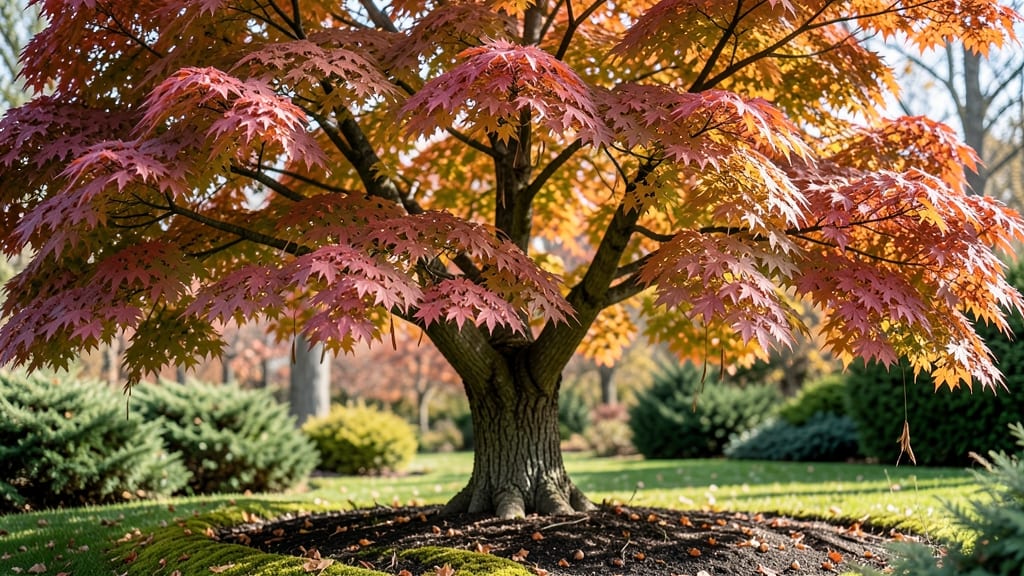
A maple tree looks like a striking hardwood with palmate leaves featuring 3-7 sharp lobes, silvery-gray bark that develops shallow ridges as it matures, and a dense, rounded crown. Its foliage transforms dramatically in autumn, displaying vibrant hues from deep crimson to golden yellow.
A maple tree's most recognizable feature is its lobed leaves, which can vary between species but typically have 3-7 pointed projections. 🌿 The bark starts smooth and silvery-gray when young but develops distinctive furrows as the tree ages, creating a textured surface that's easy to spot.
What sets maples apart from other trees is their stunning fall color display—sugar maples, for example, turn a brilliant red-orange, while silver maples lean toward golden yellow. These visual traits make them popular choices for both urban landscapes and forest settings.
Identifying maples becomes even easier when you look at their growth patterns. Most maples develop an upright, rounded canopy that spreads wider than it grows tall, creating that classic "shade tree" silhouette. The leaf veins radiate outward from a central point, forming a web-like pattern that's another dead giveaway.
I've found that these characteristics help gardeners distinguish maples from oaks or beeches at a glance, especially during the peak of autumn when the colors are at their most vibrant.
💡 In This Article
- Identifying Maple Tree Leaves: Shape, Size, and Seasonal Changes
- Maple Tree Bark and Canopy: Visual Clues for Gardeners
Identifying maple tree leaves: shape, size, and seasonal changes
The leaf morphology of maples is what first catches the eye, and it's packed with botanical details. Most maple leaves have a palmate shape, meaning all lobes radiate from a single central point like fingers on a hand.
Sugar maples typically have 5 lobes, each with sharp, serrated edges and pointed tips, while silver maples often feature 3-5 lobes that are more rounded and less pronounced. The leaf veins form an intricate web pattern, with secondary veins creating a lattice that's visible even from a distance.
Leaf size varies by species, with sugar maple leaves averaging 4-6 inches wide and silver maple leaves reaching 5-8 inches. What's fascinating is how these leaves change throughout the year. In spring, they emerge as bright green buds that unfurl into soft, velvety leaves.
By summer, the leaves develop a darker green hue with a slightly waxy texture that helps them retain moisture. The real show happens in autumn when chlorophyll breaks down, revealing the vibrant pigments that give maples their iconic fall colors.
What most people don't realize is how the leaf shape actually influences the tree's survival strategy. The pointed lobes of sugar maples, for example, help shed snow more efficiently, reducing branch breakage during winter storms.
The serrated edges also create microclimates that trap heat, which can be crucial during early spring when temperatures fluctuate. This adaptive design is one reason maples thrive in both urban environments and forest ecosystems, where they often become dominant species.
Seasonal color shifts are particularly dramatic in maples, thanks to a process called anthocyanin accumulation. As daylight shortens in autumn, the tree stops producing chlorophyll, revealing the yellow and orange pigments that were always present.
Then, in response to cool nights and bright days, the tree produces anthocyanins—those deep red and purple pigments that create the fiery hues we associate with fall. Sugar maples develop particularly intense reds because they produce higher concentrations of these pigments than other species.
Consider these key visual differences between common maple varieties:
- Sugar Maple: 5 lobes, sharp points, deep red-orange fall color, 4-6 inch leaves
- Silver Maple: 3-5 lobes, rounded tips, golden-yellow fall color, 5-8 inch leaves
- Red Maple: 3-5 lobes, serrated edges, bright red fall color, 3-6 inch leaves
The edge of each lobe typically has 10-15 teeth per inch, creating that distinctive saw-tooth pattern when viewed closely. This fine detail is what helps experienced gardeners identify maples even from a distance, especially when the leaves are still attached to the tree. 🌿