
Pruning
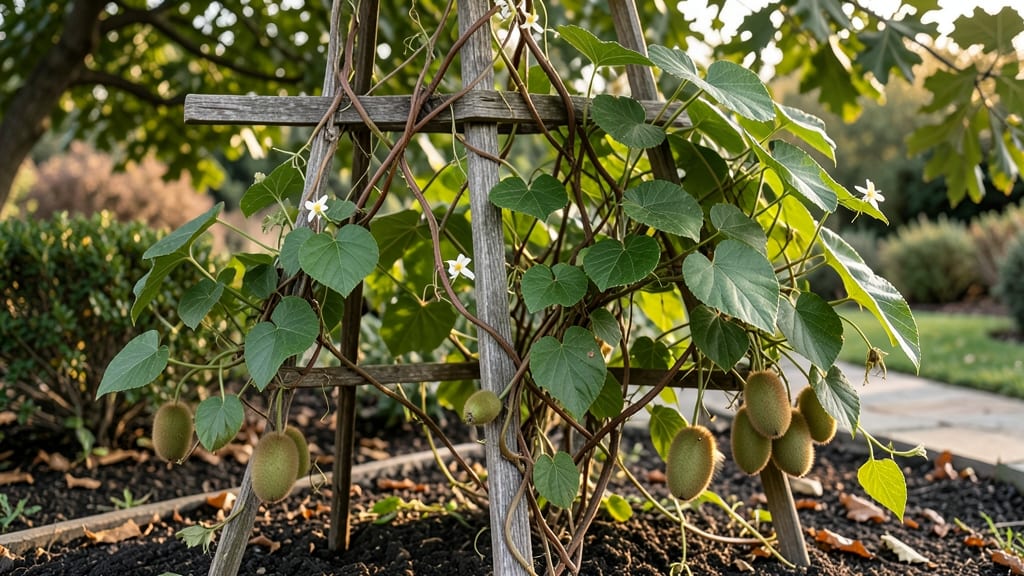
Is kiwi a tree or vine? Kiwi is neither—it's a woody vine (Actinidia deliciosa) with climbing habits, woody stems, and perennial growth, making it botanically distinct from both trees and herbaceous vines.
This classification matters because kiwi's growth pattern blends traits from both worlds.
Unlike trees, it doesn't develop a single trunk but instead sends out multiple woody canes that need sturdy support. 🌿 The plant's ability to climb and produce fruit along its length sets it apart from true vines like grapes or ivy, which are typically herbaceous or less woody.
Gardeners often treat kiwi vines like small fruit trees, but their flexible canes and rapid growth require different pruning approaches to maximize fruit production.
What's particularly interesting is how kiwi's botanical family (Actinidiaceae) includes other climbing plants, but none combine the same hardy perennial structure with such vigorous growth habits. This unique combination makes kiwi vines both challenging and rewarding for home gardeners—especially when you consider their cold hardiness compared to tropical fruit plants.
💡 In This Article
- Botanical Classification: Why Kiwi Is a Vine, Not a Tree
- Growing Kiwi Vines: Trellis Setup and Pruning Tips
Botanical classification: why kiwi is a vine, not a tree
The key difference between kiwi and trees lies in its woody, perennial vines that grow horizontally rather than vertically. Kiwi (Actinidia deliciosa) belongs to the Actinidiaceae family, where its canes develop lenticels (porous tissues) and corky bark—traits that distinguish it from herbaceous vines like morning glories.
These woody stems can reach 20-30 feet in ideal conditions, but they lack the thick, self-supporting trunk of a tree.
Kiwi’s climbing mechanism involves tendrils (modified stems) that coil around supports, much like grapes—but its perennial woodiness sets it apart. Unlike annual vines that die back yearly, kiwi’s canes persist for decades, growing thicker each season.
This hardiness explains why kiwi thrives in temperate zones (USDA zones 7-9) where frost would kill tropical vines. 🌿 The plant’s deciduous leaves (shedding annually) further blur tree-like traits, but its lack of a central trunk keeps it botanically classified as a vine.
Comparing kiwi to true vines reveals more nuances. While grapes (Vitis vinifera) are woody too, their canes are thinner and less robust. Ivy (Hedera helix) is herbaceous, lacking kiwi’s woody stems that store nutrients year-round.
The kiwi’s fruit-bearing habit—producing edible berries along its length—also mirrors vines like passionfruit, but its vigorous growth rate (up to 12 inches per season) demands heavy pruning to control spread.
Here’s where gardeners often get confused: kiwi’s trellis requirements mimic small fruit trees, but its flexible canes can’t bear their own weight. Without support, vines flop to the ground, while trees develop upright trunks.
This structural difference explains why kiwi needs strong trellises (like T-posts or cable systems) to channel its energy upward—unlike trees that self-support.
Scientifically, kiwi’s classification stems from its dicotyledonous nature (two seed leaves), shared with grapes and ivy, but its perennial woody growth aligns more with shrubs. The confusion arises because kiwi combines traits: climbing like a vine, woody like a shrub, but fruit-bearing like a tree.
This hybrid growth pattern is why botanists categorize it as a woody perennial vine—a unique middle ground in plant taxonomy.
For those curious about kiwi’s relatives, the Actinidiaceae family includes Chinese gooseberry (Actinidia arguta), which shares the same vine structure but produces smaller, sweeter fruit.
Both species highlight how kiwi’s climbing habit and woody persistence create a plant that’s equal parts vine, shrub, and fruit producer—defying simple classification. 💫