
Pruning
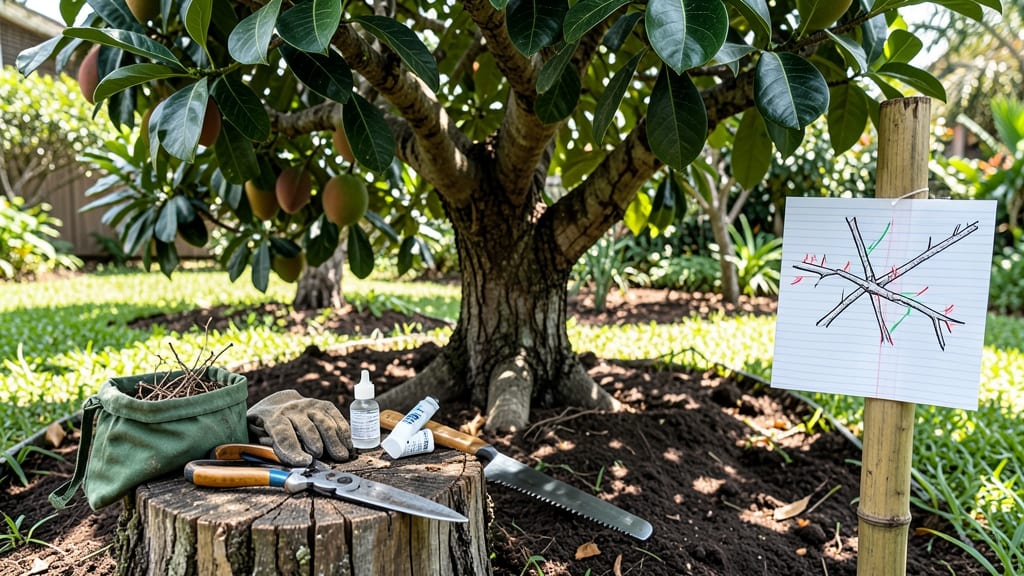
Pruning a mango tree for fruit isn't just about shaping—it's about unlocking year-round harvests by directing energy where it matters most. 🌱 I learned the hard way that aggressive cuts in the wrong season can leave you with a tree full of leaves and no fruit.
The key is timing, technique, and knowing which branches to encourage (or remove). Start with the right tools: sharp pruners for clean cuts, loppers for thicker branches, and rubbing alcohol to sterilize between cuts. Mango trees respond best to pruning right after harvest, when new growth is already underway.
This gives the tree time to heal before the next fruiting cycle begins. You'll see the difference in just a few months—more sunlight reaches the center, fruit develops faster, and the tree takes on that open, airy shape that makes picking easier.
The goal is to keep the canopy balanced, remove dead or crossing branches, and thin out crowded areas where fruit competes for resources. Common mistakes include over-pruning (which stresses the tree) or cutting too close to the trunk (which invites disease).
Take your time, and you'll turn a good harvest into an exceptional one—without sacrificing the tree's health.
📚 In This Guide
- What you need
- Instructions
- Tips and common mistakes
- Wrapping up and next steps
What you need
- ● Bypass pruners (sharp, clean, and sterilized with rubbing alcohol to prevent disease) – 1 pair
- ● Loppers (for thicker branches, 1.5–2.5 inches in diameter) – 1 pair
- ● Pruning saw (for branches too thick for loppers, 8–12 inches blade) – 1
- ● Gloves (heavy-duty, cut-resistant, and gardening-specific) – 1 pair
- ● Disposable pruning bags (to collect debris and reduce disease spread) – 1–2
- ● Ladder or step stool (if your tree is over 6 feet tall) – 1
- ● Rubbing alcohol (70% isopropyl) or bleach solution (for sterilizing tools between cuts) – small bottle
- ● Hand saw or pruning shears (for precision cuts on smaller branches)
- ● Tree wound dressing (controversial, but some swear by it for larger cuts)
- ● Marking spray or tape (to tag branches for removal before cutting)
- ● Safety glasses (to protect from debris, especially when using a saw)
- ● Notebook & pen (to sketch your tree’s shape or jot down notes on cuts)
Step-by-step guide to pruning a mango tree for heavy fruit production
Here's the method I've used for years to transform wild, unruly mango trees into well-shaped, fruit-bearing powerhouses.
✂️ Step 1: Identify and Remove Dead or Diseased Branches
Start by inspecting the entire tree for branches that are brown, brittle, or oozing sap—these are dead or dying. Use sharp, clean pruning shears to make a clean cut just outside the branch collar (the swollen area where the branch meets the trunk). I always work from the bottom up to avoid dropping debris on healthy branches below.
Don't skip this step—removing dead wood prevents disease from spreading to healthy parts of the tree. You'll know you're on the right track when you see fresh, green growth underneath the removed branches within a few weeks.
🌿 Step 2: Thin Out Overcrowded Branches for Better Airflow
Look for branches that are growing too close together or rubbing against each other. These compete for sunlight and nutrients, reducing fruit production. Remove about 20-30% of the branches in the center of the tree, focusing on the smallest ones first. Aim to create an open, vase-like shape with a strong central leader.
I like to leave 4-6 main scaffold branches spaced evenly around the trunk. These will form the backbone of your tree's structure. You'll notice the remaining branches will start growing more vigorously once they have better access to sunlight and air.
☀️ Step 3: Prune to Encourage Sunlight Penetration
Mango trees need plenty of sunlight to produce fruit, so your goal is to open up the canopy. Cut back any branches that are growing inward or downward, as these block light from reaching the center. Make your cuts at a 45-degree angle just above an outward-facing bud to encourage new growth in the right direction.
Pay special attention to the lower third of the tree—remove any branches that are growing below 4-5 feet off the ground. These won't produce much fruit and can become a nuisance as they grow. You'll see a noticeable difference in the tree's overall health and fruit production within a season.
⏰ Step 4: Shape the Tree for Future Growth
Once you've removed the dead, diseased, and overcrowded branches, focus on shaping the tree for optimal fruit production. Aim to create a balanced, open canopy with a strong central leader. Prune any branches that are growing too close to the central leader, as these can weaken the tree's structure.
I like to leave 3-4 strong, evenly spaced branches along the central leader. These will become the main branches of your tree. You'll know you're shaping the tree correctly when it looks like an upside-down "V" with a strong central trunk. This shape allows sunlight to penetrate the canopy and encourages fruit production.
🌱 Step 5: Maintain Year-Round with Strategic Trimming
Mango trees benefit from light pruning every 3-4 months to maintain their shape and encourage continuous fruit production. In the dry season, focus on removing any branches that are growing too fast or becoming leggy. In the wet season, prune to improve airflow and reduce the risk of fungal diseases.
I always prune just before the start of the flowering season to encourage new growth and fruit production. You'll know you're on the right track when you see a steady stream of new leaves and flowers appearing throughout the year.
Tips & tricks for pruning a mango tree for fruit
Transforming your mango tree into a fruit-bearing machine takes more than just cutting branches—it's about strategic shaping and timing. Here's what I've learned after years of pruning my own trees.
Tool Prep: Always sterilize your pruning shears with rubbing alcohol between cuts to prevent spreading disease. I keep a small spray bottle of diluted bleach solution (1 part bleach to 9 parts water) handy for quick sanitization when I'm working. Clean tools mean healthier cuts and faster healing for your tree. This is especially important when working with mango trees, which are susceptible to fungal infections through open wounds.
Seasonal Timing: The instructions mention pruning just before flowering season, but there's another crucial time: late winter or early spring when the tree is still dormant but just beginning to show signs of new growth. This timing gives your tree time to heal before the growing season kicks in. In tropical climates where seasons are less defined, look for the tree's natural growth cycles—prune just after a heavy fruit drop or when you notice new leaf buds forming.
Visual Pruning Cues: When thinning branches in Step 2, look for these visual clues: branches that cross over each other will eventually rub and create wounds, while those growing directly upward often produce fewer fruits. I use a simple "light test"—if you can see sunlight through the center of the canopy, you're doing it right. For the lower branches mentioned in Step 3, imagine drawing an upside-down cone from the tree's center—any branches outside this imaginary cone are candidates for removal.
Post-Pruning Care: After your pruning session, give your tree a good watering to help it recover. I also apply a thin layer of mulch around the base (but not touching the trunk) to retain moisture and prevent weeds. This is particularly important in the dry season when you're doing maintenance pruning. The mulch also helps regulate soil temperature, which encourages root growth and overall tree health.
Pro Tips for Prune A Mango Tree For Fruit
- Transforming your mango tree into a fruit-bearing machine takes more than just cutting branches—it's about strategic ...
- Tool Prep: Always sterilize your pruning shears with rubbing alcohol between cuts to prevent spreading disease. I kee...
- Seasonal Timing: The instructions mention pruning just before flowering season, but there's another crucial time: lat...
Frequently asked questions
Got questions about pruning your mango tree for that dream harvest? You’re not alone! Here are answers to the most common concerns—so you can prune like a pro and enjoy juicy mangoes all year.
When is the best time to prune a mango tree?
The ideal window is late winter or early spring (just before new growth starts) in most climates. Avoid pruning during flowering or fruiting seasons—this can stress the tree and reduce yields. If you’re in a tropical zone, prune during the dry season for cleaner cuts and faster healing.
Can I prune a mango tree while it’s flowering or fruiting?
Nope! Pruning during flowering (panicle stage) or when fruit is already set can severely damage production. Heavy pruning at these times removes energy the tree needs to support blooms or fruit development. Stick to dormant seasons for heavy cuts, and only trim lightly (if needed) during active growth phases.
What if my mango tree isn’t producing fruit after pruning?
Several factors could be at play:
- Age: Young trees (under 3–5 years) focus on growth, not fruit. Be patient!
- Light/Water: Ensure full sun (6+ hours/day) and consistent watering (deep, not frequent).
- Pruning Mistakes: Over-pruning or cutting too close to the trunk can stunt fruit production. Aim for 20–30% of the canopy per year.
- Pollination: Mango trees often need cross-pollination. Plant a second variety nearby if you’re in a low-wind area.
How do I prune a mango tree for better air circulation?
Focus on thinning out dense branches—especially in the center—to improve airflow.
- Remove water sprouts (fast-growing, weak shoots) and dead/diseased wood first.
- Cut back crossing or rubbing branches to prevent wounds and fungal growth.
- Open the canopy by trimming upward-growing branches (they block light).
Does pruning a mango tree help it survive extreme heat or cold?
Pruning can help, but timing is key!
- Heat: Light pruning in early spring removes excess foliage, reducing water stress. Avoid heavy cuts during drought.
- Cold: Prune after the last frost to protect buds. In freezing climates, prune aggressively to redirect energy to root survival.
Pro Tip:
Use sharp, sterilized shears (or a pruning saw for thick branches) to make clean cuts at a 45-degree angle. Seal larger wounds with pruning sealant to prevent disease. And remember: Less is more! Mango trees bounce back quickly—don’t overdo it.
Wrapping up and next steps
Pruning your mango tree isn’t just about shaping—it’s about unlocking its full fruiting potential! By following these steps, you’ll encourage stronger branches, better airflow, and a bountiful harvest year after year. 🌱✨
Now that you’re armed with the know-how, grab those pruners and get to work—your future mango feast starts with today’s cuts! For extra confidence, watch a few pruning tutorials or join a local gardening group to swap tips with fellow fruit enthusiasts.