
How To
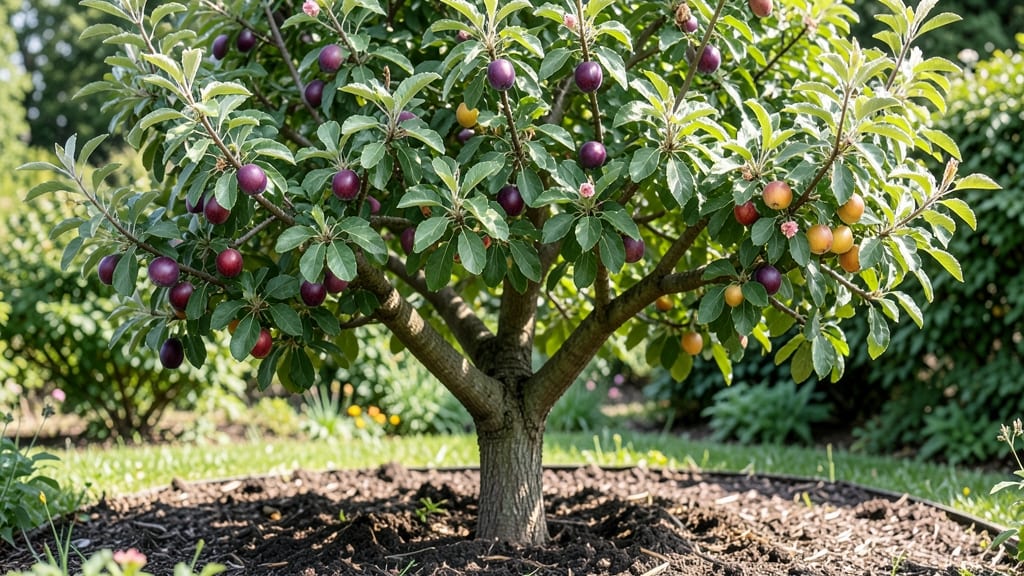
A plum tree can grow how tall it does from a compact 8 feet to a towering 30 feet, depending on the variety and how you prune it 🍑.
If you dream of harvesting juicy plums but lack the yard space for a towering fruit tree, you’ll be relieved to know dwarf and semi-dwarf varieties thrive in small gardens—some barely reaching waist height.
Standard plum trees can easily dwarf your backyard, while dwarf varieties fit neatly into a patio or balcony. Knowing the right size for your space means choosing the perfect variety, spacing it correctly, and pruning it to keep it manageable.
Below, I’ll break down the height differences between dwarf, semi-dwarf, and standard plum trees, plus the best space-saving options and pruning tips to keep your tree healthy and productive.


Plum tree height guide: dwarf vs semi-dwarf vs standard varieties
Choosing the right plum tree size is crucial for maximizing fruit production while fitting your garden space. The height of a plum tree depends entirely on its rootstock type, which determines whether it grows as a dwarf (6-12 ft), semi-dwarf (12-18 ft), or standard (20-30 ft) variety.
Understanding these differences helps you select the perfect tree for your yard or container garden.
Dwarf plum trees are ideal for small gardens, patios, or even large containers, while standard varieties dominate large landscapes. The rootstock (the underlying root system) controls growth vigor—dwarfing rootstocks like St. Julian A or Pixy keep trees compact, while vigorous rootstocks like Lovell or Marianna 2624 produce towering trees.
Let’s break down the key differences so you can plan your plum tree’s future height.
🌱 Visual Comparison: Below is a side-by-side look at how dwarf, semi-dwarf, and standard plum trees compare in mature height, spacing needs, and growth rates.
The dwarf varieties are the most space-efficient, making them perfect for urban gardens or even large pots. For example, the 'Santa Rosa' plum tree on Pixy rootstock typically stays under 8 feet tall, while the 'Methley' plum on the same rootstock rarely exceeds 10 feet.
These compact trees also produce fruit earlier—often within 2–3 years—compared to standard varieties.
Semi-dwarf plum trees strike a balance, offering larger canopies and higher yields than dwarfs but staying manageable in most home landscapes. Varieties like 'Larry Del' or 'Shiro' on Marianna 2624 rootstock reach 15–18 feet at maturity, requiring 12–15 feet of spacing for optimal airflow and sunlight.
This makes them ideal for backyard orchards where you want both productivity and aesthetics.
Standard plum trees, like the 'Stanley' or 'Burbank' varieties, grow 20–30 feet tall and need ample space to thrive. These trees are best suited for rural properties or orchards where their full height can be accommodated.
Their vigorous growth and large canopies produce bumper crops but require regular pruning to maintain shape and prevent disease.
When selecting a plum tree, consider not just its mature height but also its growth rate and fruiting habit. For instance, Japanese plums (like 'Methley') often grow faster than European varieties and may need annual pruning to control height.
Meanwhile, hybrid plums (such as 'Larry Del') combine the best traits of both, offering disease resistance and compact growth.
Pro tip: Always check the rootstock compatibility with your climate. Some rootstocks, like Myrobalan, are more drought-tolerant, while others, like Pixy, thrive in moist, well-draining soil. Matching your rootstock to your USDA hardiness zone ensures healthier growth and longer tree life.
If you’re growing plums in containers, opt for dwarf varieties on Pixy or St. Julian A rootstock. A 15–20 gallon pot is ideal for these trees, and they’ll reward you with abundant fruit while staying under 6 feet tall.
Just ensure the container has drainage holes and use a high-quality potting mix to prevent root rot.
Remember, even dwarf trees benefit from proper pruning to encourage airflow and sunlight penetration. Regularly remove suckers (shoots growing from the base) and crossing branches
Best space-saving plum trees under 15 feet for small gardens
If you love plums but have limited space, these compact varieties prove you don't need a sprawling orchard to enjoy homegrown fruit. I've grown several of these space-saving plum trees in my own backyard, and they consistently deliver sweet rewards while staying neatly contained.
The key is selecting the right dwarf or semi-dwarf varieties that mature between 8-15 feet tall, making them perfect for small gardens, patios, or even large containers.
Most of these varieties thrive in USDA Zones 5-9 and produce fruit in 2-3 years after planting. They require the same care as larger plum trees but with significantly less space.
For container growing, I recommend using 20-gallon pots with drainage holes and high-quality potting mix to prevent root bound conditions.