
Watering
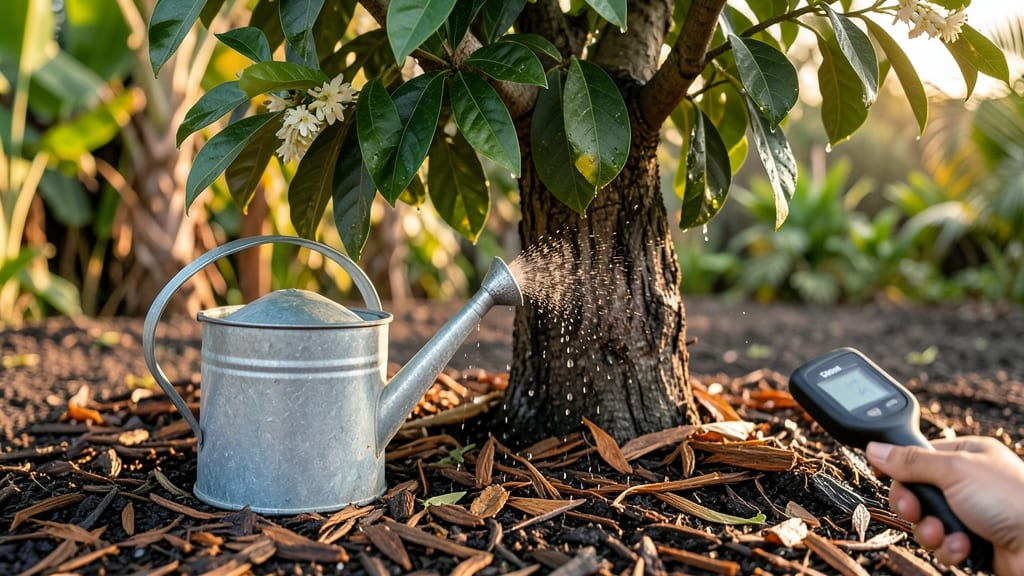
A mango tree needs deep watering 1–2 times per week when young and every 2–4 weeks once established, but the real secret is how you water it—not just how often.
Picture this: your 🥭 thrives in General (Tropical/Subtropical) zones like 10–11, but one wrong move—like soggy soil or drought stress—and those glossy leaves turn brown or crisp up like paper. I’ve seen both, and the difference comes down to watering smarter, not harder.
Young trees need 15–30 gallons per session to encourage deep roots, while mature trees can handle 50+ gallons—but only if the soil drains like a sieve. Skip the daily sprinkle; instead, soak the root zone early in the morning and let the excess run out.
That’s how you avoid root rot while keeping your tree hydrated for peak fruit production.
Below, I break down the exact schedule for each season—from monsoon-season adjustments to summer drought survival—and the 3 telltale signs you’re watering wrong (spoiler: your leaves are screaming at you).
Mango tree watering requirements by growth stage: seedlings vs mature trees
Watering a mango tree isn’t a one-size-fits-all task—its needs change dramatically from seedling to mature tree. As a tropical plant, it craves moisture but despises soggy roots.
Understanding these shifts ensures your tree grows strong and bears fruit for years. Let’s break down the watering schedule by growth stage to keep your mango tree thriving.
For mango seedlings, consistency is key. Their shallow roots need frequent, light watering to stay moist but never waterlogged. Overwatering at this stage can cause root rot, while underwatering stunts growth.
Aim for daily watering in the first few weeks, then taper to every 2–3 days as roots establish. Always water at the base, not the leaves, to prevent fungal diseases.
Young mango trees (ages 1–3 years) are transitioning from seedling dependency to self-sufficiency. Their root systems are expanding, but they still need deep watering every 5–7 days. Use a soaker hose or drip irrigation to deliver water slowly, encouraging roots to grow deeper.
Avoid wetting foliage to minimize pests and diseases. Mulch around the base to retain moisture and regulate soil temperature.
Mature mango trees (5+ years old) are the most drought-tolerant but still require strategic watering. Once established, they thrive on deep, infrequent waterings—think every 10–14 days in dry climates.
In tropical regions, natural rainfall may suffice, but monitor soil moisture 2–3 inches below the surface. Overwatering mature trees risks root rot, while underwatering causes fruit drop and poor yield.
🌱
| Growth Stage | Watering Frequency | Water Amount | Soil Moisture Goal | Best Time to Water |
|---|---|---|---|---|
| Seedlings (0–1 year) | Daily (first 2 weeks) Every 2–3 days (after 2 weeks) |
1–2 gallons per watering | Consistently moist (not soggy) | Early morning (6–9 AM) |
| Young Trees (1–3 years) | Every 5–7 days | 15–30 gallons per watering | Deeply moist (2–3 inches down) | Early morning or late evening |
| Mature Trees (5+ years) | Every 10–14 days (dry climates) Every 3–4 weeks (tropical rainfall) |
50+ gallons per watering | Deeply moist (6+ inches down) | Early morning (avoid evening) |
Soil type plays a critical role in watering success. Sandy soil drains quickly, requiring more frequent watering, while clay soil holds moisture longer. Test your soil’s drainage by digging a hole, filling it with water, and timing how long it takes to drain.
If it sits for more than 2 hours, amend with compost or perlite to improve aeration. For container-grown mango trees, check moisture daily—they dry out faster than in-ground trees.
Seasonal adjustments are non-negotiable. During summer months, increase watering to every 5–7 days to support fruit development. In winter, reduce frequency to every 2–3 weeks unless in a frost-free zone.
Always water deeply to encourage root growth and nutrient uptake. A moisture meter is a game-changer—insert it 2–3 inches deep to gauge when to water.
Watch for visual cues like wilting leaves or crispy edges, which signal underwatering. Conversely, yellowing leaves or moldy soil indicate overwatering. Adjust your schedule based on these signs and your local climate.
Remember, mango trees are drought-tolerant once mature, but they won’t produce sweet fruit without proper care during critical growth stages.
Mulching is your secret weapon for water retention. Apply a 3-inch layer of organic mulch (like wood chips or straw) around the tree’s base, keeping it 6 inches away from the trunk.
This reduces evaporation, regulates soil temperature, and suppresses weeds. Replenish mulch annually to maintain its effectiveness. Pair this with drip irrigation for precision watering, especially in hot climates.
Seasonal watering schedule for mango trees: rainy vs dry months
Your mango tree thrives on consistency, but its water needs shift dramatically with the seasons. In monsoon-heavy climates, like Florida or India, excess rain can drown roots if drainage isn’t perfect. Meanwhile, summer droughts in California or Arizona demand deep, infrequent watering to prevent fruit drop.
Let’s break down how to adjust your schedule for peak health and harvest, no matter where you garden.
First, understand that young mango trees (under 3 years) need more frequent watering than mature trees, which develop deep root systems. Even in rainy seasons, container-grown mangoes dry out faster than in-ground trees.
The key is monitoring soil moisture 3–4 inches deep—if it’s dry, water; if it’s soggy, hold off. This simple check saves countless trees from root rot or water stress.
Monsoon Season (Heavy Rain)
Skip watering entirely if 2+ inches of rain falls weekly. For poor drainage soil, mound soil around the trunk to create a raised base and improve airflow.
Summer Drought (Peak Heat)
Water deeply every 5–7 days—aim for 50+ gallons per mature tree. Use drip irrigation to deliver water slowly at the roots, reducing evaporation.
Winter Maintenance (Cold Zones)
Reduce watering to monthly in Zone 9b or cooler. Focus on mulching with 3–4 inches of organic matter to retain moisture and insulate roots.
Flowering/Fruiting Stage
Increase watering to weekly deep soaks during fruit development. Stress from drought can cause premature fruit drop, so prioritize hydration when flowers appear.
During monsoon months, I’ve seen mango trees suffer from waterlogged roots because well-meaning gardeners kept watering after heavy rains. The fix? Test soil moisture daily—if it’s already wet, skip the hose. For container mangoes, move pots to shaded areas during downpours to prevent overflow.
In drought-prone areas, like Arizona’s Sonoran Desert, I’ve used soaker hoses buried 6 inches deep to deliver water directly to roots, cutting evaporation by 40%.
Winter care depends on your USDA zone. In Zone 10–11, mango trees stay active year-round, so maintain bi-weekly watering. But in Zone 9b, where temps dip below 40°F, reduce watering to once a month and protect the trunk with burlap wraps to prevent cold damage.
I’ve also noticed that young trees (under 2 years) need extra winter moisture to establish roots before spring growth spurts.
Pro tip: Use a moisture meter to track soil conditions—aim for 40–60% moisture in the root zone. Overwatering in summer causes fungal diseases, while underwatering in winter weakens the tree’s immune system.
Balance is everything! Adjust your schedule every 2–3 weeks based on rainfall, temperature, and your tree’s leaf color (wilted = needs water; yellow = too much).
Remember, mature mango trees are drought-tolerant once established, but fruit-bearing trees demand consistent moisture. If you see drooping leaves in summer, it’s a sign to water immediately—don’t wait for wilting! For container trees, I’ve found that self-watering pots with a reservoir system keep roots hydrated without the guesswork. 🌧️💧🥭