
Pruning
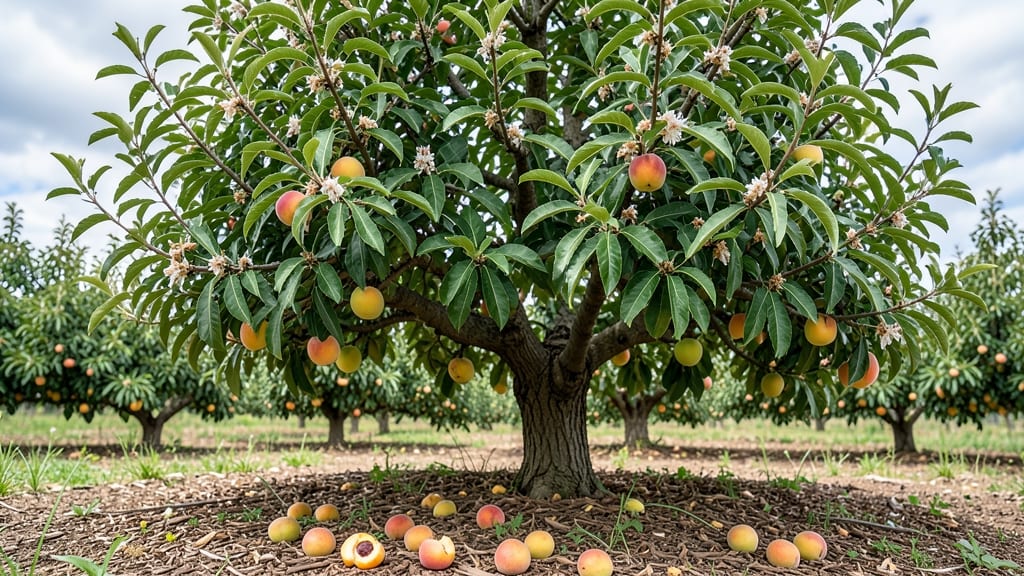
When your peach tree drops fruit too early, it’s not just frustration—it’s a clear signal your tree is overloaded. 🌳 I’ve seen this happen after heavy spring rains or when branches sag under too many blossoms, and the solution always starts with understanding why it’s happening and how to fix it.
The root causes are usually too much fruit for the tree’s energy, poor watering, or sudden temperature swings. Peach trees naturally drop excess fruit to focus on growing the healthiest remaining ones, but when they’re stressed, they drop too many too soon.
The key is balancing the load through pruning, consistent watering, and sometimes even thinning fruit by hand.
You’ll end up with fewer but larger, sweeter peaches that stay on the tree until they’re perfectly ripe. The first step is pruning in late winter to open the canopy for better airflow and sunlight, which reduces stress.
After that, it’s about monitoring water levels and protecting the tree from pests that weaken it further.
This works for both young trees and established ones, though older trees may need more aggressive pruning. If your tree keeps struggling year after year, it might be time to consult an arborist—but don’t give up just yet.
With the right approach, you can turn that fruit drop into a bountiful harvest.
Root Causes Behind Fruit Drop
Understanding why peaches prematurely fall from the tree is the first step to preventing it. Fruit drop in peach trees is rarely a single issue—it’s usually a combination of environmental stress, physiological imbalances, or poor cultural practices.
Below, we break down the key triggers behind excessive fruit loss, so you can address them before they impact your harvest.
Peach trees are sensitive to rapid temperature swings, especially during bloom and early fruit set. Here’s how heat or cold stress triggers fruit drop:
- Late Frosts or Freezes 🥶 - Peach blossoms are highly vulnerable to frost damage, which kills pollen or ovules.
If frost hits after pollination, young fruitlets (1–2 weeks old) may abort due to hormonal signals (ethylene release) telling the tree to "reset." - Actionable fix: Monitor frost forecasts and use frost cloths or smoke generators to protect blossoms.
- Heat Waves During Pollination - Temperatures above 90°F (32°C) during bloom can sterilize pollen, leading to poor fruit set.
Even if fruit forms, high daytime temps + cool nights disrupt sugar metabolism, causing premature abscission (fruit drop). - Actionable fix: Provide shade cloth (30–50%) during peak heat or irrigate soil to moderate root-zone temps.
- Spring Freezes After Fruit Set - A hard freeze 2–4 weeks post-bloom can damage fruit tissue directly, leading to watercore (internal browning) and drop.
Alternatively, the tree may sacrifice weak fruit to conserve energy. - Actionable fix: Use row covers or overhead sprinklers (which create ice crystals to insulate buds).
Peach trees have a limited energy budget, and when branches are overloaded with fruit, the tree prioritizes survival over yield. Here’s how it happens:
- Thinning Was Skipped or Done Too Late - Without manual or natural thinning, trees produce too many fruitlets, leading to competition for nutrients.
The tree abscises (drops) weaker fruit to save energy for the strongest remaining ones. - Actionable fix: Thin fruit 2–3 times during the season (see our [thinning guide](#) for exact timing).
- Inadequate Pollination - Peaches are self-pollinating but inefficient—wind or bees must transfer pollen.
If humidity is high (>85%) or bees are scarce, fruit set drops by 30–50%, causing blank clusters (no fruit) or early drop. - Actionable fix: Plant bee-friendly flowers nearby or hand-pollinate with a small brush if bees are absent.
- Branch Overload from Aggressive Fertilization - Too much nitrogen (N) without balanced phosphorus (P) and potassium (K) leads to luxuriant foliage but weak fruit attachment.
The tree can’t support the load, causing June drop (peak shedding 4–8 weeks post-bloom). - Actionable fix: Use a balanced 10-10-10 or 8-3-9 fertilizer and avoid late-season N spikes.
Peach trees need consistent moisture and nutrients to retain fruit. Any imbalance triggers hormonal signals that cause drop.
- Drought or Overwatering - Underwatering: Causes small, hard fruit that drops due to poor cell expansion.
Roots can’t supply enough auxin (a fruit-retention hormone). - Overwatering: Leads to root suffocation, reducing nutrient uptake and causing fungal issues (like brown rot) that weaken fruit attachment. - Actionable fix: Deep water 1–2x/week (1–2 inches per week) and mulch heavily to retain moisture.
- Boron or Calcium Deficiency
- Boron is critical for cell wall strength—deficiency causes brown heart (internal breakdown) and drop.
- Calcium prevents blossom end rot (a common peach issue) and weakens fruit structure.
- Actionable fix: Apply borax (1 tbsp/gal water, foliar spray) or calcium nitrate during bloom if soil tests are low.
- Potassium Shortage
- Low potassium (K) reduces fruit firmness and disease resistance, making fruit more prone to drop from pathogens or physical stress.
- Actionable fix: Use potassium sulfate or wood ash (sparingly) to boost K levels.
Fungal infections and pests directly damage fruit, forcing the tree to drop infected or infested peaches before harvest.
- **Brown Rot (Monilinia fructicola)
- Actionable fix: Apply copper fungicide at pink bud and petal fall, then remove dropped fruit to reduce spores.
Pro Tip: 💡 Keep a harvest journal to track when fruit drop spikes—this helps pinpoint whether it’s environmental (heat/frost), biological (disease), or cultural (thinning/fertilizer) related**. Adjust next season’s care accordingly!
Fixing Excessive Fruit Drop
Peach trees may drop fruit for many reasons, but the good news is that most causes have straightforward fixes—many of which also prevent future issues. Below, we’ve mapped the most common triggers to actionable solutions, including quick fixes and long-term strategies to keep your tree productive and healthy.
Problem: Too many fruits on a single branch strain the tree’s resources, leading to premature drop.
How to Fix It:
- Thin the Fruit Early 🍑✂️
- Remove 30–50% of young fruit (peach-sized) when they’re still small (3–4 weeks after bloom). Focus on keeping the largest, healthiest fruits spaced 4–6 inches apart.
- Why? This reduces competition for water/nutrients and improves air circulation.
- Prune for Balance 🌿🔪
- In late winter (dormant season), prune to open the canopy. Remove:
- Crossing or rubbing branches.
- Weak, inward-growing shoots.
- Dead or diseased wood.
- Aim for an open-center shape to let sunlight and air reach the center.
- In late winter (dormant season), prune to open the canopy. Remove:
- Fertilize Strategically 🌱💪 - Apply a balanced fertilizer (10-10-10 or 12-12-12) in early spring before blooming. Avoid high-nitrogen fertilizers after fruit sets—this encourages leafy growth over fruit. - Pro Tip: 💡 Test your soil first!
Peaches thrive in slightly acidic soil (pH 6.0–6.5). Adjust with lime (to raise pH) or sulfur (to lower it) if needed.
Prevention:
- Monitor Bloom Load 📅🌸: If your tree blooms heavily one year, expect a drop. Thin aggressively in subsequent years to balance the load.
- Avoid Late Fertilizer ⏰: Stop fertilizing 6–8 weeks before harvest to redirect energy to fruit retention.
Problem: Drought or uneven watering causes fruit to shrivel and fall.
How to Fix It:
- Deep Watering Routine 💦🌊
- Water deeply 1–2 times per week (not daily shallow watering). Aim for 1–1.5 inches of water per session.
- Use drip irrigation or soaker hoses to deliver water directly to the root zone (6–12 inches deep).
- Mulch Properly 🍂🌿
- Apply 3–4 inches of organic mulch (wood chips, straw) around the base (keep mulch 6 inches away from the trunk).
- Why? Mulch retains moisture, regulates soil temperature, and reduces evaporation.
- Check for Root Issues 🌱🔍
- If the tree is young or recently transplanted, root barriers or compacted soil may limit water uptake. Loosen soil gently with a garden fork if needed.
Prevention:
- Install a Rain Gauge 🌧️📏: Track rainfall to adjust watering during dry spells.
- Avoid Overwatering 🚫💦: Soggy soil leads to root rot. Water only when the top 2 inches of soil are dry.
Problem: Fungal infections weaken the tree, causing fruit to drop prematurely.
How to Fix It:
- Prune for Airflow 🌬️🍃
- Remove suckers, water sprouts, and dense foliage to improve airflow. Fungus thrives in humid, shaded conditions.
- Apply Fungicides 🛡️🍄
- Preventive Spray: Use copper fungicide or neem oil during bud swell and again after petal fall.
- Cure Spray: If brown rot is present, spray thiophanate-methyl (e.g., Cleary’s 3336) before rain to protect blossoms and young fruit.
- Clean Up Debris 🧹🍂
- Remove fallen leaves, mummies (infected fruit), and prunings from the orchard. Burn or compost them away from the tree.
Prevention:
- Plant Resistant Varieties 🌱🛡️: If brown rot is recurrent, try cultivars like ‘Redhaven’ or ‘Sanguine’ (moderately resistant).
- Avoid Overhead Watering 🚫💦: Water at the base, not the leaves, to reduce fungal spores.
Problem: Poor pollination leads to small, misshapen fruit that drops early.
How to Fix It:
- Hand-Pollinate 🐝👨🍳
- If bees are scarce, use a soft paintbrush to transfer pollen from one flower to another on calm, dry days.
- Plant Companion Trees 🌳🍑
- Add a pollinator-friendly tree (e.g., almond, apricot, or another peach variety) nearby to attract bees.
- Check Flower Timing ⏰🌸
- Peaches need cross-pollination (different varieties). If your tree is the only one blooming, plant a second variety that blooms at the same time.
Prevention:
- Avoid Pesticides During Bloom 🚫🐝: Chemicals like neonicotinoids kill bees. Use organic sprays or hive-friendly pesticides instead.
- Provide Bee Habitat 🏡🐝: Plant bee-friendly flowers (lavender, clover, sunflowers) near the tree.
Problem: Temperature swings (late frosts, heatwaves) shock the tree and cause fruit drop.
How to Fix It:
- Protect from Frost ❄️🔥
- Cover young trees with frost cloth on nights when temps drop below 28°F.
- Use row covers or overhead sprinklers (which create ice crystals for insulation).
- Provide Shade Cloth ☀️🌿
- If your region has scorching summers, drape 30–50% shade cloth over the tree during peak heat (10 AM–4 PM).
- Mulch Thickly 🍂🌡️
- Increase mulch depth to 4–6 inches to regulate soil temperature.
Prevention:
- Choose Cold-Hardy Varieties ❄️🍑: If you’re in a short-season climate, opt for ‘Relenta’ or ‘Contender’ (tolerate late frosts).
- Monitor Forecasts 📊⚠️: Sign up for local frost alerts to act quickly.
Problem: Pests damage fruit, leading to drop.
How to Fix It:
- Target-Specific Pests 🎯🐜
- Aphids: Spray with soapy water (1 tbsp mild soap per gallon) or neem oil.
- Peach Tree Borers: Apply borax bait (1 tbsp borax + 1 gallon water) to the base in early spring.
- Curculio Weevils: Use kaolin clay spray (e.g., Surround WP) to deter egg-laying.
- Install Pest Barriers 🛡️🌳
- Wrap the trunk with tree wrap to prevent borers from tunneling in.
Prevention:
- Encourage Beneficial Insects 🐞🐝: Ladybugs and lacewings eat aphids. Plant dill, fennel, or marigolds nearby.
- Remove Infested Fruit 🧹🍑: Pick up dropped fruit daily to stop pest cycles.
Problem: Lack of key minerals weakens fruit attachment.
How to Fix It:
- Soil Test First 📊🌱: Identify deficiencies with a home soil test kit or lab analysis.
- Apply Micronutrients 💊
Frequently asked questions
Why does my peach tree drop so many fruits right after blooming?
This is called "June drop" and is actually natural! Peach trees produce way more blossoms than they can support, so they drop about 50-75% of young fruit to focus energy on developing the healthiest remaining ones. The key is ensuring your tree has enough water, nutrients, and sunlight to support what remains.
How can I tell if my tree is dropping fruit because of pests or environmental stress?
Check for holes, chew marks, or webbing on dropped fruit (pests) or small, shriveled peaches (drought/heat stress). If you see brown rot mummies (mummified fruit), that's a fungal issue. Environmental stress often happens after sudden temperature swings or during drought periods.
Is it too late to save my peaches if they're already dropping?
Not necessarily! If you catch it early, focus on deep watering (1-2 inches per week) and thinning remaining fruit to 4-6 inches apart. For pest issues, apply targeted sprays like neem oil or kaolin clay. The tree can still recover if you address the root cause quickly.
Should I fertilize my peach tree if it's dropping fruit?
Only if you've tested your soil first! Too much nitrogen after bloom actually worsens fruit drop by encouraging leaf growth over fruit. Instead, use a balanced 10-10-10 fertilizer in early spring, and avoid fertilizing 6-8 weeks before harvest to redirect energy to fruit retention.
Will pruning help prevent fruit drop next year?
Prune in late winter to remove crossing branches, dead wood, and water sprouts, which improves airflow and sunlight penetration. This reduces stress and fungal diseases that contribute to fruit drop. Aim for an open-center shape to let light reach the center of the tree.