
How To
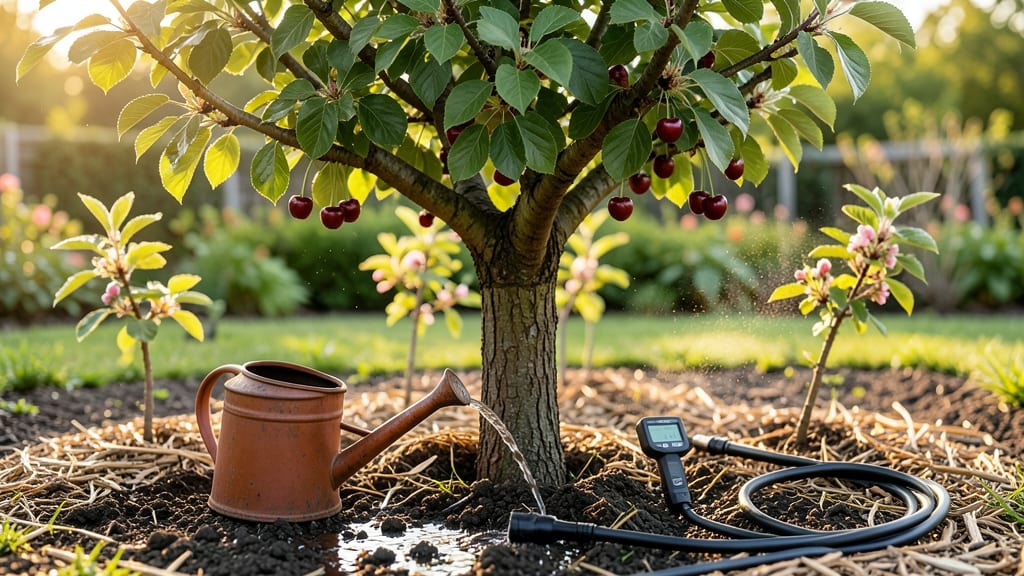
A cherry tree 🍒 needs 1 to 2 inches of water per week during its growing season to thrive—and getting this right makes all the difference between a lush harvest and a struggling sapling.
Struggling to keep your cherry tree healthy? Overwatering or underwatering can spell disaster for its fruit production and longevity—here’s the exact seasonal watering schedule you need.
Young trees in USDA Zone 6a planted in spring need consistent moisture to establish roots, while mature trees can handle slightly drier conditions once established. The key is checking soil moisture before watering—stick your finger an inch deep, and if it’s dry, it’s time to hydrate.
In this guide, you’ll discover how to adjust watering for summer heat, winter dormancy, and soil types, plus how to spot signs of thirst or overwatering before they damage your tree.
Cherry tree watering requirements by season: a detailed breakdown
Understanding how much water a cherry tree needs is crucial for its health and fruit production.
Unlike many plants, cherry trees have seasonal watering needs that shift dramatically from spring planting to winter dormancy. Overwatering or underwatering can lead to root rot, leaf scorch, or poor fruit set—so let’s break it down by season to keep your tree thriving.
Newly planted cherry trees require the most frequent watering because their roots struggle to reach deep moisture. Mature trees, on the other hand, develop extensive root systems that need less frequent but deeper watering.
The key is monitoring soil moisture and adjusting based on weather conditions. For example, a hot, dry summer may require daily checks, while a cool, rainy spring might need adjustments to prevent soggy soil.
In spring, your cherry tree’s roots are establishing themselves, so consistent moisture is critical. Aim for 1-2 inches of water per week, but increase this during drought conditions.
Use a soil moisture meter or the "finger test"—insert your finger 2 inches deep; if it feels dry, it’s time to water. Mulch around the base with wood chips to lock in moisture and regulate soil temperature.
When summer arrives, your cherry tree enters its fruiting phase, demanding the most water of any season. During peak heat, water every 3-4 days, delivering 10-15 gallons per session to encourage deep root growth.
Avoid wetting the leaves or fruit to prevent fungal diseases like brown rot. Early morning watering minimizes evaporation and gives foliage time to dry.
As fall approaches, reduce watering to prepare the tree for dormancy. By October, cut back to bi-weekly watering and taper off completely by first frost.
Overwatering in fall can weaken roots and make the tree vulnerable to winter stress. Instead, focus on mulching heavily (3-4 inches) to insulate roots from freezing temperatures.
Winter is the dormant season, so your cherry tree needs minimal water—only monthly checks if there’s no snow cover. Overwatering can lead to root suffocation in cold, waterlogged soil.
If your region experiences freezing temperatures, avoid disturbing the soil around the tree’s base to protect delicate roots from temperature fluctuations.
Watch for signs of stress like yellowing leaves, premature leaf drop, or cracked soil, which indicate underwatering. Conversely, mushy roots or fungal growth at the base signal overwatering. Adjust your schedule based on these cues—your cherry tree’s health depends on balancing moisture with its natural growth cycles.
Pro tip: Use a drip irrigation system for mature trees to deliver water slowly and evenly to the root zone. This method reduces runoff and ensures consistent moisture without wetting the foliage. For young trees, a soaker hose placed at the drip line is ideal for gentle, deep hydration.
Remember, cherry trees thrive on routine. Sticking to a seasonal watering schedule tailored to your climate and soil type will yield healthier trees, better fruit production, and fewer pests. With these guidelines, your cherry tree will flourish for decades to come! 🌱💧
How to water a mature cherry tree without overdoing it
A mature cherry tree thrives with deep, infrequent watering rather than frequent shallow soaks. Overwatering suffocates root systems, while underwatering stresses the tree during fruit production. The key is replicating natural rainfall patterns—1-2 inches per week—while adjusting for your local climate and soil type.
I’ve learned the hard way that drip irrigation or soaker hoses are your best friends for mature trees. They deliver water directly to the root zone (the area extending 12-18 inches from the trunk) without wetting the foliage, which reduces disease risk.
For trees over 10 years old, aim for 5-10 gallons per watering session, depending on soil drainage.
⚠️ callout-warning ⚠️
A mature cherry tree needs 1-2 inches of water weekly—but sandy soil drains faster (may need daily checks in summer), while clay soil holds moisture longer (reduce to bi-weekly). Yellowing leaves or mushy bark? You’re overdoing it! Test soil moisture by sticking your finger 3-4 inches deep—if it’s damp, wait.
Mulching is a game-changer for water retention and root protection. Apply a 3-inch layer of organic mulch (wood chips or straw) around the drip line, keeping it 6 inches away from the trunk to prevent rot.
This layer helps regulate soil temperature and reduces evaporation, so you’ll water 30% less during peak summer months.
During drought conditions, increase watering to every 3-4 days but monitor for leaf scorch (brown edges). If your tree is container-grown, water when the top 2 inches of soil feel dry—containers dry out 3x faster than in-ground plantings.
Always water in the early morning to allow foliage to dry before nightfall, preventing fungal infections like powdery mildew.
Adjust your watering routine seasonally: spring calls for weekly deep waterings as roots establish, summer demands every 3-4 days during fruiting, and fall/winter can drop to monthly as the tree enters dormancy.
A moisture meter ($20 at garden centers) takes the guesswork out of it—aim for 40-60% moisture at the root zone.
Pro tip: Group watering sessions with other garden tasks to avoid inconsistency. Set a weekly reminder on your phone for summer months, and always water slowly to encourage deep root penetration.
With these adjustments, your cherry tree will reward you with juicier fruit and longer lifespan—no soggy roots required! 🌱