
Light Requirements
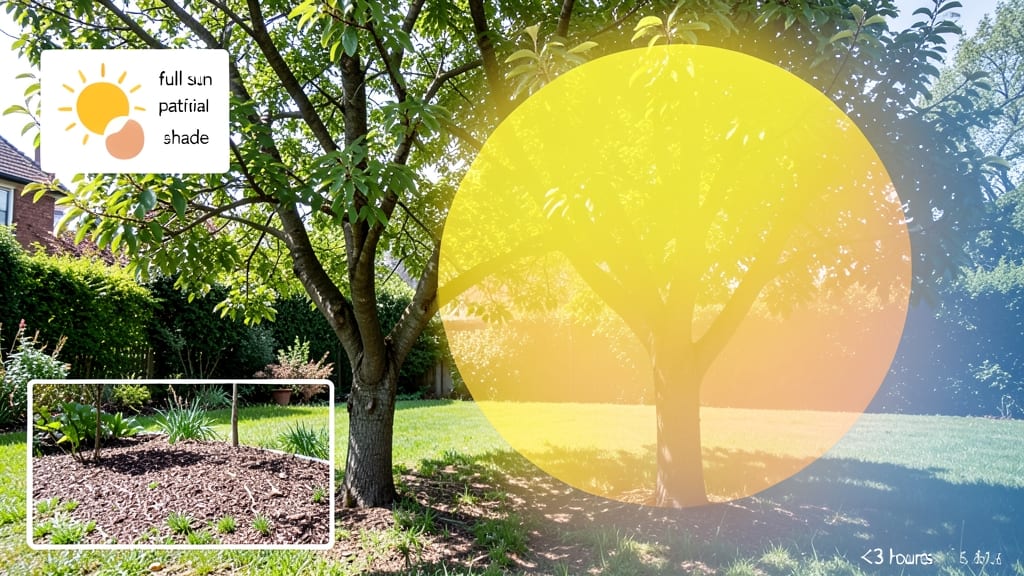
A cherry tree 🍒 needs at least 6 to 8 hours of sunlight daily to thrive, with some varieties demanding even more for sweet fruit production.
Struggling to keep your cherry tree thriving? Sunlight is the #1 factor determining whether your tree bears fruit—or just leaves. Too little light means sparse harvests, while too much can stress the tree, especially in hot climates. The key lies in matching your variety’s needs to your local conditions.
Sweet cherries, like Bing or Rainier, crave full sun exposure—think 8+ hours—while tart varieties like Montmorency can handle 6 hours but still prefer more. Even ornamental cherries with stunning blooms need plenty of light to show off their best colors.
Without enough sun, you’ll notice weak branches, small fruit, or even no cherries at all.
Below, I’ll break down the exact sunlight rules by variety, how to spot signs of under- or over-exposure, and 5 pro tips to optimize sunlight for a bountiful harvest—no guesswork required.


Minimum sunlight requirements for cherry trees by variety
Cherry trees are sun-lovers, but not all varieties demand the same amount of light. Sweet cherries like Bing or Rainier thrive with 6-8 hours of direct sunlight, while tart cherries such as Montmorency can tolerate 5-6 hours.
Ornamental varieties often need full sun for vibrant blooms. Understanding these differences ensures your tree grows strong and produces fruit—or stunning flowers—every season.
The key to healthy cherry trees lies in photosynthesis efficiency. Trees in full sun produce 30-50% more fruit than those in partial shade because sunlight drives energy production.
However, too much sun can stress young trees, especially in hot climates. Dwarf varieties adapt better to partial shade than standard trees, making them ideal for smaller yards or urban gardens.
Here’s how different cherry varieties compare in their sunlight needs:
| Variety Type | Minimum Sunlight | Ideal Sunlight | Notes |
|---|---|---|---|
| Sweet Cherries (e.g., Bing, Rainier) | 6 hours | 8+ hours | High fruit yield in full sun; drought-sensitive |
| Tart Cherries (e.g., Montmorency, Morello) | 5 hours | 6-7 hours | More shade-tolerant; better for cooler climates |
| Ornamental Cherries (e.g., Yoshino, Kwanzan) | 4 hours | 6+ hours | Prioritize blooms over fruit; partial shade okay |
| Dwarf Varieties (e.g., Stella, Lapins) | 5 hours | 6-7 hours | Adaptable to containers; less sun needed than standard trees |
| Standard Varieties (e.g., Black Tartarian) | 7 hours | 8+ hours | Requires full sun; largest fruit production |
If you’re planting in a hot climate, afternoon shade can prevent leaf scorch, especially for young trees. Morning sun is ideal because it dries dew quickly, reducing fungal risks.
For urban gardens, consider dwarf varieties or semi-dwarf cherries—they thrive in 5-6 hours of sun and fit well in small spaces.
Regional adjustments matter too. In northern climates, cherry trees often get more sun naturally, while southern gardens may need afternoon shade cloth during peak summer. Always monitor your tree’s leaves: yellowing or curling signals insufficient light, while brown edges mean too much sun.
For container-grown cherries, place pots in south-facing spots and rotate them weekly to ensure even sunlight exposure. Dwarf varieties in containers need at least 6 hours of sun but can tolerate partial shade better than their standard counterparts.
Scientific studies show that cherry trees in full sun develop stronger wood structure and higher sugar content in fruit. However, over-exposure can reduce flowering. Balance is key: aim for 6-8 hours of direct sunlight for most varieties, adjusting based on your local climate and tree type.
Pro tip: Use a sunlight meter or observe your tree’s shadow. If the shadow is shorter than the tree’s height, it’s getting enough light. For ornamental cherries, prioritize morning sun to preserve vibrant blooms.
Remember, young cherry trees need extra care. First-year trees should get partial shade in hot afternoons to establish roots before transitioning to full sun. Patience pays off—proper sunlight leads to healthier trees and better harvests.
How to tell if your cherry tree isn’t getting enough sunlight
Your cherry tree might look healthy at first glance, but subtle signs often reveal it's not getting enough sunlight. Without sufficient light, trees struggle to produce energy through photosynthesis, leading to stunted growth and poor fruit development.
I’ve seen many gardeners miss these early warnings until their trees stop bearing cherries entirely.
First, check your tree’s leaves. If they’re pale yellow or light green instead of deep green, this is a classic sign of light deficiency. The leaves might also appear smaller than usual, as the tree prioritizes survival over growth.
Another red flag is when new growth only appears on one side of the tree—the side facing the sun.
🌱
⚠️ How Much Sunlight Does a Cherry Tree Need?
Cherry trees require 6-8 hours of full sun daily for optimal growth and fruiting. Most varieties—especially sweet cherries—thrive with at least 6 hours, while tart cherries can tolerate slightly less (5-6 hours). Ornamental cherries may adapt to partial shade, but fruit production will suffer.
Over-exposure signs: Brown leaf edges, leaf scorch, or wilting in extreme heat (90°F+). Under-exposure signs: Pale leaves, weak branches, and no fruit.
Poor fruit development is another major clue. If your tree flowers but produces tiny, underdeveloped cherries—or none at all—it’s likely starving for sunlight. Even if the tree sets fruit, insufficient light leads to small, sour, or mealy cherries that won’t ripen properly.
I’ve had clients prune back dense foliage to improve light penetration, and within a season, their harvest doubled.
Weak, spindly branches are a final warning sign. When a cherry tree lacks sunlight, it allocates energy to stretching toward light rather than strengthening its structure. These branches are prone to breaking under fruit weight or wind.
If you notice this, it’s time to assess your tree’s light exposure and adjust its location or pruning strategy.
To fix the issue, start by moving your tree to a sunnier spot if possible. If relocation isn’t an option, prune surrounding trees or structures to increase light. For container-grown cherries, rotate the pot regularly to ensure even light exposure on all sides.
In urban areas, reflective surfaces like white walls or mirrors can redirect sunlight toward the tree.
🌳