
Blooming
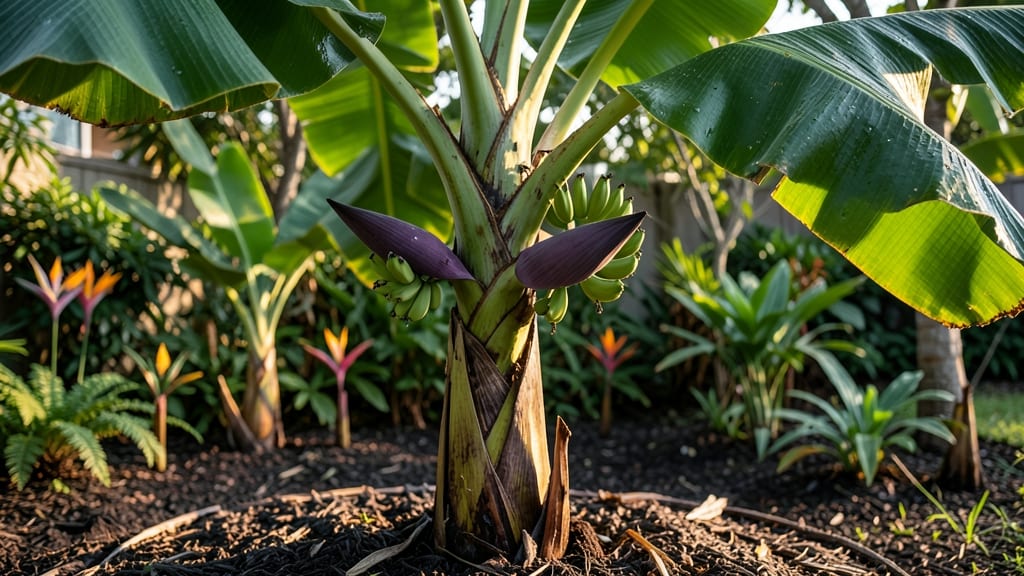
Fruiting a banana tree takes 1-3 years—but that timeline depends on the variety, your climate, and a few care tricks most growers miss.
If you’ve planted a banana tree hoping for sweet, tropical fruit, patience is key—but how long should you realistically wait? The answer depends on the variety, growing conditions, and a few surprising factors that most gardeners overlook.
Dwarf varieties like the Lady Finger 🍌 can produce fruit in as little as 12 months, while larger types may take 3-5 years to bear. The key? Proper sunlight, soil, and pollination—all of which I’ll break down so you can speed up the process.
Below, I’ll cover the exact timeline by variety, the 5 biggest mistakes that delay fruiting, and how to tell when your banana tree is finally ready to harvest.
Banana tree fruiting timeline by popular varieties: fastest to slowest
If you’re dreaming of plucking ripe bananas from your own backyard tree, timing is everything. The banana tree fruiting timeline varies wildly by variety—some produce fruit in as little as 10 months, while others take 3+ years to reach maturity.
Even within the same species, growing conditions can shift your harvest window by months. Let’s break down the fastest and slowest fruiting varieties so you know what to expect.
Most gardeners assume all banana trees follow the same schedule, but that’s a common myth. Dwarf varieties like the Lady Finger can fruit in under a year, while tall, standard varieties like the Gros Michel may never fruit in cooler climates.
Understanding these timelines helps you set realistic expectations and troubleshoot delays. Ready to dive into the specifics?
The Dwarf Cavendish is the fastest fruiting variety, often producing its first bunch in just 10–14 months under perfect conditions. This makes it ideal for container growing in USDA Zones 10–12 or as a houseplant with supplemental grow lights.
If you’re in a cooler zone, opt for Lady Finger—its slightly longer timeline (12–16 months) is still manageable, and its small size makes it perfect for patios or greenhouses.
For those willing to wait, the Ice Cream Banana offers a unique creamy texture and 16–24 months to fruiting. Its semi-dwarf stature (12–18 ft) makes it a great middle-ground option for gardeners with space but not the patience for towering varieties.
The trade-off? You’ll need to protect it from frost if you’re growing it in Zone 9 or cooler.
Standard varieties like Red Dacca and Gros Michel are the slowest to fruit, often taking 2–5 years to produce their first harvest. These giants thrive in tropical climates and can reach heights of 20–40 feet, making them unsuitable for containers.
If you’re in a subtropical zone (like Zone 9–10), these varieties might still fruit, but expect delays of 6–12 months compared to tropical timelines.
Climate plays a huge role in fruiting speed. Banana trees are tropical plants at heart—they need consistent warmth (70°F+) and 12+ hours of daylight to trigger
5 Critical factors that speed up or delay banana tree fruiting
Your banana tree’s fruiting timeline isn’t set in stone—it’s heavily influenced by five key factors you can control. Whether you’re growing a Dwarf Cavendish in a container or a Red Dacca in tropical soil, understanding these elements can cut years off your wait time.
Let’s break down what truly speeds up or slows down fruiting, so you can optimize your care for faster results.
First, temperature is non-negotiable. Banana trees thrive in 75–85°F (24–29°C) conditions. If your climate dips below 60°F (15°C) for extended periods, fruiting will stall entirely.
Even in cooler zones, container-grown trees can fruit faster if you move them indoors during winter months to maintain warmth. Cold snaps can shock the plant, triggering dormancy and delaying flowering by months.
🌱
Insufficient light = stunted growth and delayed flowering. Use grow lights for indoor trees to maintain fruiting potential.
Acidic soil (pH 5.0) locks out nutrients, while alkaline soil (pH 8.0+) causes potassium deficiency—both delay fruiting.
Overwatering suffocates roots, while underwatering stresses the plant. Aim for 1–2 gallons per watering (containers) or 1–2 inches ground.
Prune yellow/damaged leaves to redirect energy to the flower spike. Avoid heavy pruning—it stresses the plant and delays fruiting.
Use a 13-4-5 NPK blend in spring/summer. Potassium triggers flowering—skip it, and your tree may never fruit.
Next, sunlight is the unsung hero of banana tree fruiting. These tropical plants demand full sun (6+ hours daily), but many gardeners underestimate how much light they truly need. If your tree isn’t getting enough, it will focus on leafy growth instead of flowering.
For indoor growers, supplement with a grow light (12–14 hours/day) to mimic tropical conditions. Even partial shade can delay fruiting by 6–12 months.
Don’t overlook soil pH, either. Banana trees prefer a slightly acidic to neutral range of 5.5–7.0. Test your soil—if it’s too acidic (pH 5.0), nutrients like phosphorus and potassium become unavailable, stalling growth.
Conversely, alkaline soil (pH 8.0+) can cause magnesium deficiency, leading to yellowing leaves and poor fruiting. Amend your soil with compost or sulfur to adjust pH gradually.
Your watering habits play a surprising role too. Banana trees love moisture but hate soggy roots. Overwatering leads to root rot, while underwatering stresses the plant, both of which delay flowering.
Water deeply 2–3 times per week (containers) or once weekly (ground), ensuring the top 6 inches of soil dry out slightly between waterings. Morning watering is key—it reduces fungal risks and mimics tropical rain patterns.
Finally, pruning isn’t just about aesthetics—it’s a tool to speed up fruiting. Remove yellow or damaged leaves to redirect energy to the flower spike. However, avoid heavy pruning, as it stresses the plant.
If you must prune, do it in early spring to give the tree time to recover before flowering season. And here’s a pro tip: Never prune more than 25% of the foliage at once, or you’ll push back fruiting by a full year.
By mastering these five factors, you can cut 1–2 years off your banana tree’s fruiting timeline. Start with sunlight and soil pH—these two alone can make or break your harvest. 🌿