
Trees
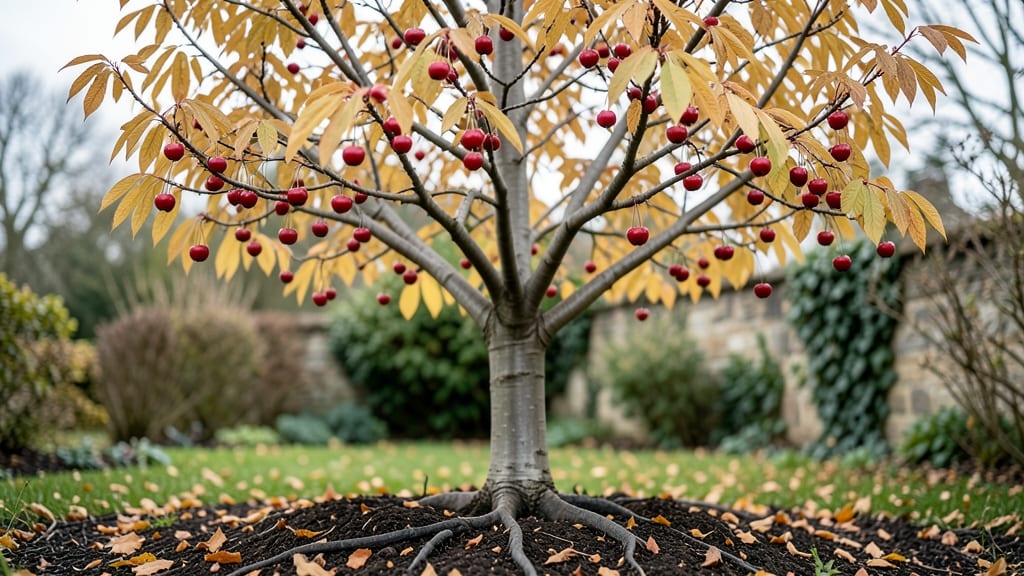
Autumn cherry tree fruit ripens when the skin transitions from green to deep red-orange, yielding slightly to gentle pressure, and emits a sweet, tart aroma. Harvest when fully colored but still firm to avoid overripening or bird damage.
Identifying ripe autumn cherry tree fruit involves watching for three key signals: the skin's vibrant color shift from green to rich red-orange (a sign of chlorophyll breakdown), a gentle give when pressed (indicating peak sugar content), and that distinctive sweet-tart fragrance. 🍒 Unlike summer cherries, which ripen uniformly, autumn cherries develop unevenly across the tree, so check multiple branches daily.
I've found that harvesting in the cooler morning hours preserves their natural sweetness and prevents bruising from heat stress.
Once picked, store cherries in a single layer on a tray in the fridge for up to 5 days—they'll keep their firmness longer this way. For longer storage, freeze them whole on a baking sheet first (to prevent clumping), then transfer to airtight containers.
This method locks in their tart-sweet flavor for pies and sauces even months later. The key is speed: cherries continue ripening after harvest, so don't wait until they're soft and mealy!
💡 In This Article
- Key Visual and Tactile Signs of Ripe Autumn Cherries
- Optimal Harvesting Techniques for Autumn Cherry Trees
Key visual and tactile signs of ripe autumn cherries
The color transformation in autumn cherries is one of nature's most dramatic signals. As the fruit matures, chlorophyll breaks down and anthocyanins—those vibrant red-orange pigments—take over, creating the signature deep hue.
Unlike sweet summer cherries (which stay bright red), autumn varieties develop a rich, almost coppery tone when fully ripe. 🌟 This shift happens because the tree redirects energy from leaf production to fruit development as temperatures drop, triggering pigment production.
Texture provides the next clue: ripe autumn cherries should yield slightly when pressed with your thumbnail (about 1-2 millimeters of give), similar to a perfectly ripe peach. Overripe fruit becomes mushy, while underripe cherries stay rock-hard and lack sweetness.
The stem should also separate cleanly from the fruit—if it resists, the cherry isn't ready. This tactile test is especially important because autumn cherries often ripen unevenly across the tree, with some branches producing fruit 1-2 weeks earlier than others.
The scent is your final confirmation. Ripe autumn cherries emit a sweet-tart aroma that's more pronounced than summer varieties, thanks to higher levels of volatile organic compounds like benzaldehyde (which gives almonds their scent). 🍃 Hold a cluster near your nose—if you detect that distinctive fruity note, it's harvest time.
Pro tip: Birds are drawn to this same aroma, so check trees daily during peak ripening (typically late September to October in most climates) to avoid losing your crop to feathered thieves.
Comparing autumn cherries to their summer counterparts reveals key differences. Summer cherries ripen uniformly and are sweeter, while autumn varieties develop a complex tartness that intensifies when cooked.
Their thicker skins also make them better suited for baking—think of their firmness when ripe as nature's way of saying "preserve me for pies!" This texture contrast explains why autumn cherries are often used in sauces and preserves where summer cherries might turn to mush.
One common mistake is waiting for cherries to detach easily from the stem—a sign of overripeness. The ideal moment is when the fruit is 90-95% colored but still clings firmly.
At this stage, their sugar content peaks at about 12-15% brix (a measure of sweetness), compared to 8-10% brix in underripe fruit. This higher sugar concentration is what gives autumn cherries their signature tart-sweet balance that shines in desserts.
For visual learners, imagine this progression: a green cherry is like an unripe apple, firm and bland; a fully colored but firm cherry is your sweet spot; and a soft, dark cherry is past its prime. 🍒 This color-texture-scent trio works together like a culinary compass, guiding you to harvest at the perfect moment when flavor is at its peak.