
Planting
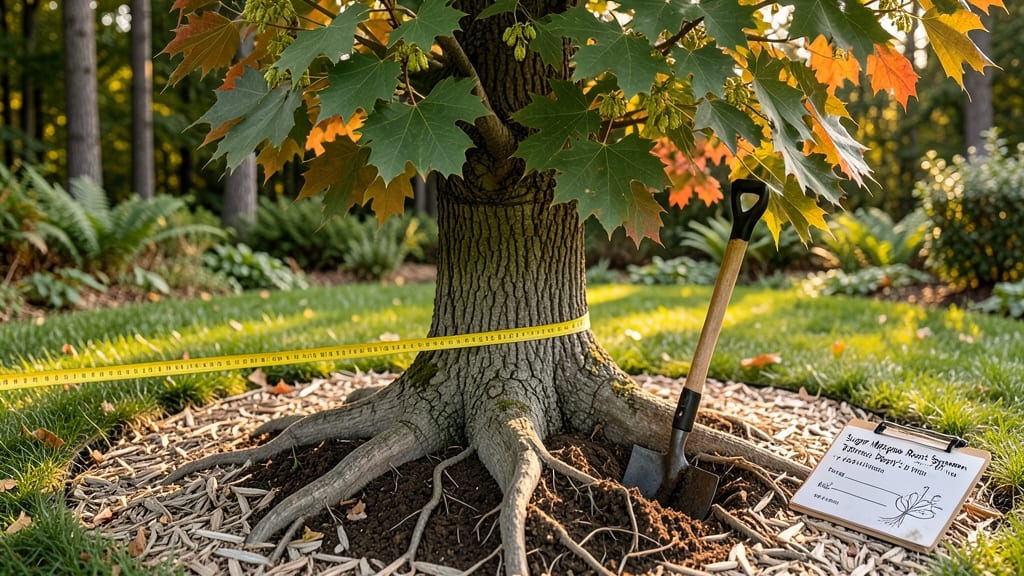
The depth of maple tree roots can reach 3 to 5 feet deep and spread even wider, depending on the species and soil type 🌳 — a fact that’s crucial for planting and landscaping.
Picture this: You’ve just planted your dream maple tree, only to watch it struggle because its roots hit a buried pipe or your driveway. Understanding root depth isn’t just about aesthetics—it’s about protecting your investment and avoiding costly mistakes.
Different maple species, like sugar, silver, or red maple, have unique root behaviors. For example, sugar maples tend to develop deeper roots, while silver maples spread wider and shallower. Soil type also plays a role—clay soils can restrict root growth, while loamy soils encourage deeper penetration.
In this guide, I’ll break down how root depth varies by species, how to plant safely near structures, and the best soil and watering practices to keep your maple tree thriving for decades.
Maple tree root depth by species: sugar, silver, and red maple variations
Understanding maple tree root depth is essential for safe landscaping and property planning. Maple roots vary significantly by species, with sugar maples developing deeper systems than silver maples, which spread aggressively. Even red maples show distinct differences in how they penetrate soil and spread laterally.
These variations directly impact where you plant, how far from structures to place them, and which species suits your soil type.
Young maple trees start with shallow roots, but as they mature, their root systems expand dramatically. A 5-year-old sugar maple may have roots extending 12-18 inches deep, while a mature specimen (30+ years) can reach depths of 3-5 feet or more.
Meanwhile, silver maple roots spread wider than they grow deep, often causing issues with sidewalks and foundations if planted too close. Knowing these patterns helps you avoid costly mistakes like cracked driveways or blocked utilities.
Soil type plays a critical role in root development. Clay soils restrict deep growth, forcing roots to spread horizontally, while loamy soils allow roots to penetrate deeper. Sandy soils drain too quickly, limiting root stability.
Below, we compare the root systems of three common maple species—sugar, silver, and red—to help you choose the right tree for your landscape and soil conditions.
The sugar maple stands out for its deep, taproot system, making it ideal for urban planting where vertical space is limited. Its roots can extend 3-5 feet deep in mature trees, but they spread 25-40 feet wide, so maintain a 30-foot buffer from structures.
This species thrives in loamy, well-drained soils, which allow roots to access nutrients and moisture efficiently.
Silver maples, on the other hand, are notorious for their shallow, aggressive lateral roots. While their mature depth reaches only 2-3 feet, their roots can spread 40-60 feet wide, often lifting sidewalks or invading septic systems. They adapt to moist soils, including clay, but their weak wood makes them prone to storm damage. If you plant a silver maple, allocate at least 50 feet of clearance from buildings and hardscapes.
Red maples strike a balance, with roots reaching 2.5-4 feet deep and spreading 30-50 feet wide. They’re more adaptable than sugar maples, tolerating wet to dry soils, including sandy or slightly acidic conditions. Red maples are excellent for landscapes with moderate space constraints, as their roots are less invasive than silver maples but still require 25-30 feet of clearance from foundations.
For young maple trees, root depth is minimal but grows rapidly. A 5-year-old sugar maple has roots only 12-18 inches deep, while silver maples may reach just 6-12 inches.
During this stage, focus on mulching (3-4 inches of organic mulch) to encourage deeper root growth without smothering the trunk. Avoid compacting soil around the root ball, as this restricts future expansion.
If your soil is clay-heavy, amend it with compost or sand to improve drainage and encourage deeper root penetration. In sandy soils, add organic matter like peat moss or leaf mold to retain moisture and prevent roots from drying out.
Always test your soil’s pH (ideal range: 6.0-7.5) before planting, as extreme pH levels stunt root development.
Pro tip: Use a root-pruning saw when transplanting young maples to minimize root damage. Cut roots that circle the trunk (girdling roots) to redirect growth outward. This technique reduces transplant shock and promotes a healthier root system as the tree matures.
When planning your landscape, consider the 30-3-3 rule: Plant your maple tree 30 feet from structures, maintain a 3-foot mulch ring, and keep the 3-inch gap between mulch and trunk. This spacing prevents root-related damage while supporting long-term tree health.
Soil type impact: how clay, sand, and loam affect maple root systems
Your maple tree’s root system isn’t just influenced by genetics—soil type plays a huge role in how deep and wide those roots grow. Clay soil can smother roots, forcing them to spread shallowly, while sandy soil drains too quickly, limiting nutrient access. Loam, the ideal mix, allows roots to penetrate deeply and spread efficiently.
Understanding your soil’s makeup helps you adjust planting strategies to avoid future headaches like cracked driveways or stunted growth.
Maple trees naturally develop shallow lateral roots that spread horizontally, but their vertical growth depends entirely on soil conditions. In clay-heavy soils, roots may only reach 12-18 inches deep but spread aggressively outward.
Meanwhile, sandy soils force roots to grow deeper—sometimes 3-5 feet—to find moisture and nutrients. Loam, with its balanced texture, encourages roots to grow both deep and wide, creating a stable foundation for your tree.
🌱 Soil Type & Maple Root Depth Guide
Clay
Loam
Sand
12-18"
24-36"
36-60+"
Wide & shallow
Balanced
Deep but sparse
💡 Pro Tip: Test your soil with a $10 home kit or send a sample to your local extension office for precise adjustments.
If your soil test reveals high clay content, focus on improving drainage by amending with organic matter like compost or aged manure. This encourages roots to grow deeper instead of spreading horizontally.
For sandy soils, add peat moss or coconut coir to retain moisture and nutrients, helping roots establish a stronger network. Loam-based soils require minimal adjustments, but a 2-inch layer of mulch protects roots and maintains ideal moisture levels.
Planting depth also matters—maple trees should be placed with their root flare visible above soil level. In clay soils, dig a wider hole to prevent root restriction, while sandy soils need a deeper hole to encourage downward growth.
Always backfill with native soil mixed with compost to create an optimal root zone. This small adjustment can double root penetration in just one growing season.
Monitor your maple tree’s growth patterns after planting. Shallow roots in clay soil may lift sidewalks, while deep roots in sandy soil could disrupt underground utilities. Regularly check for root lift or uneven pavement and adjust mulch or soil amendments as needed.
A healthy root system starts with the right soil foundation—don’t skip this critical step!
For homeowners with mixed soil types, consider planting maples near loam-rich areas of your yard. This ensures the best root development while minimizing potential damage to hardscapes. If your property has compacted soil, aerate before planting to give roots the space they need to thrive.
Your maple’s long-term health depends on these early soil adjustments.