
How To
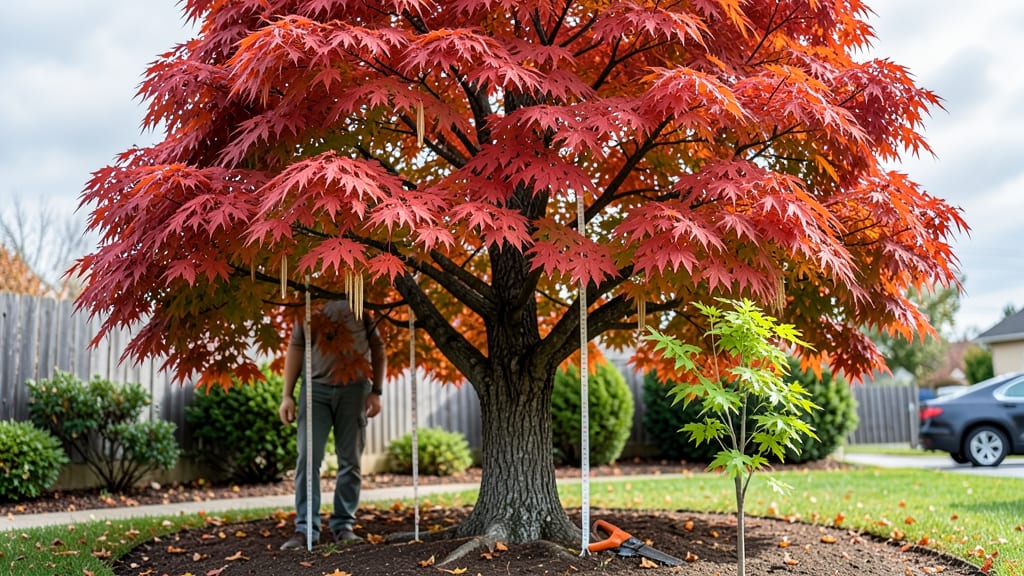
A red maple tree grows how tall does a red maple tree grow between 30 and 60 feet at maturity, but some varieties shoot up faster than others—meaning your yard’s space and sunlight could determine whether you end up with a towering shade giant or a manageable specimen.
If you're dreaming of a stunning red maple tree but worried about space, understanding its mature height is key—some varieties reach towering heights while others stay compact, making them perfect for small yards.
For example, the 'Autumn Flame' variety can top out at 60 feet in ideal conditions, while dwarf options like 'Red Sunset' max out around 20 feet. That difference means the wrong choice could leave you with a tree that outgrows your property—or one that never quite reaches its potential.
Below, I break down the fastest-growing varieties, how to control height with pruning, and whether a red maple’s multi-stemmed or single-trunk growth habit will fit your landscape plans.


Red maple tree height ranges: mature sizes by fastest-growing varieties
When planning your landscape, knowing how tall a red maple tree grows helps you choose the perfect variety for your space. Red maples (Acer rubrum) are stunning shade trees with vibrant fall foliage, but their mature heights vary dramatically—from towering giants to compact specimens.
The fastest-growing varieties can reach 50-70 feet in ideal conditions, while others stay under 30 feet, making them ideal for smaller yards.
Your yard’s size and sunlight exposure will determine which red maple variety thrives best. For example, the 'October Glory' variety is a rapid grower, often reaching 50-60 feet in 20-30 years, while the 'Armstrong' variety grows slightly slower but still hits 40-50 feet.
These differences matter when spacing trees or planning for future growth near structures like houses or driveways.
The 'October Glory' red maple is one of the fastest-growing varieties, often adding 2-3 feet per year in ideal conditions. This makes it a top choice for homeowners who want rapid shade and stunning red-orange fall foliage.
However, its mature height of 50-60 feet means it’s best suited for large properties or as a focal point in spacious landscapes.
If you’re working with limited space, the 'Armstrong' variety is a fantastic alternative. It grows at a slightly slower pace but still reaches 40-50 feet, making it ideal for medium-sized yards. Its disease-resistant qualities also make it a low-maintenance option compared to other fast-growing varieties.
For a compact red maple that won’t overwhelm your yard, consider the 'Red Sunset' variety. This smaller option tops out at 25-35 feet and grows at a more manageable 1-2 feet per year. It’s perfect for small urban yards or as a container-grown specimen on patios and decks.
When planting any red maple, remember that proper spacing is critical. A 50-foot tree needs at least 30-40 feet of clearance from structures, power lines, and other trees to avoid future issues like root damage or branch interference. Always check local regulations for tree planting near sidewalks or streets.
To encourage faster growth, provide your red maple with full sun exposure (6+ hours daily) and well-draining soil. Regular watering during the first few years establishes a strong root system, which supports rapid height increases. Mulching around the base also helps retain moisture and regulate soil temperature.
Pruning young red maples can also influence their mature height. Removing competing branches early directs energy toward vertical growth, while crown thinning later in life maintains
How fast do red maple trees grow? Height progression by age
Red maple trees (Acer rubrum) are known for their rapid growth, especially when planted in ideal conditions. On average, they grow between 1 to 2 feet per year during their early years, with some fast-growing varieties reaching 3 feet annually.
Understanding this growth progression helps you plan for their mature height—typically 40 to 60 feet—while managing their space needs effectively.
Growth rates can vary based on factors like soil quality, sunlight exposure, and pruning practices. For instance, red maples planted in well-draining, nutrient-rich soil with full sun exposure often outpace those in shaded or poor soil conditions.
Let’s break down their height progression by age, so you can visualize how quickly your tree will grow and when it might need pruning or support.
- 1
- 2
- 3
- 4
- 5
To maximize growth, ensure your red maple receives at least 6 hours of sunlight daily and is planted in well-draining, slightly acidic soil (pH 4.5-6.0). Mulching around the base helps retain moisture and nutrients, while regular pruning in late winter or early spring encourages healthier, faster growth.
Avoid over-pruning, as this can stress the tree and slow its development.
If you’re planting a red maple in a smaller yard, consider dwarf varieties like 'Red Sunset' or 'Skyway,' which grow more slowly and stay under 30 feet tall.
These varieties are perfect for urban landscapes or areas with limited space, offering the same vibrant fall colors without the towering height of standard red maples.
Monitor your tree’s growth annually and adjust care practices as needed. With the right conditions, your red maple can become a stunning focal point in your landscape, providing shade, beauty, and wildlife benefits for decades to come. 🌳