
Pruning
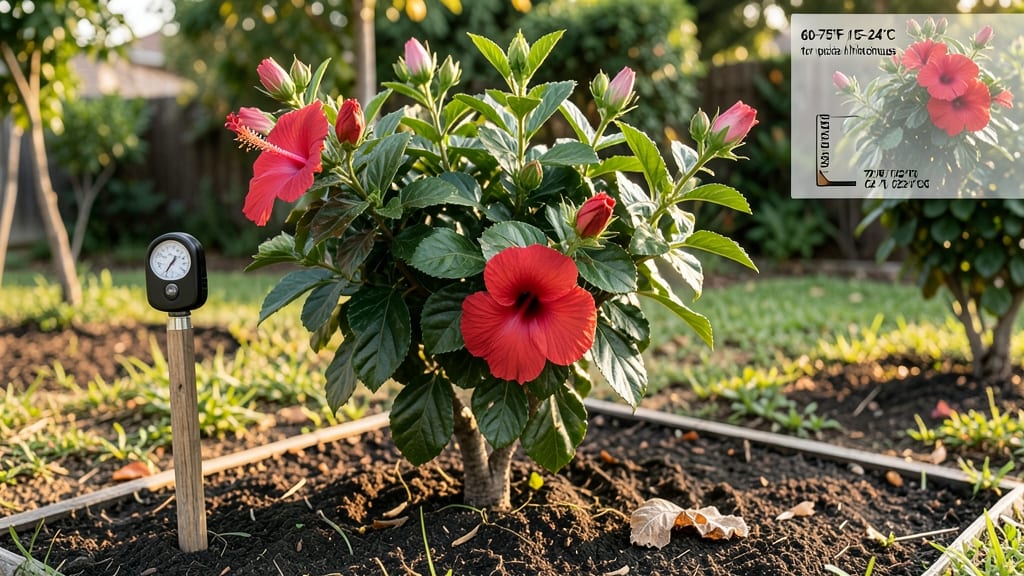
The hibiscus tree temperature range for optimal growth spans 30°F to 95°F (-1°C to 35°C), with most hardy varieties surviving brief dips to 28°F (-2°C). Tropical hibiscus, however, suffer irreversible damage below 32°F (0°C). Proper winter care like mulching and protective wraps can extend cold tolerance by 5-10°F.
The hibiscus tree temperature range directly impacts its survival and blooming potential. Cold-sensitive varieties shut down growth below 50°F (10°C), while extreme cold triggers dormancy or root damage. 🌡️ Hardy hibiscus can recover from winter dieback, but tropical species often perish without protection.
Understanding your local climate zone helps determine whether to choose cold-hardy types like 'Dwarf Blue' or tropical favorites like 'Hawaiian Sunset.'
For example, a sudden drop to 25°F (-4°C) can kill tender hibiscus foliage, but the roots may still survive if insulated with 4-6 inches of mulch.
In regions with harsh winters, wrapping the trunk and branches with burlap or frost cloth creates an insulating barrier that mimics natural snow cover. This simple technique can mean the difference between a thriving plant and winter loss.
💡 In This Article
- How Cold Affects Hibiscus Tree Growth and Survival
- Protecting Hibiscus Trees in Freezing Weather: Step-by-Step Guide
How cold affects hibiscus tree growth and survival
When temperatures drop below 50°F (10°C), hibiscus trees trigger a physiological response called dormancy—a survival mechanism where growth slows, and energy reserves shift to protect critical functions.
The plant's cells begin producing antifreeze proteins, similar to those in cold-hardy crops like winter wheat, which prevent ice crystal formation in cell walls. However, this protection has limits: prolonged exposure to 28°F (-2°C) or lower causes cytoplasmic freezing, where water in plant cells crystallizes and ruptures membranes.
This is why hardy hibiscus varieties like 'Lord Baltimore' survive winter dieback—their roots remain intact, acting as a living reservoir for regrowth once temperatures rise.
The duration of cold exposure matters just as much as the temperature itself. A 30-minute frost at 25°F (-4°C) may only damage leaves, while a 2-hour freeze at the same temperature can kill the canopy down to the wood.
Tropical hibiscus, such as 'Hawaiian Sunset', lack this resilience because their cells contain higher moisture levels and fewer protective compounds.
Their thick, waxy leaves—designed to conserve water in humid climates—become brittle and crack under 32°F (0°C), exposing the plant to fungal infections and dehydration. 🌡️ This is why gardeners in USDA Zone 8 often lose tropical hibiscus in unexpected late-spring frosts, even when summer highs reach 95°F (35°C).
Hardy hibiscus varieties, like those bred for Zone 5, have evolved thicker bark and deeper root systems that insulate the vascular tissues. Their buds contain abscisic acid, a hormone that helps them withstand sub-freezing temperatures by slowing metabolic processes.
For example, the 'Dwarf Blue' hibiscus can endure 20°F (-7°C) for short periods because its roots extend 12-18 inches deep, where soil temperatures remain 10°F (5.5°C) warmer than the air. This root insulation acts like a natural underground blanket, protecting the plant's life-support system during winter.
Temperature spikes—like a sudden thaw followed by another freeze—are equally damaging. When hibiscus break dormancy too early, new growth emerges only to be killed by a return to cold.
This phenomenon, called spring frost damage, occurs when daytime temperatures rise above 50°F (10°C) but nights drop back to 30°F (-1°C). The plant's cells, now active and water-filled, become prime targets for ice damage.
To mitigate this, gardeners in transitional zones (like Zone 7) often use row covers or circulation fans to delay budding until the last expected frost date.
Another critical factor is soil moisture during cold snaps. Wet soil conducts heat away from roots more efficiently than dry soil, increasing the risk of cold damage.
For instance, hibiscus planted in clay-heavy soil—common in Zone 6—are more vulnerable to winterkill because clay retains moisture longer, creating a colder microclimate near the roots. Amending soil with organic matter (like compost or pine bark) improves drainage and insulation, raising the soil's temperature by 2-4°F compared to untreated clay.
Understanding these physiological responses helps explain why some hibiscus varieties thrive in colder climates while others falter. For example, the 'Aphrodite' hibiscus, a hybrid developed for Zone 6, combines the cold tolerance of hardy species with the vibrant blooms of tropical types.
Its secret? A genetic mutation that boosts antifreeze protein production by 30% compared to standard tropical hibiscus. This genetic adaptation is what allows it to survive 25°F (-4°C) without protective measures—a temperature that would devastate most tropical cousins. 🌸