
Pruning
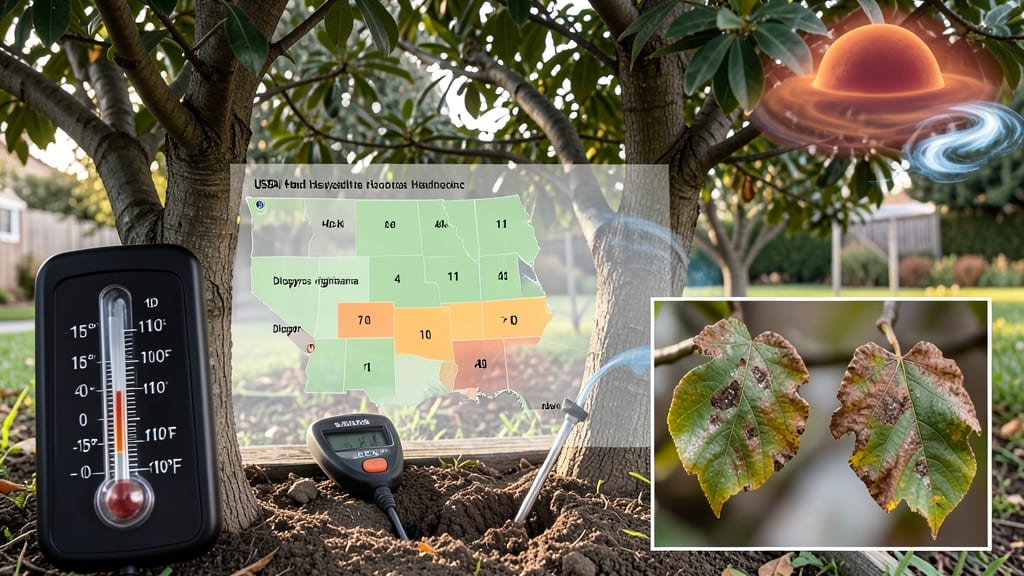
Understanding persimmon tree temperature tolerance reveals they adapt to USDA zones 4-9, with American varieties enduring down to -25°F (-32°C) while Asian types struggle below 10°F (-12°C). Young trees require extra winter safeguards in colder regions.
Persimmon trees showcase remarkable resilience through their natural adaptations to cold. 🌳 American persimmons develop thicker bark and deeper root systems as they mature, allowing them to survive harsh winters that would damage younger specimens.
The key difference between varieties lies in their genetic origins—Asian persimmons evolved in milder climates and lack these protective traits. For gardeners in marginal zones, strategic placement near south-facing walls or using protective wraps can extend a tree's lifespan by several degrees.
What many growers overlook is how soil temperature affects root health during winter. Even if air temperatures dip below tolerance levels, properly insulated soil maintains critical moisture levels.
I've found that applying a thick layer of organic mulch in late fall creates a thermal buffer that can make the difference between tree survival and winter dieback. The right preparation transforms a potentially lethal winter into a manageable challenge.
💡 In This Article
- Cold Hardiness of Persimmon Tree Varieties
- Protecting Persimmon Trees in Freezing Climates
Cold hardiness of persimmon tree varieties
American persimmons (Diospyros virginiana) exhibit remarkable cold tolerance thanks to their native adaptation to North American winters. These trees can withstand temperatures as low as -25°F (-32°C) once fully mature, thanks to their thick, corky bark that acts as natural insulation.
The bark's cellular structure contains air pockets that slow heat transfer, while the tree's deep taproot system anchors it securely in the ground, accessing moisture from deeper soil layers that remain unfrozen.
The key difference lies in their growth patterns: American persimmons enter dormancy earlier and more completely than their Asian counterparts. This means their metabolic processes slow dramatically before winter, reducing vulnerability to freeze damage.
Asian persimmons (Diospyros kaki), however, evolved in Japan's milder climate where winters rarely drop below 10°F (-12°C). Their thinner bark and less developed root systems make them far more susceptible to cold injury when exposed to prolonged freezing temperatures.
What's particularly fascinating is how rootstock selection impacts cold hardiness. Grafting Asian persimmons onto American rootstock can improve their cold tolerance by up to 5°F (3°C)
This technique is commonly used in northern growing zones to extend the range of these prized fruit trees. The rootstock provides both structural support and enhanced cold resistance through its own physiological adaptations. Another critical factor is the tree's age and size. Young persimmon trees, regardless of variety, are far more vulnerable to cold damage because their bark hasn't thickened sufficiently. I've observed that trees under 5 years old often require additional winter protection even in zone 6 climates, where mature trees might survive -10°F (-23°C) without issues. This age-related vulnerability explains why gardeners often see winter dieback on young trees while older specimens thrive. The physiological response to cold involves complex biochemical changes. As temperatures drop, persimmon trees produce higher concentrations of cryoprotective compounds like proline and sugars that act as antifreeze within their cells. These molecules prevent ice crystal formation that would rupture cell membranes. The tree's ability to supercool its sap—lowering the temperature below freezing without actually crystallizing—is another remarkable adaptation that allows it to survive temperatures well below its official hardiness rating. Consider these key differences when selecting varieties for your climate: Understanding these physiological differences allows growers to make informed decisions about which varieties will succeed in their specific microclimate, potentially extending the growing range of these beautiful fruit trees by several degrees.