
Pruning
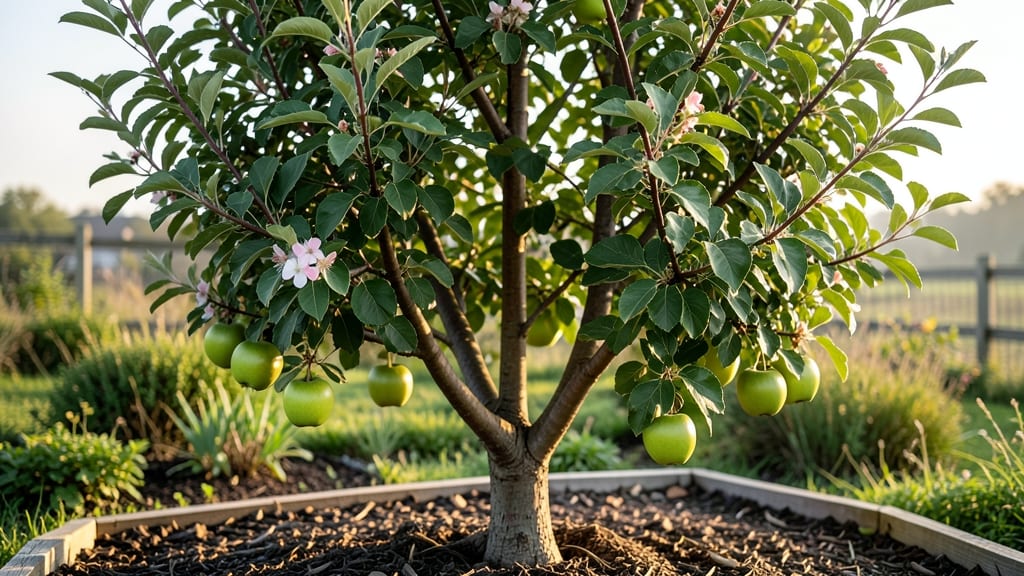
A granny smith apple tree can reach a size of 20-30 feet tall and spread 15-25 feet wide when left unpruned—enough to shade a small backyard. 🌳 I learned this the hard way when my first tree stretched past my neighbor's fence, sparking a very polite but firm conversation about branches.
The key to managing size lies in understanding the variety: standard trees reach full height, while dwarf varieties stay under 8 feet, perfect for urban gardens.
Root depth matters just as much as canopy size—these trees send roots 3-5 feet deep, which is why they need well-draining soil and space to establish. My compact 'Granny Smith' in a 15-gallon container grows just 6 feet tall but still produces bushels of tart apples.
The trade-off? You'll need consistent watering and winter protection for potted trees in colder zones.
Pruning transforms size and shape—annual pruning keeps trees manageable while boosting fruit production. I prune mine in late winter, removing water sprouts and thinning branches to improve airflow.
This keeps my 12-foot semi-dwarf from becoming a jungle while ensuring every branch bears fruit. The result? More apples and easier harvesting.
For small spaces, consider columnar varieties like 'Golden Horizon'—they grow 10-12 feet tall but stay 3 feet wide, making them ideal for narrow yards. Just remember: even dwarf trees need 6-8 hours of sun daily and regular pruning to prevent overcrowding.
Whether you have acres or a balcony, size isn't a limitation—it's a choice.
📚 In This Guide
- What you need
- Instructions
- Tips and common mistakes
- Wrapping up and next steps
What you need
- ● Granny Smith apple tree (choose a dwarf, semi-dwarf, or standard size based on your space): Dwarf: 6–8 feet tall at maturity
- ● Semi-dwarf: 10–12 feet tall
- ● Standard: 16–20 feet tall
- ● Shovel or spade (for digging planting holes)
- ● Garden gloves (to protect your hands)
- ● Pruning shears or loppers (bypass pruners for clean cuts, 6–8" blades for loppers)
- ● Disinfectant (rubbing alcohol or bleach solution) (to sterilize tools between cuts)
- ● Compost or well-aged manure (5–10 gallons for amending soil)
- ● Mulch (wood chips, straw, or pine needles) (3–4 inches to retain moisture)
- ○ Stake and ties (optional but recommended for young trees) (1–2 stakes per tree, 1–2 inches wide)
- ● Watering can or hose with a gentle spray nozzle
- ○ Tree support collar (optional for standard-sized trees) (to prevent trunk damage from stakes)
- ● Soil test kit (to check pH and nutrient levels, ideal range: 6.0–6.5 for apples)
- ● Slow-release fertilizer (balanced 10-10-10 or organic options like fish emulsion)
- ● Tree guard or protective wrap (to shield young bark from pests/sunburn)
- ● Drip irrigation system (for consistent watering, especially in hot climates)
- ● Bird netting (to protect fruit from hungry critters!)
- ● Pruning sealant (for large cuts over ½ inch in diameter)
Understanding Granny Smith apple tree size by variety and growth habits
Let’s break down exactly how big your Granny Smith apple tree will get—and how to plan for it.
🌱 Step 1: Identify Your Granny Smith Variety and Standard Size
Granny Smith apple trees come in several forms, each with distinct mature heights. Standard, unpruned trees reach 12–18 feet tall with a spread of 10–15 feet, making them ideal for large yards or orchards. Semi-dwarf varieties—common in home gardens—top out at 8–12 feet tall with a 6–10-foot spread, while dwarf varieties stay compact at 6–8 feet tall and 5–7 feet wide. Always check the nursery tag or plant description, as these sizes can vary slightly by rootstock.
Here’s the key: rootstock determines size. Trees grafted onto vigorous rootstock (like MM.106) will grow taller, while those on dwarfing rootstock (like M.9) remain small. If you’re planting in a small urban space, dwarf or semi-dwarf varieties are your best bet—they produce fruit earlier and require less pruning. I’ve seen some homeowners plant standard varieties in tight spaces and end up with a tree that outgrows its welcome within a few years.
☀️ Step 2: Assess Your Space and Sunlight Requirements
Before planting, measure your available space. Granny Smith trees need full sun (6–8 hours daily) and at least 10 feet of clearance in all directions for air circulation and sunlight penetration. In tight spaces, semi-dwarf varieties can work if pruned annually to maintain their shape, but even then, they’ll need 8–10 feet of horizontal space to avoid overcrowding neighboring plants or structures.
Watch for these signs of space constraints: if branches rub against a fence or roof within 3–4 years, the tree is already too large for its location. Granny Smiths are vigorous growers, so if you’re planting near a house or driveway, opt for a dwarf variety or consider espalier training to grow the tree flat against a wall. I’ve trained a semi-dwarf Granny Smith along a trellis, and it produced just as many apples while staying out of the way.
✂️ Step 3: Plan for Pruning to Control Growth
Pruning isn’t just about shaping—it’s how you manage height and spread. For standard trees, prune in late winter or early spring before buds swell, removing water sprouts (vertical shoots) and crossing branches to open the canopy. For dwarf varieties, a lighter prune in summer (after harvest) encourages bushier growth. Always use clean, sharp pruners and cut just outside the branch collar to avoid damaging the tree.
Here’s the trick: prune for light penetration. If the center of the tree stays dark, apples won’t ripen properly. Thin out 20–30% of the canopy annually to maintain airflow and sunlight. I’ve seen Granny Smiths left unpruned for years—by year 5, they’re a tangled mess with fruit only on the outer branches. A well-pruned tree will have open branches with sunlight reaching the center, ensuring even fruiting.
🪴 Step 4: Consider Pollination and Spacing for Multiple Trees
Granny Smiths are self-pollinating but produce more fruit with a pollinator. If planting a single tree, choose a variety like ‘Golden Delicious’ or ‘Honeycrisp’ to plant nearby (within 50 feet). For multiple Granny Smiths, space them 15–20 feet apart to prevent overcrowding. Dwarf varieties can be planted 8–10 feet apart, but even then, they’ll compete for nutrients if too close.
Watch for these signs of overcrowding: smaller apples, fewer blossoms, or yellowing leaves in early summer. If you’re short on space, consider undercropping with shallow-rooted perennials like lavender or thyme, which won’t compete with the apple tree’s deep roots. I’ve seen some gardeners plant a dwarf Granny Smith in a large container—it works, but you’ll need to repot every 2–3 years and fertilize heavily to compensate for root restriction.
⏰ Step 5: Adjust Expectations for Urban or Small-Yard Planting
If you’re working with limited space, dwarf or columnar Granny Smith varieties are your best options. Columnar trees grow 12–16 feet tall but only 3–4 feet wide, making them perfect for narrow yards or even large containers. Semi-dwarf trees can be kept in check with annual pruning and root pruning (trimming roots that encroach on sidewalks or foundations).
Here’s what I’ve learned: don’t skimp on soil prep. Even dwarf trees need well-draining, fertile soil to stay healthy. Amend the planting hole with compost and a balanced fertilizer (10-10-10) at planting, and mulch 3 inches deep (keeping mulch 6 inches away from the trunk) to retain moisture and regulate temperature. In small spaces, drip irrigation is a game-changer—it delivers water directly to the roots without wetting the foliage, reducing disease risk.
Tips & tricks for managing Granny Smith apple tree growth
Real talk: Choosing the right variety and planning ahead makes all the difference with these vigorous growers.
Rootstock Matters: The rootstock you choose determines your tree's eventual size more than anything else. If you're planting in a small urban yard, opt for dwarfing rootstock like M.9—it keeps trees under 6-8 feet tall while maintaining excellent fruit production. For larger properties, semi-dwarf rootstock (like MM.106) gives you that perfect balance of manageable size (8-12 feet) and abundant harvest. Always verify the rootstock before purchasing, as nursery tags often only mention the scion variety.
Pruning for Light Penetration: I can't stress this enough—the center of your Granny Smith needs sunlight to produce quality fruit. In Step 3, when you're pruning, focus on creating an open canopy by removing 20-30% of the canopy annually. Look for branches that cross each other or grow straight up (water sprouts)—these are your first targets. A well-pruned tree will have sunlight reaching all the way to the center branches, which is where you'll get the sweetest, most flavorful apples. Think of it like giving your tree a haircut that lets the sunlight shine through.
Espalier Training for Small Spaces: If you're working with limited space but want that classic Granny Smith look, consider espalier training. This technique involves growing the tree flat against a wall or fence, keeping it narrow while maintaining full height. I've seen stunning espaliered Granny Smiths in narrow city yards that produce just as many apples as their full-sized counterparts. The key is to train the tree while it's young—start with a semi-dwarf variety and use flexible ties to guide branches into your desired pattern. It takes patience (about 3-4 years to establish), but the results are worth it.
Pro Tips for Granny Smith Apple Tree Size
- Real talk: Choosing the right variety and planning ahead makes all the difference with these vigorous growers.
- Rootstock Matters: The rootstock you choose determines your tree's eventual size more than anything else.
- Pruning for Light Penetration: I can't stress this enough—the center of your Granny Smith needs sunlight to produce quality fruit.
Frequently asked questions
Got questions about Granny Smith apple tree size? You’re not alone! Whether you’re planning your orchard or troubleshooting a stubborn sapling, here are the answers you need:
How tall does a mature Granny Smith apple tree grow, and how fast?
A standard Granny Smith apple tree typically reaches 20–30 feet tall at maturity, though dwarf varieties stay between 6–12 feet. Growth speed depends on climate and care—expect 1–2 feet per year in ideal conditions. Pro tip: Semi-dwarf trees (12–16 ft) strike a balance for home gardens!
Can I prune a Granny Smith tree to control its size?
Prune young trees annually in late winter to shape them and encourage a compact, open canopy. Remove suckers, dead wood, and crossing branches—this keeps the tree manageable and boosts fruit production. Warning: Avoid over-pruning; aim to retain 60–70% of the tree’s structure.
What’s the best spacing for planting multiple Granny Smith trees?
Space standard trees 25–35 feet apart for airflow and sunlight, while dwarf varieties need just 8–12 feet. Semi-dwarf trees thrive at 15–20 feet. Pro tip: Group trees of the same variety to improve pollination—Granny Smiths are self-pollinating but yield better with neighbors!
Why is my Granny Smith tree growing slower than expected?
Slow growth often stems from poor soil, pests, or overcrowding. Check for:
- Nutrient deficiency (test soil pH—ideal range: 6.0–6.5).
- Root-bound containers (transplant if potted).
- Pests/disease (inspect for aphids, fire blight, or fungal spots).
Adjust care and monitor progress—patience pays off!
Are there alternatives to Granny Smith for smaller spaces?
Yes! Consider these compact apple varieties:
Variety
Mature Size
Notes
‘Liberty’
8–10 ft (dwarf)
Disease-resistant, sweet-tart flavor.
‘Columnar’ Granny Smith
6–8 ft (narrow)
Vertical growth, minimal pruning.
‘Golden Delicious’
10–12 ft (semi-dwarf)
Faster fruiting, adaptable to containers.
Bonus: Columnar trees fit urban yards perfectly!
Wrapping up and next steps
Growing a Granny Smith apple tree is a rewarding journey, and understanding its mature size—whether it’s a compact columnar variety or a sprawling standard tree—helps you plan with confidence. 🍏 With the right pruning, spacing, and care, you’ll enjoy bountiful harvests for years to come.
Now that you’re armed with insights on growth habits and pruning tips, take the next step: sketch a simple layout for your orchard or backyard, factoring in mature tree sizes and sunlight needs. Happy planting—your future crisp, tangy apples are waiting!