
Pruning
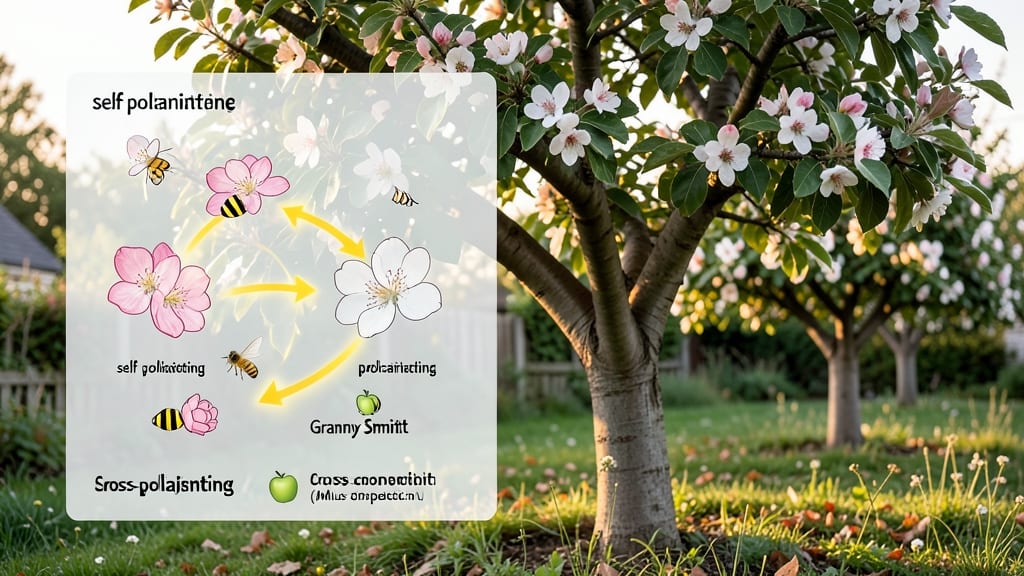
A granny smith apple tree pollination chart shows these trees need compatible partners like Gala or Fuji to produce fruit, since they can't pollinate themselves. Pair varieties with overlapping bloom periods (early to mid-spring) for best results.
A granny smith apple tree pollination chart isn't just about matching varieties—it's about timing. 🍎 These trees bloom in early spring, and their flowers need pollen from compatible trees within a 1-2 week window for successful fruit set.
I've seen orchards double their yield by planting a 3:1 ratio of Granny Smith to pollinizers like Honeycrisp or Braeburn, which share similar bloom periods. The chart also accounts for regional climate variations, since colder zones may have delayed blooming that affects pollination timing.
For home gardeners, the most practical approach is to plant at least two different varieties within 50 feet of each other.
This ensures sufficient pollinator activity from bees and other insects. 🐝 Many nurseries provide regional pollination charts that show which varieties bloom simultaneously in your specific zone—this is especially helpful if you're in a transitional climate area where bloom times can shift yearly.
💡 In This Article
- Granny Smith Apple Tree Pollination Requirements Explained
- Best Companion Apple Trees for Granny Smith Pollination
Granny Smith apple tree pollination requirements explained
Granny Smith apple trees are not self-fertile because their flowers produce sterile pollen that can't fertilize their own ovules. This genetic quirk means they rely entirely on compatible varieties to produce fruit.
The tree's flowers contain both male and female parts, but the pollen lacks the necessary genetic diversity to create viable seeds. Without cross-pollination, the flowers may drop off without developing fruit, a phenomenon called "fruit set failure." 🌸
The pollination process begins when bees or other pollinators transfer pollen from a compatible tree's flowers to Granny Smith's stigma. For successful fertilization, this transfer must happen within 1-2 weeks of the tree's bloom period.
Granny Smith typically blooms in early to mid-spring, but exact timing varies by climate zone—trees in USDA Zone 5 may bloom 2-3 weeks later than those in Zone 8. This variation is why regional pollination charts are essential for gardeners.
Temperature plays a critical role in bloom timing and pollination success. Granny Smith trees require chilling hours (typically 500-800 hours below 45°F) during winter dormancy to trigger proper bloom development. Without adequate chilling, flowers may appear sparse or fail to open, reducing pollination opportunities.
Additionally, spring temperatures above 85°F can cause flower buds to drop before pollination occurs, a condition known as "bud blast."
Granny Smith's flower structure also influences pollination efficiency. Each flower contains 5 petals and 20-30 stamens that produce pollen, but the stigma must be receptive to foreign pollen for fertilization.
The tree's flowers are hermaphroditic, meaning they have both male and female parts, but the pollen must come from a genetically distinct variety to avoid self-incompatibility. This is why planting a single Granny Smith tree rarely yields fruit—it needs a compatible neighbor.
Understanding these biological factors helps explain why pollination charts emphasize overlapping bloom periods. For example, Gala trees bloom simultaneously with Granny Smith in most regions, making them an ideal pollinizer. However, in cooler climates, varieties like Honeycrisp (which blooms slightly later) may be a better match.
The chart accounts for these variations by listing bloom periods in days relative to a reference variety, typically McIntosh or Delicious.
One often-overlooked detail is the role of wind pollination in apple orchards. While bees are the primary pollinators, wind can carry pollen up to 100 feet in ideal conditions. This is why commercial orchards often plant pollinizer rows every 50-100 feet to ensure even pollen distribution.
For home gardeners, planting two compatible trees within 50 feet maximizes the chances of successful pollination through both bee activity and wind dispersal. 🌬️