
Pruning
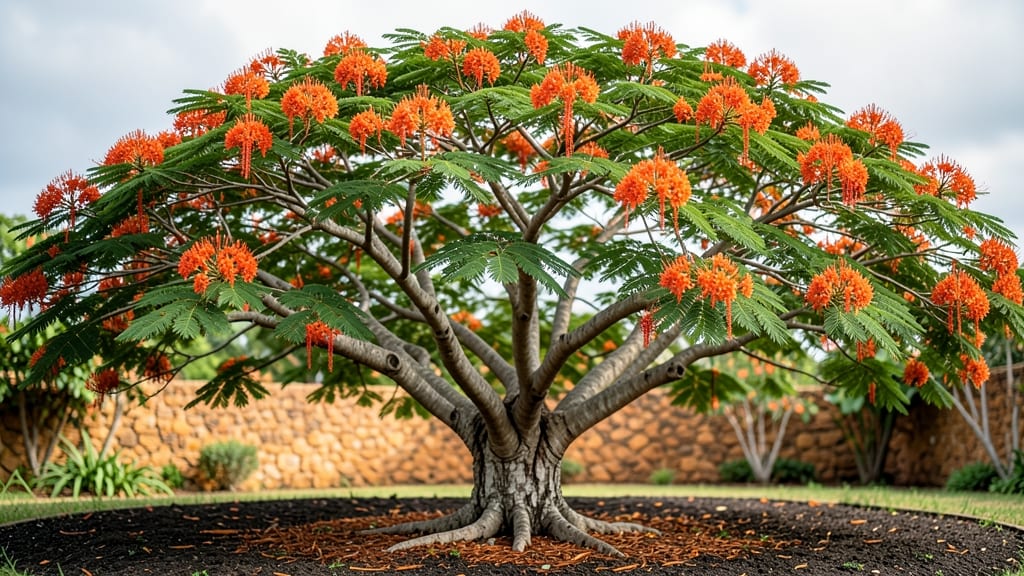
The flame tree in Florida thrives with seasonal pruning: trim dead branches in late winter, shape growth in early spring, and lightly prune after flowering to encourage new blooms while avoiding heavy cuts during summer drought stress.
The flame tree in Florida's climate demands careful timing to avoid stressing the tree during its most vulnerable periods. 🌳 Florida's humid summers create ideal conditions for fungal growth, so pruning during this season can actually harm your tree by exposing fresh cuts to moisture.
Instead, focus on late winter when the tree is dormant, or early spring when new growth begins—this timing helps the tree recover faster and produces more vibrant blooms.
For best results, use sharp, sterilized tools to make clean cuts and avoid tearing the bark. This minimizes the risk of disease in Florida's wet environment. After pruning, apply a light layer of mulch around the base to retain moisture and protect the roots from the intense summer heat.
💡 In This Article
- Why Florida’s Humid Climate Affects Flame Tree Pruning Needs
- Step-by-Step Florida Flame Tree Pruning Guide by Season
Why Florida’s humid climate affects flame tree pruning needs
Florida’s humid climate creates a unique challenge for flame tree care, primarily because the combination of high temperatures and moisture accelerates fungal growth and bacterial infections. 🌿 During the summer months, when humidity often exceeds 80% and temperatures hover around 90°F, pruning exposes fresh cuts to an environment perfect for pathogens like Fusarium and Botrytis.
These conditions turn small wounds into entry points for disease, which can weaken or even kill the tree if not managed properly.
The wet-dry seasonal cycle in Florida also influences pruning timing. After the rainy season (typically May to October), the soil remains saturated, making it harder for the tree to recover from pruning stress.
This is why late winter—when the tree is dormant and humidity drops to 60-70%—is the ideal time to remove dead or diseased branches. At this stage, the tree’s energy is conserved, and the risk of fungal infection is significantly lower. 🌞
Another critical factor is how Florida’s climate affects the tree’s natural defenses. Flame trees rely on their bark and leaves to protect against pests and diseases, but heavy pruning during peak humidity can strip away these natural barriers.
For example, removing large branches in summer can expose the tree’s vascular system to airborne spores, leading to conditions like Phytophthora root rot—a common issue in Florida’s swampy soils. This is why light, strategic pruning is always preferred over aggressive cuts.
Humidity also plays a role in how quickly the tree heals. In dry climates, pruning wounds seal faster due to lower moisture levels, but in Florida, the prolonged dampness can delay the formation of protective callus tissue.
This is why sterilizing pruning tools with a 10% bleach solution before and after each cut is essential—it reduces the risk of introducing harmful bacteria or fungi into fresh wounds.
Finally, Florida’s summer droughts—even brief ones—can stress the tree further if pruning is done at the wrong time. When the tree is already struggling to access water, removing branches diverts energy away from root development and flower production.
This is why post-flowering pruning (after April-May) is safer—it allows the tree to recover before the heat and humidity peak in late summer.
Understanding these climate-driven factors helps you prune with precision. For instance, if you must prune during the rainy season, do so on a dry, sunny day when humidity is lowest and the tree can begin healing immediately.
This small adjustment can make a big difference in your flame tree’s long-term health. 🌱