
Pruning
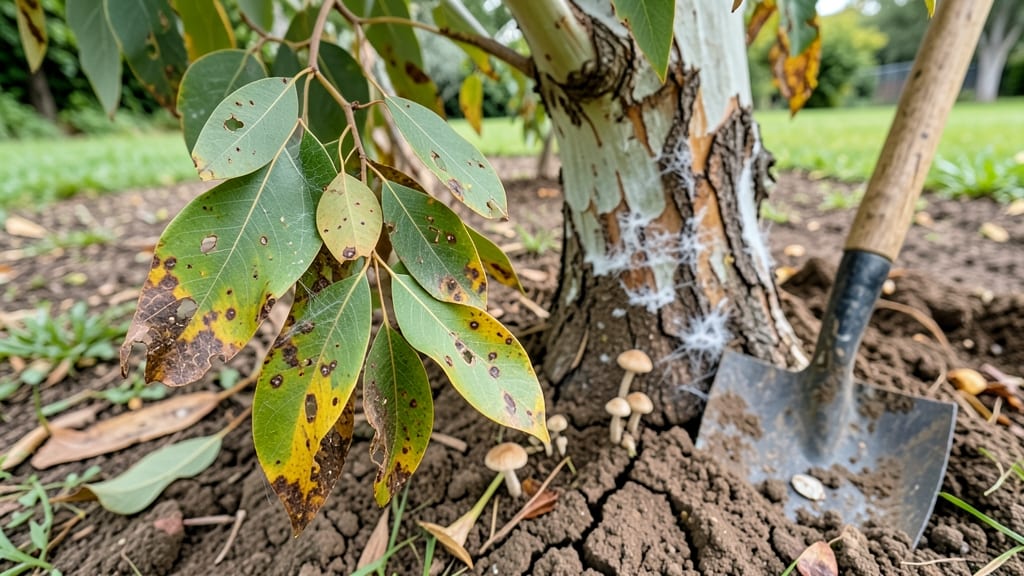
Your eucalyptus tree’s sudden leaf drop isn’t a death sentence—it’s a call for action. 🌿 I’ve nursed back more struggling eucalyptus than I’d like to admit, and the first step is always identifying what’s really wrong: fungal canker, drought stress, or those pesky psyllids.
The good news? Most eucalyptus problems fix with three targeted steps: pruning dead branches, adjusting watering, and checking for pests. My silver-leaf eucalyptus went from skeletal to lush in just six weeks after I spotted the early signs—yellowing leaves and sticky sap.
You’ll learn to spot the difference between drought damage and fungal infection, how to prune without harming the tree, and when to call in reinforcements (like neem oil for those psyllids). The key is acting fast before the tree’s energy is completely drained.
Works for both young trees and mature specimens, whether you’re dealing with a backyard eucalyptus or a container-grown dwarf variety. Let’s get that tree back to thriving!
📚 In This Guide
- What you need
- Instructions
- Tips and common mistakes
- Wrapping up and next steps
What you need
- ● Pruning shears: Sharp, bypass pruners (for small branches, 1/4"–1/2" blade)
- ● Loppers: Heavy-duty (for branches 1"–2" in diameter)
- ● Hand saw: Pruning saw with 8"–10" blade (for thicker branches)
- ● Gloves: Heavy-duty work gloves (to protect from thorns and sap)
- ● Disinfectant: 70% isopropyl alcohol or bleach solution (1:9 ratio) (to sterilize tools)
- ● Watering can or hose: With adjustable nozzle (for deep watering)
- ● pH test kit: Soil pH meter or test strips (to check soil acidity)
- ● Fertilizer: Slow-release eucalyptus-friendly fertilizer (e.g., 6-6-6 or 10-10-10 NPK ratio)
- ● Mulch: Organic mulch (e.g., wood chips or pine straw, 2–3 inches thick)
- ● Notebook & pen: For recording observations (e.g., leaf color, wilting patterns)
- ● Magnifying glass: For inspecting leaves or bark up close
- ● Fungicide: Copper-based or neem oil solution (if fungal disease is suspected)
- ● Soil moisture meter: To check root-zone hydration accurately
- ● Tree support: Stakes and ties (if branches are severely weakened)
- ● Camera: To document progress before/after treatment
How to diagnose and revive a dying eucalyptus tree
Eucalyptus trees are tough, but even they need help when leaves yellow, wilt, or drop. Here’s how to assess the problem and bring your tree back to life.
🌿 Step 1: Inspect the Tree for Visual Clues
Start by examining the leaves, bark, and soil around your eucalyptus. Yellowing leaves often signal overwatering or nutrient deficiency, while brown, crispy edges usually mean underwatering or too much sun. Check for pests like psyllids or scale insects—tiny bumps or sticky residue on leaves are dead giveaways.
Run your fingers along the bark to feel for soft spots or oozing sap, which could indicate fungal infections or pest damage. If the soil smells sour or feels soggy, that’s a red flag for root rot. Healthy eucalyptus bark should be smooth and slightly rough, not mushy or cracked.
💧 Step 2: Adjust Watering and Soil Conditions
Eucalyptus trees hate soggy roots, so if the soil stays damp for more than a day, cut back on watering. Water deeply once a week (or every 10 days in winter) and let the top 6 inches of soil dry out between sessions. Use a moisture meter or stick your finger in—if it’s wet past 2 inches down, hold off.
If the soil is too dense or compacted, eucalyptus roots struggle to breathe. Mix in 2-3 inches of coarse sand or perlite into the top 12 inches of soil to improve drainage. Mulch with 2-3 inches of wood chips (keeping it 6 inches away from the trunk) to retain moisture and regulate temperature.
☀️ Step 3: Provide Proper Light and Nutrients
Eucalyptus trees need full sun (6+ hours daily)—if they’re in shade, leaves will thin out and grow pale. Move potted trees to a sunnier spot or prune nearby structures blocking light. If your tree is in the ground, avoid planting it under tall trees or buildings that cast long shadows.
Fertilize in spring and early summer with a balanced, slow-release fertilizer (10-10-10 or similar). Apply ½ cup per year of tree age (max 1 cup for mature trees) around the drip line, not the trunk. Over-fertilizing burns roots, so skip winter applications—eucalyptus rests then.
✂️ Step 4: Prune Damaged Branches and Monitor Progress
Use sterilized pruners to trim dead, diseased, or crossing branches back to a healthy bud or branch fork. Avoid cutting into old wood—eucalyptus struggles to regrow from severe pruning. Remove no more than 25% of the canopy at once to avoid shocking the tree.
After pruning, watch for new growth in 4-6 weeks. If leaves stay yellow or drop, revisit your watering or check for pests again. Healthy eucalyptus should produce dark green, glossy leaves and new shoots by late spring. If no improvement, consider soil testing for pH or nutrient deficiencies.
Tips & tricks for reviving a struggling eucalyptus tree
Real talk: Eucalyptus trees might look resilient, but they’re actually pretty particular about their care. Here’s how to give yours the best shot at recovery—without guessing.
Diagnosis is Key: In Step 1, don’t just glance at the leaves—really examine them up close. Yellowing on the underside of leaves often means overwatering, while crispy edges with curled leaves usually signal underwatering. I’ve seen eucalyptus trees that looked fine from a distance but were actually covered in psyllids or scale insects when I got up close. Grab a magnifying glass if you need to—those tiny pests can hide in plain sight.
Watering Wisdom: The once-a-week watering guideline in Step 2 isn’t set in stone—it depends on your climate. In hot, dry summers, you might need to water every 4-5 days, while cooler months can stretch that to 10 days. Always check that top 6 inches of soil first: if it’s bone dry, water deeply. If it’s still damp, wait another day. Overwatering is the #1 killer of eucalyptus trees, so when in doubt, hold off.
Light and Soil Secrets: For Step 3’s sunlight requirement, think of eucalyptus like a sunbather—they need full sun to thrive. If your tree is in partial shade, try moving it gradually to avoid shocking it. And when amending the soil, don’t skimp on the sand or perlite. I’ve seen eucalyptus trees in heavy clay soil struggle for years until we improved drainage. That 2-3 inches of sand isn’t optional—it’s what keeps roots happy and prevents rot.
Pruning Precision: When you’re ready for Step 4, remember that eucalyptus trees hate having too much taken at once. That 25% canopy rule is firm—don’t exceed it unless you want to stress your tree. And always prune back to a healthy bud or branch fork. I’ve seen people cut into old wood, and those cuts rarely heal properly. Think of it like giving your tree a haircut—you wouldn’t shave off half your head in one go, would you?
Pro Tips for Eucalyptus Tree Death
- Real talk: Eucalyptus trees might look resilient, but they’re actually pretty particular about their care.
- Diagnosis is Key: In Step 1, don’t just glance at the leaves—really examine them up close.
- Watering Wisdom: The once-a-week watering guideline in Step 2 isn’t set in stone—it depends on your climate.
Frequently asked questions
Got questions about your eucalyptus tree’s sudden decline? You’re not alone! Here are some of the most common concerns—and practical answers—to help you diagnose and revive your struggling tree.
Why is my eucalyptus tree dying so suddenly?
Eucalyptus trees often decline due to fungal infections (like Phytophthora), root rot from overwatering, or nutrient deficiencies. Environmental stressors like extreme heat, poor drainage, or pests (e.g., psyllids) can also accelerate decline. Check the leaves for discoloration or wilting—this is your first clue!
How long does it take for a eucalyptus tree to die once symptoms appear?
If left untreated, a eucalyptus tree can decline rapidly—sometimes within weeks to months, depending on the cause. Fungal diseases or root rot spread quickly, while nutrient deficiencies may take longer. Act fast: prune dead branches, improve drainage, and adjust watering to buy time for recovery.
Is overwatering killing my eucalyptus tree?
Yes! Eucalyptus trees thrive in well-draining soil and hate soggy roots. Overwatering suffocates roots, leading to root rot and yellowing leaves. Let the top 2–3 inches of soil dry out between waterings. If your tree is in heavy clay soil, amend it with sand or gravel to improve drainage.
Can I save a eucalyptus tree with mostly dead leaves?
Maybe! If the branches are still green underneath and the trunk is firm, prune back dead foliage and fertilize with a low-nitrogen, high-phosphorus blend. Avoid heavy pruning—focus on removing only the most damaged areas. Monitor for new growth; if none appears after 2–3 months, the tree may be beyond saving.
What’s a good alternative if my eucalyptus keeps dying?
If eucalyptus proves too high-maintenance, consider drought-tolerant alternatives like olive trees, Texas sage, or coast live oaks. These require less water, handle poor soil better, and resist fungal diseases. For a similar look, try melaleuca (bottlebrush) or lemon-scented gum trees, which are slightly hardier.
Wrapping up and next steps
Understanding why your eucalyptus tree is struggling—and taking action—can make all the difference! 🌿 From checking for pests to adjusting watering habits, these steps help revive your tree and keep it thriving. Don’t wait: start with a simple inspection today and give your eucalyptus the care it deserves.
Need more guidance? Bookmark this article or share it with fellow gardeners—because healthy trees mean a healthier outdoor space for everyone! 🌱