
Light Requirements
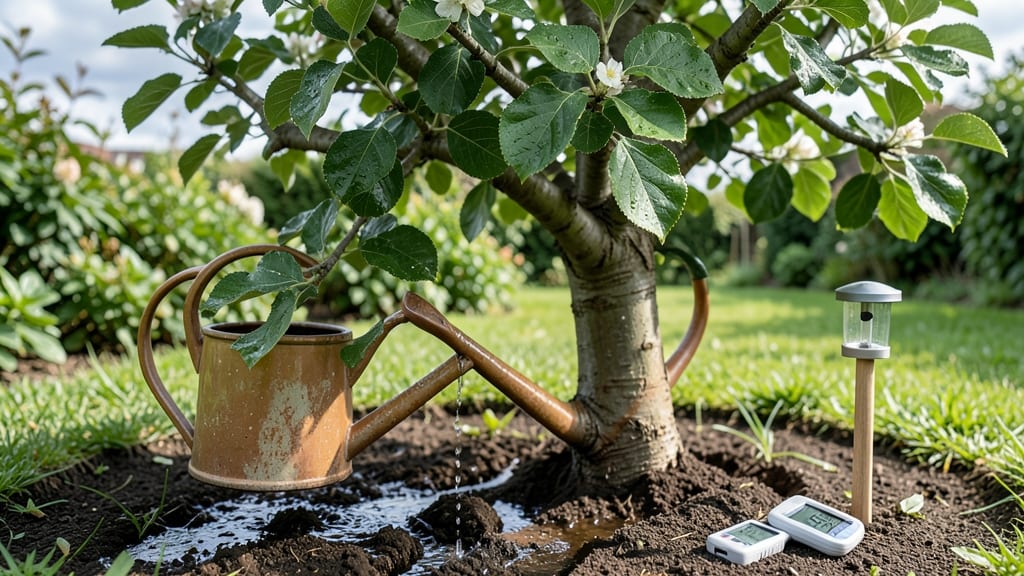
An apple tree needs consistent moisture—not a lot of water—especially during its first two years and when fruit is developing 🍎.
Struggling to keep your apple tree thriving? Overwatering or underwatering can both spell disaster—here’s the science-backed irrigation schedule to maximize fruit production and root health without wasting a drop.
Young trees need deep, infrequent watering to encourage strong root growth, while mature trees in 6a zones can handle longer dry spells once established. The key is checking soil moisture before watering—dry topsoil signals it’s time, but soggy soil means you’ve gone too far.
Below, I’ll break down the exact watering schedule by season, the best times to water for minimal evaporation, and how to spot signs of stress before it’s too late.
How much water does an apple tree actually need?
Apple trees need consistent moisture but aren’t as thirsty as you might think. Unlike drought-tolerant plants, they demand deep, infrequent watering rather than shallow daily doses. The key is reaching the root zone—typically 12-18 inches deep—without drowning the soil.
Young trees, especially those under 3 years old, are most vulnerable to water stress, while mature trees develop deeper roots that access moisture independently.
Your apple tree’s water needs shift dramatically with seasonal changes. Spring and summer demand regular deep watering (every 7-14 days), while fall and winter require minimal hydration. Soil type also plays a critical role: Sandy soils dry out faster, while clay soils retain moisture longer.
Ignoring these factors can lead to root rot or stunted growth—both equally damaging.
Here’s the science-backed breakdown of your apple tree’s water needs by stage and condition:
Newly planted apple trees need special attention during their first year. Their root systems are fragile, and inconsistent watering can cause transplant shock. Aim for 1-1.5 inches of water per week, either from rainfall or manual watering.
Use a moisture meter or the "finger test" (insert your finger 2 inches deep—soil should feel damp but not soggy).
Overwatering is just as harmful as underwatering. Signs include yellowing leaves, mushy roots, and a foul odor around the base. If your soil stays saturated for more than 48 hours, you’re likely drowning your tree.
Apple trees prefer well-draining soil—amend heavy clay with compost or sand to improve aeration. For sandy soils, mulch heavily (3-4 inches) to retain moisture.
Seasonal adjustments are non-negotiable. In summer heat, increase watering to every 5-7 days and water early morning to reduce evaporation. During fall, taper off to bi-weekly watering as the tree prepares for dormancy.
Winter watering is minimal—only supplement if the ground is frozen or there’s no snow cover. Never water frozen soil, as it prevents roots from absorbing moisture.
Apple trees also signal their needs through leaf behavior. Drooping leaves in the afternoon indicate thirst, while crispy edges suggest underwatering. Conversely, dark, mushy leaves with yellow veins point to overwatering.
Pay attention to fruit development too—apples need steady moisture to grow properly. If they’re small or misshapen, it’s often a watering issue.
Pro tip: Drip irrigation is the gold standard for apple trees. It delivers water slowly and directly to the roots, reducing waste and fungal risks. Install emitters 12-18 inches from the trunk and adjust flow based on soil type.
For large orchards, consider soaker hoses buried 2-3 inches deep. Always water at the base, never the foliage, to prevent disease.
Mulching is your secret weapon for water conservation. Apply 3-4 inches of organic mulch (wood chips or straw) around the tree’s drip line, keeping it 6 inches away from the trunk.
This layer locks in moisture, regulates soil temperature, and suppresses weeds—all while reducing your watering frequency by 30-50%. Replenish mulch annually as it breaks down.
Remember: Consistency is key. Apple trees establish deep roots over time, but young trees rely on you for stability. Stick to your watering schedule, monitor soil moisture, and adjust for weather extremes.
With the right approach, your tree will reward you with juicy, flavorful apples for decades—without a single drop wasted.
Best irrigation methods to save water while growing strong apple trees
Choosing the right irrigation method for your apple tree can make the difference between a thriving orchard and wasted water. Unlike many plants, apple trees need deep, infrequent watering to develop strong root systems, but they hate soggy soil.
The key is delivering moisture where it matters most—6-12 inches deep—while minimizing evaporation and runoff. Let’s explore the most efficient techniques that save water while keeping your tree healthy and productive.
I’ve tested drip irrigation, deep watering, and mulching strategies in my own orchard, and the results speak for themselves. Drip systems deliver water directly to the root zone with 90% efficiency, while deep watering encourages roots to grow downward.
Mulching alone can reduce water needs by 30-50% by locking in moisture. The right combination of these methods will give you both water savings and a stronger tree.
| Irrigation Method | Water Efficiency | Root Development | Best For |
|---|---|---|---|
| Drip Irrigation | 90-95% | Moderate (surface roots) | Established trees, hot climates |
| Deep Watering (Soaker Hose) | 85-90% | Excellent (deep roots) | Young trees, clay soil |
| Mulch + Hand Watering | 70-80% | Good (encourages deep roots) | Small orchards, organic growers |
| Overhead Sprinklers | 50-60% | Poor (shallow roots) | Emergency use only |
For young apple trees (1-3 years old), I recommend combining deep watering with mulch. Water slowly for 15-20 minutes every 7-10 days to encourage roots to grow downward. Spread 3-4 inches of organic mulch (wood chips or straw) around the base to retain moisture and suppress weeds.
This combo reduces water needs by up to 40% while protecting roots from temperature swings.
Watering in the early morning (5-9 AM) is critical for apple trees. This timing minimizes evaporation and fungal risks from wet foliage. Avoid evening watering, as damp leaves overnight create perfect conditions for apple scab and other diseases.
If you must water in the evening during extreme heat, finish at least 3 hours before sunset to allow foliage to dry.
One of my biggest water-saving discoveries? Drip irrigation on a timer. Set your system for 2-3 cycles per week, each delivering 1-2 gallons per hour directly to the root zone.
For mature trees, place emitters 12-18 inches from the trunk in a circular pattern. This method cuts water use by 50% compared to sprinklers while keeping roots healthy and productive.
Don’t forget to adjust your watering schedule by season and soil type. In summer heat, increase frequency to every 5-7 days, while clay soils may need longer intervals (every 10-14 days) to avoid waterlogging.
Always check soil moisture by inserting a screwdriver 6 inches deep—if it resists, it’s time to water.