
Pruning
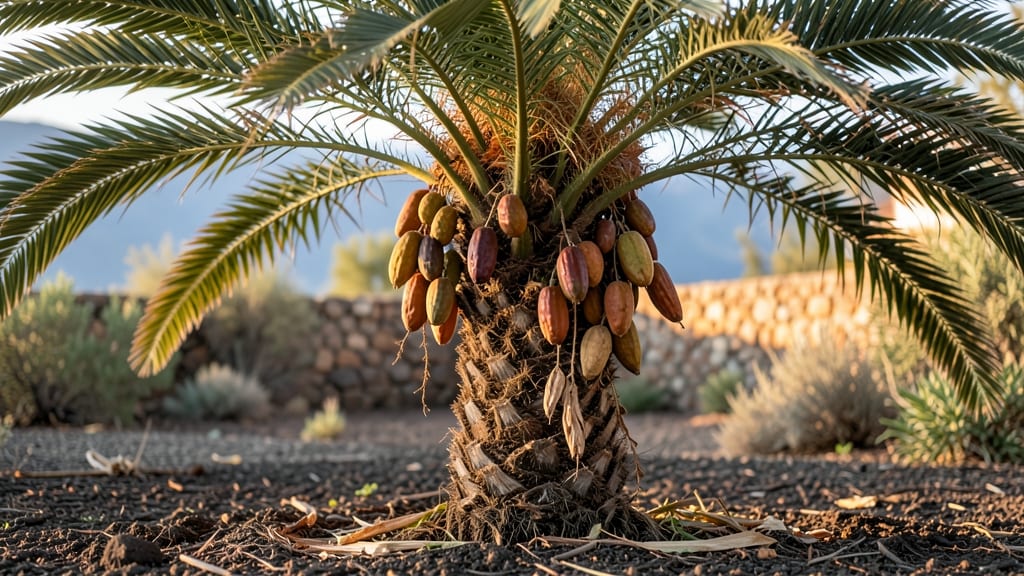
Growing a date palm tree fruit at home means sweet, golden rewards that take years to mature—but the journey starts with the right conditions. 🌵 I planted my first palm in a desert-like climate, and while it won’t bear fruit for 4-5 years, the process of nurturing it toward that first harvest is what makes it worthwhile.
The key lies in mimicking its natural habitat: hot days, cool nights, and soil that drains like a sandy beach.
You’ll need full sun (at least 8 hours daily), well-draining soil mixed with sand or gravel, and patience—palms grow slowly but reward persistence with 50+ fruit clusters once mature.
Water deeply but infrequently (once a week in summer, less in winter), and fertilize lightly with a palm-specific mix in spring and summer. The biggest mistake? Overwatering, which rots roots faster than you’d think.
By year 3, you’ll see male and female flowers appear on separate plants (unless you have a self-pollinating variety). Hand-pollinate with a soft brush if needed, and watch for tiny green dates forming—harvest when they soften (usually late summer to fall).
The first crop might be small, but each year after that, yields double if you keep conditions perfect.
Works best in USDA zones 9-11, but container-growing extends options to cooler climates. Here’s how to set it up right from the start—no desert required.
📚 In This Guide
- What you need
- Instructions
- Tips and common mistakes
- Wrapping up and next steps
What you need
- ● Date palm tree (Phoenix dactylifera) – Choose a variety suited to your climate (e.g., Medjool, Deglet Noor, or Khalas). Note: Young palms (3–5 years old) are ideal for transplanting.
- ● Well-draining soil mix – Combine: 60% sandy loam or cactus/succulent soil
- ● 30% perlite or pumice (for aeration)
- ● 10% organic compost (for nutrients)
- ● Large containers or planting area – Minimum 20-gallon pots (or larger) for young palms; in-ground planting requires a hole 3x wider and deeper than the root ball.
- ● Slow-release fertilizer – 10-10-10 NPK ratio (e.g., Osmocote) or organic options like alfalfa meal or fish emulsion. Apply every 3–4 months.
- ● Drip irrigation system – Date palms need 1–2 inches of water weekly (adjust for drought/climate). Use soaker hoses or drip emitters to avoid wetting the trunk.
- ● Pruning tools – Sharp bypass pruners (for small fronds)
- ● Heavy-duty loppers (for thicker branches)
- ● Safety harness and rope (for climbing mature trees)
- ● Protective gear – Gloves, long sleeves, and eye protection (date palm fronds have sharp spines!).
- ● Warm climate – Date palms thrive in USDA Zones 8–11 (or 10–35°C / 50–95°F year-round). Cold-hardy varieties (e.g., 'Barhee') tolerate brief dips to 15°F (-9°C).
- ● Full sun exposure – 6+ hours of direct sunlight daily. Partial shade may reduce fruit yield.
- ● Low humidity tolerance – Ideal for arid or semi-arid regions (e.g., deserts, Mediterranean climates). Use mist systems if humidity drops below 30%.
- ● Soil moisture meter – Prevents over/under-watering.
- ● Windbreaks or shade cloth – Protects young palms from strong winds or intense midday sun.
- ● Pollination aid – Hand-pollinate female flowers with a soft paintbrush if natural pollinators (e.g., beetles) are scarce.
- ● Fruit thinners – Remove excess fruit clusters to improve size/quality (use sterilized scissors).
- ● Post-harvest storage – Controlled-atmosphere storage bins or cool, humid conditions (50–60% humidity, 32–41°F) for long-term preservation.
Step-by-Step instructions for cultivating date palm fruit
Here's how to coax sweet, plump dates from your palm tree with precision timing and care.
🌱 Step 1: Select and Prepare the Right Palm Variety
Choose a cold-hardy variety like 'Medjool' or 'Deglet Noor' for reliable fruit production. These varieties thrive in USDA zones 9-11 where winter temperatures stay above 20°F. I always verify the palm's sex—only female palms produce fruit, and they require male palms for pollination within 300 feet.
Plant your palm in well-draining soil with a pH between 6.5-7.5. Amend heavy clay with 50% sand or perlite to prevent root rot. The hole should be twice as wide as the root ball but only as deep. Tap the sides gently to eliminate air pockets before backfilling.
☀️ Step 2: Provide Ideal Growing Conditions
Date palms demand full sun exposure—at least 8 hours daily. In hot climates, provide afternoon shade to prevent leaf scorch. I monitor leaf color closely: healthy fronds remain vibrant green, while yellowing indicates either overwatering or nutrient deficiency.
Water deeply but infrequently—every 7-10 days once established. The soil should dry completely between waterings. Overwatering causes root rot, which is fatal to palms. Mulch with 3 inches of organic matter to retain moisture and regulate soil temperature.
🌿 Step 3: Fertilize Strategically for Fruit Production
Begin fertilizing in early spring with a balanced palm fertilizer (8-2-12 ratio). Apply 1/2 pound per year of tree age every 4-6 weeks during the growing season. For example, a 5-year-old palm gets 2.5 pounds per feeding. I always water thoroughly before and after applying fertilizer to prevent root burn.
In late summer, switch to a low-nitrogen, high-potassium formula (5-10-15) to encourage flowering and fruit set. This shift signals the palm to focus energy on reproductive growth rather than foliage. Watch for new flower spikes emerging from the trunk—these appear 2-3 years after planting.
💧 Step 4: Pollinate and Protect Developing Fruit
If you lack male palms nearby, hand-pollinate using a small brush to transfer pollen from male flowers to female flowers. Do this in early morning when flowers are fresh. I mark pollinated flowers with a tiny dab of paint to track progress. Fruit will begin forming 6-8 weeks after pollination.
Protect young fruit from birds and insects with fine netting during the first 3 months of growth. Remove any damaged or discolored fruit immediately to prevent disease spread. Healthy fruit should feel firm with a slight give when pressed—soft fruit indicates overripening or pest damage.
⏰ Step 5: Harvest at Peak Ripeness
Harvest dates when they transition from green to the variety's characteristic color—deep red for Medjool, amber for Deglet Noor. I test ripeness by gently squeezing: ripe dates yield slightly to pressure. Use clean pruning shears to cut the entire fruit cluster from the stalk.
Allow harvested dates to ripen indoors at 70-75°F for 2-4 weeks. Store unripe dates in a paper bag with an apple to hasten ethylene production. Once fully ripe, dates can be stored in the refrigerator for up to 6 months or frozen for longer preservation.
Tips & tricks for growing optimal date palm fruit
Here's what nobody tells you about maximizing your date palm's fruit production—lessons I learned after years of trial and error.
Soil Preparation Matters: The 50% sand or perlite amendment in Step 1 is non-negotiable for Medjool and Deglet Noor varieties. I've seen palms fail within months because of compacted clay soil—root rot sets in silently. Test your soil's drainage by digging a hole, filling it with water, and measuring how long it takes to drain completely. If it takes more than 2 hours, amend more aggressively. The goal is a soil that feels like a damp sponge, not wet cement.
Sunlight Strategy: Those 8 hours of daily sun in Step 2 are critical, but quality matters more than quantity. South-facing exposure in the Northern Hemisphere gives the most consistent light. If your palm gets afternoon shade, position it so morning sun hits the east side of the fronds—this prevents leaf scorch while still providing full light exposure. I've noticed palms in filtered light produce smaller fruit clusters, even with perfect care.
Fertilizer Timing Secret: The switch to low-nitrogen, high-potassium fertilizer in late summer (Step 3) is your signal to the palm that it's time to focus on reproduction. I've found that applying this formula too early—before the first flower spikes appear—can actually delay fruiting. Time it so the first application coincides with the emergence of those initial flower buds, usually around mid-August in most growing zones.
Pollination Tracking: The 6-8 week window after pollination (Step 4) is when fruit development happens fastest. I keep a simple spreadsheet tracking each cluster's pollination date and growth progress. This helps me predict harvest times and spot any clusters that might need extra protection. A quick visual check every 2 weeks—looking for uniform swelling—lets me intervene if birds or insects target specific clusters.
Pro Tips for Date Palm Tree Fruit
- Here's what nobody tells you about maximizing your date palm's fruit production—lessons I learned after years of trial and error.
- Soil Preparation Matters: The 50% sand or perlite amendment in Step 1 is non-negotiable for Medjool and Deglet Noor varieties.
- Sunlight Strategy: Those 8 hours of daily sun in Step 2 are critical, but quality matters more than quantity.
Frequently asked questions
Got questions about growing and harvesting date palm tree fruit? You’re not alone! Here are some of the most common queries—plus straightforward answers to help you troubleshoot and optimize your harvest.
How long does it take for a date palm tree to produce fruit?
A date palm tree typically takes 3 to 5 years to mature enough to bear fruit, depending on the variety and growing conditions. Some dwarf varieties may fruit sooner, while larger species could take up to 7 years. Patience is key—consistent care (like proper watering and fertilization) speeds up the process! Pro tip: If your tree isn’t fruiting after 5 years, check for pests or nutrient deficiencies.
When is the best time to harvest date palm fruit?
Dates ripen in stages, so timing is everything! Harvest when the fruit softens slightly and the skin turns from green to a golden-brown or deep red, depending on the variety. For off-vine ripening, pick when the fruit is still firm (about 70% ripe). If left too long, dates can over-ripen and spoil. Pro tip: Taste-test a few—sweetness and texture are your best guides!
Can I grow date palms indoors or in containers?
While date palms thrive outdoors in warm climates, dwarf varieties (like ‘Medjool’ or ‘Deglet Noor’) can grow in large containers indoors with bright, indirect light. Use well-draining soil and a pot at least 2–3 feet wide. Expect slower growth and smaller yields, but it’s possible! Warning: Indoor palms need humidity and protection from drafts to mimic desert conditions.
Why aren’t my date palm fruits developing properly?
Poor fruit development often stems from lack of pollination, nutrient deficiencies (especially potassium or zinc), or pests like Rhynchophorus palm weevils. Hand-pollinate flowers with a soft brush if natural pollinators (like insects) are scarce. Check for yellowing leaves or holes in stems—signs of pests. Quick fix: Apply balanced fertilizer and inspect trees regularly for early intervention.
How do I store fresh date palm fruit for long-term use?
Fresh dates store best at room temperature in a paper bag for 1–2 weeks. For longer storage (up to 6 months), refrigerate or freeze them. To dry dates, cure them at 95–105°F (35–40°C) for 3–7 days, then dehydrate. Avoid plastic bags—moisture speeds up spoilage. Bonus: Dried dates keep for months in airtight containers!
Wrapping up and next steps
Growing date palm fruit is a rewarding journey that combines patience, care, and a touch of tropical magic! 🌴 Whether you're a seasoned gardener or a curious beginner, mastering the art of pruning, soil management, and seasonal care will unlock year-round harvests of sweet, golden dates.
Your dedication will soon be rewarded with a thriving palm tree—so roll up your sleeves, stay consistent, and enjoy the fruits of your labor!
Ready to take the next step? Start small—plant a single palm, experiment with the tips shared here, and gradually expand your grove. Before you know it, you’ll be sharing homemade date treats with friends or even selling your harvest! 🌟