
Pests and Diseases
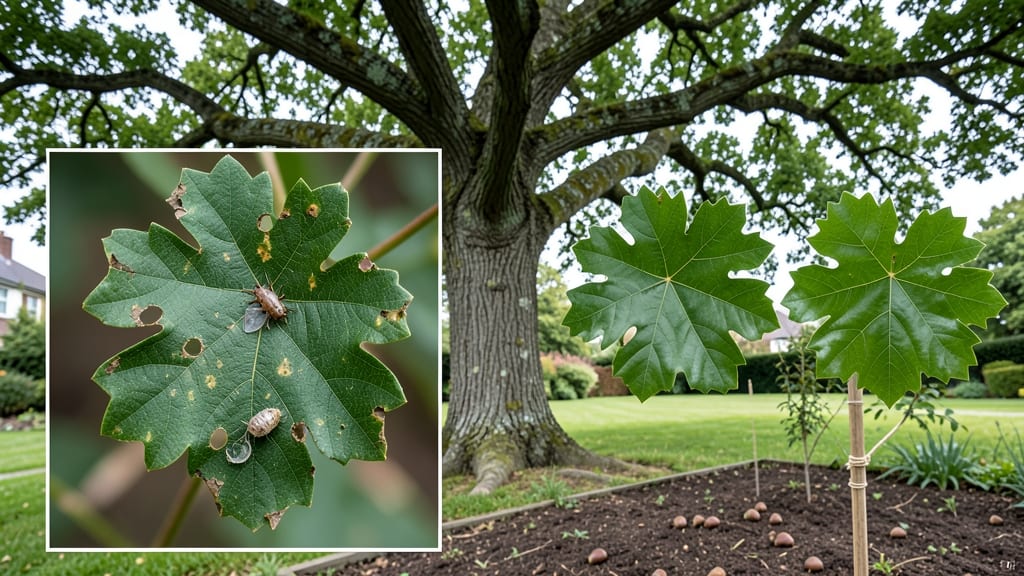
Holes in tree leaves mean your shade provider is under attack—and it’s easier to fix than you think. 🌳 I’ve seen oak, maple, and birch trees go from ragged to lush again in just a few weeks with the right moves, and I’ll show you how.
The culprits are usually tiny: sawfly larvae, leaf miners, or even wind damage. Each leaves different clues—sawfly chew irregular edges, while miners create serpentine trails. The good news? Most don’t kill the tree, and organic fixes work fast.
You’ll identify the issue, pick the right treatment (neem oil for pests, pruning for damage), and watch new growth fill in within weeks. The key is acting before the pests spread to neighbors. Works for any tree species, from backyard favorites to street-side giants.
Let’s get your leaves back to full strength.
The Real Culprits Behind Leaf Damage
When you spot tiny holes or chewed edges on tree leaves, the damage is rarely random—it’s usually the work of specific pests, diseases, or environmental factors. Understanding the root cause is key to treating the problem effectively.
Below, we break down the most common reasons your tree’s leaves are developing unsightly holes, backed by science and actionable insights.
Insects are the #1 reason for holes in leaves, and their feeding habits can range from superficial nibbling to complete leaf destruction. Here’s how to identify the likely pests:
🌿 Chewing Insects (Direct Damage)
These pests physically bite into leaves, creating irregular holes, notched edges, or even skeletonized foliage (where only the leaf veins remain). Common culprits include:
- Caterpillars (e.g., Tent Caterpillars, Gypsy Moths, Loopers)
- 🔍 Signs: Frass (chewed leaf debris), silken webs, or clusters of hairy larvae.
- 🔬 Science: Caterpillars have mandibles designed to crush plant tissue, leaving behind jagged holes. Some species, like the Lymantria dispar (gypsy moth), can defoliate entire trees in weeks.
- 💡 Pro Tip: Check the underside of leaves—caterpillars often hide there during the day.
- Beetles (e.g., Japanese Beetles, Flea Beetles)
- 🔍 Signs: Japanese beetles create semi-circular holes and feed in groups, while flea beetles leave shotgun-like tiny holes.
- 🔬 Science: Beetles use their hard exoskeletons and chewing mouthparts to pierce leaf surfaces. Japanese beetles (Popillia japonica) secrete enzymes that soften plant cells before consumption.
- 💡 Pro Tip: Flea beetles are most active in hot, dry weather—water-stressed plants are easier targets.
- Leafminers (e.g., Fly Larvae)
- 🔍 Signs: Wavy, blistered trails or transparent tunnels inside the leaf (visible when held up to light).
- 🔬 Science: Leafminer larvae burrow between leaf layers, feeding on mesophyll cells. Their frass (poop) often clogs the mines, making them appear dark.
- 💡 Pro Tip: Early detection is critical—once mines are visible, the damage is irreversible for that leaf.
🍃 Sap-Sucking Pests (Indirect Damage)
While they don’t create holes, these insects weaken leaves by sucking sap, making them more susceptible to disease and secondary pests. Look for:
- Aphids, Spider Mites, or Scale Insects
- 🔍 Signs: Sticky residue ("honeydew"), yellowing leaves, or fine webbing (mites).
- 🔬 Science: Their stylets pierce plant cells to extract sap, disrupting nutrient flow. This stress makes leaves more vulnerable to fungal infections like sooty mold.
- 💡 Pro Tip: A magnifying glass helps spot tiny mites or scale insects on leaf undersides.
Not all leaf damage comes from living organisms. Harsh weather, pollution, or mechanical injury can also create hole-like symptoms. Here’s how to tell if the environment is to blame:
🌪️ Wind or Hail Damage
- Signs: Sharp, uneven tears along leaf edges or dents from impact.
- Science: High winds abrade leaf surfaces against rough bark or other foliage, while hail crushes cell structures, causing localized death (necrosis).
- 💡 Pro Tip: Check for patterned damage—wind tears often follow the leaf’s natural shape, while hail creates round or angular bruises.
🔥 Heat or Drought Stress
- Signs: Brown, crispy holes (especially on edges) or scorch marks.
- Science: Extreme heat causes protein denaturation in leaf cells, while drought leads to plasmolysis (cell collapse). Both processes create necrotic spots that resemble holes.
- 💡 Pro Tip: Affected leaves often curl or drop prematurely. Mulching and deep watering can prevent further stress.
🧪 Chemical Burns or Pollution
- Signs: Bleached or white holes, often in banded patterns (from overspray) or random speckling (acid rain).
- Science: Herbicides, fungicides, or even salt spray can disrupt chlorophyll production, leading to dead patches. Pollution (e.g., sulfur dioxide) causes oxidative stress, breaking down leaf tissues.
- 💡 Pro Tip: If damage follows spray patterns, adjust your application technique or use a shield to protect nearby plants.
While less common than insect damage, pathogens can create hole-like symptoms by killing leaf tissue in specific patterns. Here’s how to spot them:
🍄 Fungal Leaf Spots (e.g., Anthracnose, Leaf Spot)
- Signs: Small, circular holes with halos or target-like rings. Often accompanied by yellowing or black fruiting bodies.
- Science: Fungi like Colletotrichum (anthracnose) release enzymes that break down cell walls, creating necrotic lesions. High humidity spreads spores rapidly.
- 💡 Pro Tip: Remove infected leaves immediately and prune for airflow to prevent spread.
🧬 Bacterial Leaf Scorch
- Signs: Irregular holes with dark, water-soaked edges that dry to brown. Often starts at leaf tips.
- Science: Bacteria like Xanthomonas clog
Fixing Leaf Damage Fast
Now that you know what’s chewing, nibbling, or infecting your tree’s leaves, it’s time to take action! The good news? Most leaf damage can be reversed—or at least controlled—with the right steps.
Below, we’ll match the most common causes to practical, step-by-step fixes and share pro tips to keep your tree healthy long-term.
---
Causes: Chewing insects (caterpillars, beetles, aphids, leaf miners), sap-suckers (spider mites), or boring pests (borers, sawflies).
#### 🔥 Step 1: Identify the Culprit Before treating, confirm the pest.
Shake a branch over a white sheet or bucket—do you see: - Caterpillars? (Look for frass—tiny black droppings—or silken webs.) - Aphids? (Sticky residue on leaves = honeydew.) - Mites? (Tiny yellow spots or webbing on undersides.) - Holes + sawdust-like frass? (Sawfly larvae or borers.)
#### 🍳 Step 2: Manual Removal (Best for Small Infestations) - Handpick caterpillars (drop them in soapy water 🧼). - Blast off aphids with a strong spray of water (early morning works best). - Prune heavily infested branches (dispose of clippings in sealed bags).
#### 👨🍳 Step 3: Natural Pesticides (Safe & Effective) | Pest | Treatment | How to Apply | |-------------------|---------------------------------------|-------------------------------------------| | Caterpillars | Bt (Bacillus thuringiensis) | Mix with water; spray on leaves (reapply after rain). | | Aphids/Mites | Neem oil or insecticidal soap | Spray undersides of leaves; repeat every 5–7 days. | | Beetles | Kaolin clay (Surround WP) | Dust leaves to create a barrier. | | Borers | Beneficial nematodes | Water into soil to target larvae. |
💡 Pro Tip: Apply treatments early in the morning or late afternoon to avoid harming bees. Always follow label instructions!
#### ⏰ Step 4: Prevent Future Infestations - Encourage predators: Ladybugs, lacewings, and birds love eating pests—plant native flowers to attract them. - Remove debris: Fallen leaves and branches harbor eggs and larvae. - Use row covers for young trees if pests are severe.
---
Causes: Anthracnose, leaf spot, or bacterial blight (often from excess moisture or poor airflow).
#### 🔪 Step 1: Prune for Airflow - Remove crossing branches and dense foliage to improve circulation. - Cut out dead or infected leaves (sterilize pruners with rubbing alcohol between cuts).
#### 🌡️ Step 2: Fungicide Application - Copper fungicide (for bacterial issues) or baking soda spray (1 tbsp baking soda + 1 tsp oil + 1 gallon water) work well. - Organic option: Milk spray (1 part milk to 9 parts water) has proven antifungal properties.
#### 🎯 Step 3: Adjust Watering Habits - Water at the base (not overhead) to keep leaves dry. - Water in the morning so foliage dries quickly. - Avoid overhead sprinklers during humid weather.
#### ✨ Step 4: Boost Tree Health - Fertilize lightly with compost or a balanced fertilizer (over-fertilizing stresses trees). - Mulch properly (2–4 inches of organic mulch, kept away from the trunk).
---
Causes: Hail, wind, animal rubbing, or mechanical damage (lawnmowers, tools).
#### 🔄 Step 1: Assess the Damage - Minor tears? No treatment needed—leaves will regrow. - Large holes or broken branches? Prune carefully to avoid further stress.
#### 🌿 Step 2: Protect from Future Harm - Install tree guards if animals (deer, rabbits) are chewing bark. - Use a shield when mowing near trees. - Stake young trees in windy areas to prevent uprooting.
#### 💪 Step 3: Encourage New Growth - Feed with slow-release fertilizer to support recovery. - Water deeply during dry spells (1 inch per week).
If your tree shows: ✅ Large cankers (sunken, oozing wounds) ✅ Wilted or blackened branches (signs of disease spread) ✅ Heavy borer infestation (exit holes + sawdust-like frass)
A certified arborist can diagnose and treat severe issues safely.
Final Thought: Most leaf damage is fixable with quick action! Start with identification, then targeted treatments, and preventive care to keep your tree thriving. 🌳💚
Frequently asked questions
1Why do some leaves get holes while others on the same tree stay intact?
Pests like caterpillars and beetles often target specific leaves based on maturity, location, or nutritional value. Newer leaves may be more tender, while older leaves near the tree's center might be shielded from wind or easier for pests to reach. Check the undersides of affected leaves—you'll likely spot frass (chewed debris) or tiny eggs.
2Can holes in leaves kill my tree?
Most leaf damage won't kill a healthy tree, but severe infestations can stress it. If 50%+ of leaves are eaten or the tree has multiple years of damage, growth weakens. Focus on treating the cause early—even light pruning of damaged branches helps the tree redirect energy to new foliage.
3What's the fastest way to stop Japanese beetles from destroying my tree?
Combine kaolin clay (Surround WP) as a protective barrier with handpicking beetles into soapy water. For heavy infestations, use neem oil at dusk (beetles are active then). Remove fallen beetles immediately—they can't fly again but will lay eggs in soil.
4Are holes from leaf miners different from other pests?
Yes! Leaf miners create wavy, serpentine trails inside leaves (visible when held up to light), while chewing insects make irregular holes. The key difference: miners feed between leaf layers, leaving frass (poop) inside the tunnels. Treat with spinosad or beneficial wasps that parasitize larvae.
5Will my tree grow new leaves if I fix the problem?
Trees are resilient—once you eliminate the cause, new growth typically appears in 2-4 weeks during active seasons. Focus on pruning damaged branches and fertilizing lightly to support recovery. Young trees may need more time, but mature trees often bounce back quickly.