
Trees
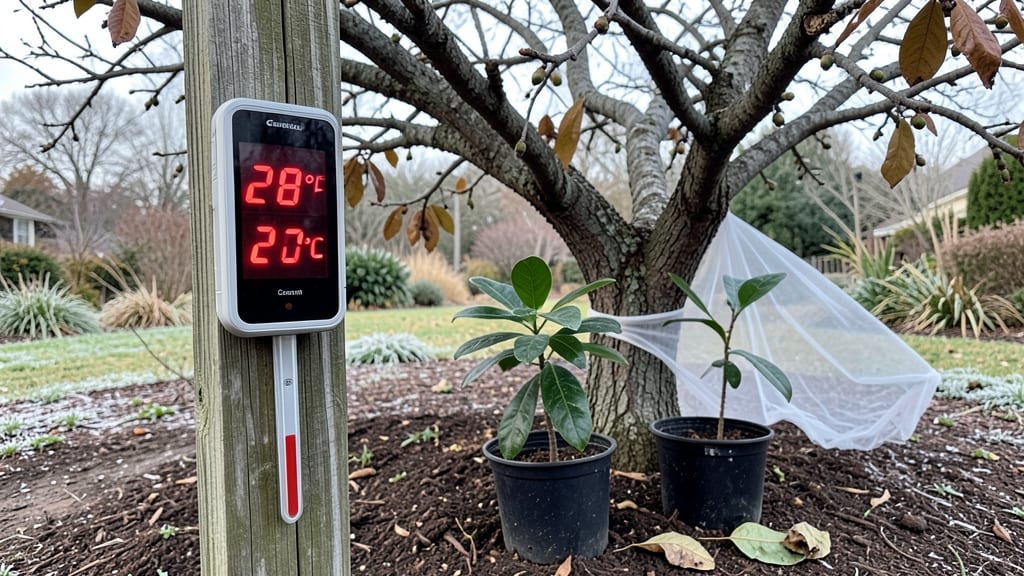
Mango trees can't survive winter in cold climates without protection, as they need temperatures between 10–27°C (50–80°F) to thrive and will die when exposed to 10°F (-12°C) or colder. Potted trees or young plants should be moved indoors or insulated, while outdoor trees require heavy mulching and windbreaks.
Mango trees are tropical plants, meaning their delicate systems—especially leaves and roots—freeze at 32°F (0°C) or below. 🌱 Without protection, even a brief cold snap can kill a tree, as frost damages cell walls and disrupts nutrient flow. The good news?
With proper insulation, containers, or indoor relocation, you can extend their lifespan in colder zones. For outdoor trees, mulching with straw or leaves adds a protective layer, while windbreaks shield against harsh winds that accelerate heat loss.
If you're in USDA zones 9-11, your mango tree has a fighting chance outdoors with winter care. But in zones 8 or colder, potted trees are your best bet—just remember to bring them inside before temperatures drop.
The key is acting early: monitor forecasts and prepare insulation or indoor space at least a month before the first frost.
💡 In This Article
- Mango Tree Cold Tolerance Limits and Freeze Damage
- Winter Care Strategies for Potted and Outdoor Mango Trees
Mango tree cold tolerance limits and freeze damage
Mango trees are tropical evergreens that evolved in regions where temperatures rarely drop below 10°C (50°F), making them highly sensitive to cold. Their leaves contain high moisture content and thin cell walls that rupture when exposed to frost, causing irreversible damage.
The roots, which absorb water and nutrients, are particularly vulnerable—even a brief dip to 20°F (-7°C) can kill root systems, starving the tree above ground.
In nature, mango trees grow in USDA hardiness zones 9-11, where winters stay above 30°F (-1°C). Below 10°F (-12°C), the tree's cellular structures freeze and burst, a process called "ice crystal formation."
This is why even a single night of -5°F (20°C) can kill an unprotected mango tree. 🌱 The bark, while slightly more resilient, can develop cracks that invite fungal infections, further weakening the tree.
What makes this worse is wind chill. A calm 25°F (-4°C) night feels warmer than the same temperature with 15 mph winds, which can drop the effective temperature to 10°F (-12°C) or lower.
This is why windbreaks—like burlap screens or evergreen trees—are crucial for outdoor mango trees in marginal climates. The goal is to maintain a 5°F (3°C) buffer around the tree to prevent cellular damage.
Young mango trees are especially fragile because their root systems are shallow and haven't developed the depth to access deeper, warmer soil layers. Mature trees in ideal conditions can tolerate brief dips to 28°F (-2°C), but only if their roots remain insulated.
This is why mulching with 6-8 inches of straw or wood chips is non-negotiable—it acts like a thermal blanket, keeping root-zone temperatures 5-10°F warmer than the air above.
Here's the science behind the damage: When water in plant cells freezes, it expands by 9% in volume, tearing cell membranes. This disrupts the tree's ability to transport water and nutrients, leading to browning leaves and eventual death.
The first visible sign of trouble is leaf discoloration—yellowing or blackening—that appears within 24-48 hours of frost exposure. By then, it's often too late to save the tree.
For comparison, citrus trees—another tropical relative—can handle brief dips to 25°F (-4°C) with proper care, but mango trees lack this resilience. Their leaves contain higher moisture levels, making them more prone to freeze damage.
This is why even experienced growers in USDA zone 8 (like parts of California) treat mango trees as annuals unless they're potted and moved indoors.