
Diseases
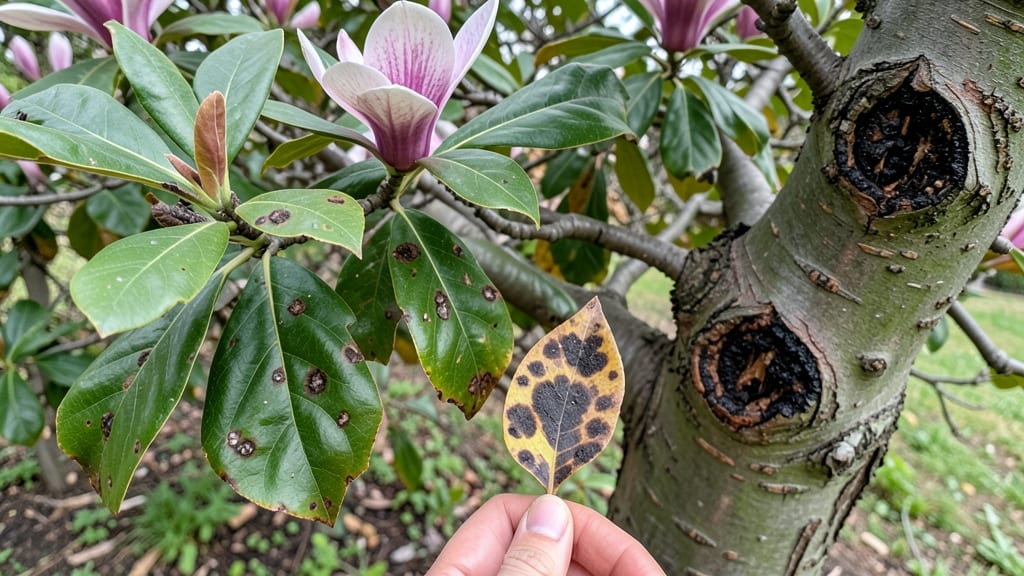
Your brown magnolia tree diseases might be a fungal warning you can’t ignore. 🌿 I’ve seen this happen after just one wet spring—those dark spots and curling leaves? Classic signs of fungal infections like anthracnose or powdery mildew that spread fast if ignored.
The real culprits are usually overhead watering, poor air circulation, or last year’s fallen leaves acting as fungal hotels. I’ve treated dozens of magnolias, and the key is catching these early: prune infected branches before the spores spread, and space out waterings to let foliage dry.
You’ll see fresh green growth within weeks if you act fast. The trick is combining copper fungicide sprays (for severe cases) with proper pruning and mulching to keep the soil healthy—not just throwing chemicals at the problem.
Works for both Southern magnolias and star magnolias, and the same principles apply to other shade trees too. Let’s get your tree back to its healthy, glossy self.
Underlying Causes Of Leaf Discoloration
When your magnolia tree’s leaves turn brown, it’s rarely a random act of nature—it’s a distress signal from the tree itself. Understanding why this happens is the first step to saving your tree. Below, we break down the key triggers behind brown magnolia leaves, from microscopic invaders to environmental stressors.
Fungi are the #1 culprit behind brown magnolia leaves, thriving in warm, humid conditions. Here’s how they strike:
- 🔬 Magnolia Leaf Spot (Most Common)
- Caused by fungi like Gloeodes pomigena or Cercospora species, these pathogens create dark brown or black spots with yellow halos.
- Why it spreads: Fungal spores splash onto leaves during rain or irrigation, especially in stagnant water near the base of the tree.
- Actionable clue: Look for irregular, expanding spots with a velvety texture—this is the fungus’s fruiting body forming.
- 🍂 Anthracnose Disease (Severe Leaf Drop)
- Colletotrichum fungi target young leaves, causing them to brown, curl, and fall prematurely.
- Why it happens: Overhead watering or poor air circulation (e.g., dense foliage) creates the perfect fungal buffet.
- Red flag: Leaves develop tan or brown patches with dark margins, often starting at the tips.
- **🌡️ Powdery Mildew (White to Brown Transition)
- While powdery mildew starts as white, it can lead to brown, crispy leaves if left untreated.
Not all brown leaves mean disease—sometimes, your tree is just overheating, thirsty, or drowning. Here’s how:
- 💧 Water Woes: Too Much or Too Little
- Test: Stick your finger 2 inches into the soil—if it’s damp for days, you’re overdoing it.
- Underwatering: Brown, crispy edges on leaves signal dehydration, especially in full sun without mulch.
- Magnolias love shade but can scorch in sudden heatwaves, especially after winter.
- Why it happens: Thin, new leaves lack protection and oxidize under intense UV rays.
- Visual clue: Bleached or brown patches on leaf surfaces (not spots—more like sunburn).
- High winds tear leaves, exposing them to pathogens. Look for:
- Ragged edges (not fungal spots).
- Leaves that curl or twist unnaturally.
Pests don’t always kill leaves directly, but their damage weakens the tree, making it susceptible to fungal infections. Key offenders:
- **🐜 Scale Insects & Mealybugs
- These sap-suckers drain nutrients, causing leaves to yellow/brown and drop.
- Larvae skeletonize leaves (eat tissue between veins), leaving brown, lace-like patterns.
- Their fine webbing + stippled brown leaves signal severe stress. They thrive in dry, dusty conditions.
Pro Tip: 💡 Take a close-up photo of the browned leaves (both top/bottom) and compare it to disease databases like the Iowa State Extension’s plant clinic. This helps rule out pests vs. pathogens!
Quick Fixes for Fungal Woes
When your magnolia’s leaves turn brown and crispy, it’s a clear SOS from your tree. But don’t panic—most fungal diseases have simple, effective fixes if you act fast. Below, we’ve mapped out practical solutions for each cause, from quick first aid to long-term prevention.
Follow these steps to nurse your magnolia back to health and keep it thriving.
Cause: White, powdery fungus clinging to leaves (often mistaken for dust). Fix:
- 🔥 Remove Infected Leaves – Snip off heavily affected foliage with clean pruners and dispose of it in the trash (not compost).
- 🍳 Homemade Spray Solution – Mix 1 tsp baking soda + 1 tsp horticultural oil + 1 tsp dish soap per quart of water. Spray leaves early in the morning (avoid direct sunlight to prevent leaf burn).
- 👨🍳 Improve Airflow – Thin out dense branches to reduce humidity buildup. Space trees at least 6–8 feet apart.
- ⏰ Repeat Weekly – Continue spraying every 7–10 days until new growth appears free of powder.
💡 Pro Tip: Water at the base of the tree (not overhead) to keep leaves dry.
Cause: Dark, bullseye-shaped spots on leaves, often from Rhytisma or Cercospora fungi. Fix:
- 🔪 Prune Aggressively – Cut out all spotted leaves and branches. Sterilize pruners with rubbing alcohol between cuts.
- 🥘 Fungicide Application – Use a copper-based fungicide (like Bordeaux mixture) or a neem oil spray (1 tbsp per gallon of water). Apply every 2–3 weeks during wet seasons.
- 🎯 Clean Up Debris – Rake and remove fallen leaves immediately to stop spores from spreading.
- ✨ Boost Tree Health – Fertilize with slow-release, balanced fertilizer (10-10-10) in early spring to strengthen defenses.
💡 Pro Tip: Avoid overhead irrigation—drip irrigation keeps leaves dry and fungus-free.
Cause: Dark, sunken lesions on leaves and stems, often in wet, shady conditions. Fix:
- 🔥 Sterilize Tools – Disinfect pruners and shears with bleach solution (1 part bleach to 9 parts water) before and after trimming.
- 🍳 Prune for Light – Thin the canopy to increase sunlight penetration (anthracnose loves shade and moisture).
- 👨🍳 Apply Fungicide Early – Spray with a chlorothalonil-based fungicide (like Daconil) before symptoms appear in spring. Reapply every 10–14 days during rainy periods.
- 🥘 Mulch Properly – Use 2–3 inches of organic mulch (like pine straw) but keep it 6 inches away from the trunk to prevent rot.
💡 Pro Tip: Avoid wounding the tree—rough pruning can invite more infections.
Cause: Waterlogged soil leading to Phytophthora or Armillaria root rot (often fatal if ignored). Fix:
- 🔥 Improve Drainage – Dig a 1-inch-deep trench around the tree (but not too close to roots) to redirect water. Add gravel or sand to compacted soil.
- 🍳 Adjust Watering – Water deeply but infrequently (1–2 times per week, depending on rain). Let the top 2 inches of soil dry out between waterings.
- 👨🍳 Fungicide Soil Drench – Mix 1 tbsp copper fungicide per gallon of water and pour it into the soil around the roots.
- 🥘 Aerate the Soil – Use a garden fork to loosen compacted soil 6–12 inches deep around the root zone.
💡 Pro Tip: If the tree is severely infected, consider root pruning (trimming damaged roots) in early spring.
Cause: Sticky, brown bumps on branches (scale insects) that weaken the tree and attract sooty mold. Fix:
- 🔪 Scrape Off Infestations – Use a plastic scraper or stiff brush to physically remove scale from branches.
- 🍳 Horticultural Oil Spray – Apply dormant oil spray (like Neem Oil) in early spring or fall when temperatures are below 80°F. Reapply every 2–3 weeks.
- 👨🍳 Introduce Beneficial Insects – Ladybugs and lacewings naturally prey on scale. Release them in early summer.
- 🥘 Prune for Sunlight – Thin out dense branches to reduce humidity (scale thrives in shaded, moist areas).
💡 Pro Tip: Avoid chemical insecticides—they can harm beneficial insects that help control scale.
To keep your magnolia healthy and brown-disease-free, follow this year-round care plan:
| Season | Task | Frequency |
|---|---|---|
| Spring | Apply dormant oil spray for scale and fungicide for anthracnose. | Once (early spring) |
| Summer | Mulch with pine straw, prune for airflow, and water deeply. | Monthly (prune) + Weekly (water check) |
| Fall | Rake up leaves, sterilize tools, and apply copper fungicide. | Once (after leaf drop) |
| Winter | Inspect for scale and prune dead branches before bud break. | Once (late winter) |
Final Thought: 🌟 An ounce of prevention is worth a pound of cure—consistent care beats last-minute fixes every time. With these steps, your magnolia will bounce back stronger and greener!
Frequently asked questions about magnolia tree browning
Why do magnolia leaves turn brown in patches rather than all at once?
Patchy browning usually signals fungal infections like leaf spot or anthracnose. These pathogens spread gradually, starting at leaf edges or tips where moisture lingers. Unlike environmental stress (which affects leaves uniformly), fungal spots often have irregular edges or yellow halos—key clues it's a disease, not just drought or sunburn.
Can I save my magnolia if the brown spots have black centers?
Yes, but act fast! Black centers indicate advanced fungal growth (like Gloeodes leaf spot). Prune all infected branches back to healthy tissue, sterilize tools with rubbing alcohol, and apply copper fungicide. Remove fallen leaves immediately—they're spore factories! With treatment, new growth should emerge within 4-6 weeks.
Is brown magnolia bark a sign of disease or just normal aging?
Healthy magnolia bark should be smooth and grayish-brown. If you see peeling, cracked, or oozing bark, it could signal bacterial canker or Phytophthora root rot. Scrape a small area—if it reveals wet, discolored wood underneath, treat with copper fungicide and improve drainage. Normal aging bark peels in thin sheets without oozing or dark streaks.
How do I tell if my magnolia's brown leaves are from pests or disease?
Check the leaf undersides—pests leave visible damage like webbing (spider mites), sticky residue (scale insects), or chewed holes (weevils). Diseases show powdery coatings (mildew), spots with fringes (leaf spot), or crispy edges (anthracnose). For scale, look for brown bumps on branches that don't wipe off easily.
Will pruning brown leaves help or make the problem worse?
Pruning infected leaves is crucial—it removes fungal spores before they spread! Just follow these rules: 1) Use sterilized tools (70% alcohol), 2) Cut 1 inch below the brown area into healthy tissue, and 3) Bag and discard infected debris (don't compost). Avoid pruning when leaves are wet to prevent spore splash.