
Pests and Diseases
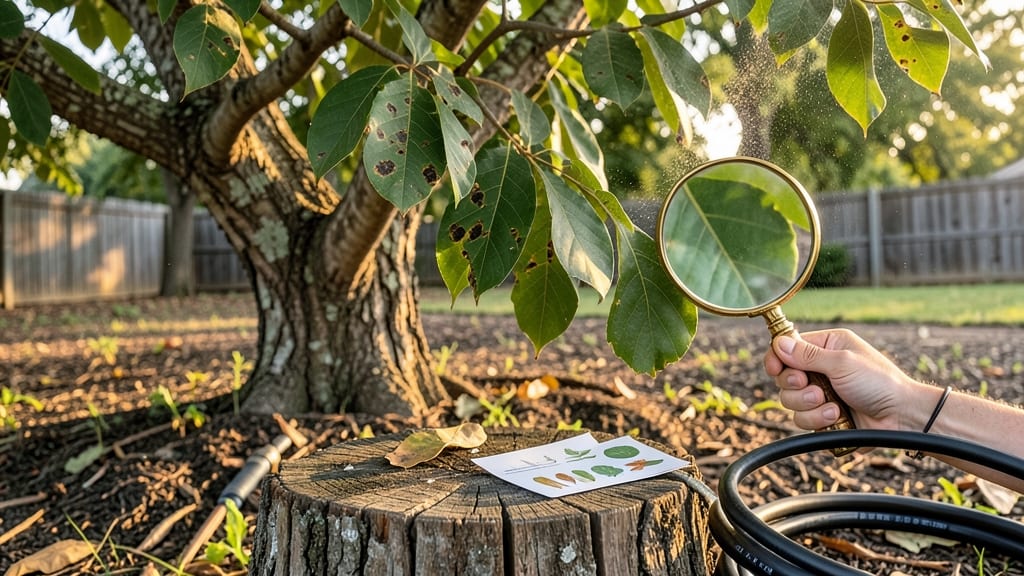
Black spots appearing on pecan tree leaves typically signal fungal infections such as anthracnose or scab, which flourish in warm, damp conditions and can severely stress trees if left unchecked. Quick action—like pruning affected foliage and enhancing airflow—helps stop the spread before it worsens.
These fungal issues don't just appear randomly—they're often triggered by poor circulation or excessive moisture. 🌱 For example, anthracnose thrives when leaves stay wet for prolonged periods, while scab prefers humid conditions above 75°F.
I've seen trees recover completely when homeowners adjust their pruning schedule to improve sunlight exposure and reduce overhead watering. The key is acting fast before the spots spread to younger leaves or fruit.
Beyond pruning, organic solutions like copper-based fungicides or neem oil sprays can be highly effective when applied during the early morning or evening to avoid leaf burn. Always test a small area first, as some trees may react sensitively to treatments.
Proper spacing between trees also plays a crucial role—it's one of the simplest ways to dramatically improve airflow and prevent future outbreaks.
💡 In This Article
- Identifying Fungal Diseases Causing Black Spots on Pecan Leaves
- Organic Treatment Steps for Pecan Tree Leaf Spot Diseases
Identifying fungal diseases causing black spots on pecan leaves
Fungal diseases like anthracnose and scab create those telltale black spots by producing microscopic spores that infect leaf tissue. Anthracnose, caused by the fungus Gloeosporium, creates irregular, sunken spots that can merge into larger necrotic areas.
These spots often have a dark brown center surrounded by a yellow halo, which is your tree's immune response trying to contain the infection. Under humid conditions (above 80% relative humidity), these spores germinate within 24-48 hours, turning leaves into perfect breeding grounds.
The scab disease, caused by Fusicladium effusum, produces slightly raised, olive-green to black spots that may appear velvety or powdery due to fungal growth.
What makes scab particularly aggressive is its ability to overwinter in fallen leaves and buds, ready to reinfect when spring arrives. 🌱 Temperature plays a critical role—scab thrives between 60-80°F, while anthracnose prefers 75-90°F.
This explains why you might see outbreaks spike during late spring or early summer when both humidity and temperatures align perfectly for fungal growth.
Bacterial leaf spot, though less common, creates smaller (1/8-inch) water-soaked spots that eventually turn black and papery. The key difference here is the presence of yellowish bacterial ooze on the underside of leaves during wet conditions.
Unlike fungal diseases, bacterial infections spread rapidly through rain splashing, which is why overhead watering can accelerate outbreaks. Identifying which pathogen you're dealing with matters because it determines the most effective treatment approach.
Here's what to look for in terms of spot characteristics:
- Anthracnose: Irregular, sunken spots with yellow halos; often appears on lower leaves first
- Scab: Raised, olive-green to black spots that may have a powdery texture; commonly found on upper leaves
- Bacterial leaf spot: Tiny, water-soaked spots that turn black and papery; may have bacterial ooze
Environmental factors accelerate these diseases dramatically. For instance, prolonged leaf wetness (more than 9 hours) can increase anthracnose infection rates by up to 300%.
This is why proper tree spacing (20-30 feet between mature pecan trees) becomes crucial—it allows sunlight to penetrate the canopy and evaporate moisture faster. The combination of poor airflow and excessive moisture creates the perfect storm for fungal proliferation.
What most people don't realize is how quickly these diseases can spread through your entire orchard. A single infected leaf can produce thousands of spores, which are then dispersed by wind, rain, or even garden tools.
This is why early detection—catching spots when they're still small—can mean the difference between a minor outbreak and a full-blown epidemic that weakens your tree's overall health and reduces nut production by up to 50% in severe cases.