
Pruning
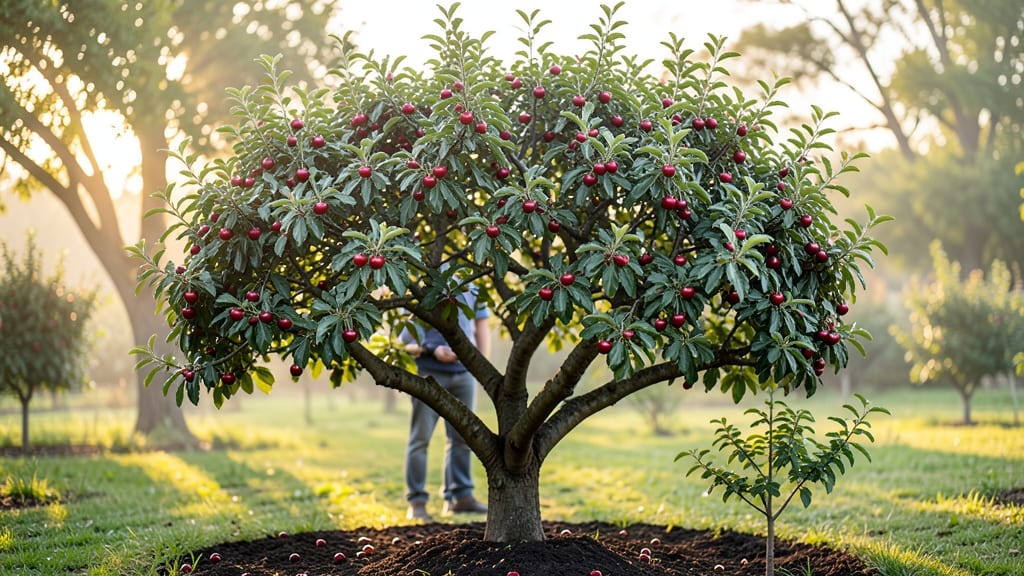
A Bing cherry tree’s height 🍒 can reach 15 to 25 feet at maturity, but don’t let that scare you off—there are ways to manage its size without sacrificing fruit.
If you’re dreaming of homegrown Bing cherries but worried about space, you’re not alone—this classic variety grows surprisingly tall, but the right variety and pruning can make it perfect for small yards.
The key to keeping your Bing cherry tree under control starts with choosing a dwarf or semi-dwarf variety, which can stay between 8 and 18 feet tall. Even standard trees can be pruned strategically to fit tight spaces, so you don’t have to skip out on those sweet summer fruits.
In this guide, I’ll break down the fastest-growing Bing cherry types, how to prune for height control, and the best compact varieties for urban gardens—so you can enjoy fresh cherries without sacrificing your backyard.

Bing cherry tree height: mature size & growth rate by variety
The Bing cherry tree is a beloved choice for home orchards, but its mature height can be a game-changer for space planning. Standard varieties typically reach 20–25 feet tall, while dwarf and semi-dwarf options stay under 12 feet.
Understanding these differences—and how rootstock type influences growth—helps you pick the perfect tree for your yard. Whether you have a spacious backyard or a cozy urban patio, the right variety can make Bing cherries a reality. Let’s break down the specifics so you can plan with confidence.
Your Bing cherry tree’s height depends on two key factors: the cultivar you choose and the rootstock it’s grafted onto. For example, a tree grafted onto Mazzard rootstock will grow much taller than one on Mahaleb or Gisela rootstock.
This distinction is critical because it determines not just how big your tree will be, but also how quickly it matures and produces fruit. Let’s explore the most common options and their growth patterns to help you make an informed decision.
📌 Key Takeaway: A standard Bing cherry tree can grow 20–25 feet tall in 8–10 years, while dwarf varieties reach 8–12 feet in the same timeframe. Rootstock choice is the #1 factor controlling size—don’t skip this step!
The standard Bing cherry tree on Mazzard rootstock is the classic choice, but its 20–25 foot height makes it ideal for large properties or rural settings. If you’re working with limited space, consider Bing Improved on Mahaleb rootstock, which tops out at 12–15 feet while still delivering a bountiful harvest.
For urban gardeners or small backyards, dwarf varieties like Stella or Lapins are game-changers, offering 8–12 feet of height and faster fruit production.
One of the biggest misconceptions about Bing cherry trees is that all varieties grow at the same rate. In reality, rootstock type directly impacts annual growth.
For instance, a tree on Mazzard rootstock can grow 1.5–2.5 feet per year, while a dwarf variety on Gisela 5 grows just 0.8–1.2 feet annually.
This slower growth means dwarf trees start producing fruit 2–3 years sooner than their standard counterparts, which is a major perk for impatient gardeners!
If you’re planning to grow a Bing cherry tree in a container, focus on dwarf varieties like Stella or Bing Dwarf, both of which thrive in large pots (at least 24-inch diameter) with proper drainage.
These compact options are perfect for patios, balconies, or small yards where space is at a premium. Just remember: even dwarf trees need full sun exposure and regular pruning to maintain their size and shape. Without these care steps, they can quickly outgrow their containers.
For those with larger gardens or orchards, the standard Bing cherry tree is a fantastic investment, but it requires careful planning. These trees need at least 20 feet of space in all directions to avoid overcrowding, which can lead to poor air circulation and increased disease risk.
If you’re planting multiple trees, space them 25–30 feet apart to ensure optimal growth and fruit production. Pro tip: Pair your Bing tree with a pollinator variety like Stella or Lapins to guarantee better fruit set.
Another factor to consider is your climate zone. Bing cherry trees thrive in USDA Zones 5–7, where they experience cold winters and warm summers. In warmer climates (Zones 8–9), these trees may struggle with heat stress or poor fruit set.
If you’re in a hotter region, opt for a dwarf variety and provide afternoon shade during peak summer months to help the tree conserve energy. Proper watering and mulching will also support healthy growth in challenging climates.
Best Bing cherry varieties for small yards & containers
If your yard is small but you crave homegrown Bing cherries, don't despair—there are compact varieties that thrive in tight spaces. The classic Bing cherry can reach 15-25 feet, but dwarf and semi-dwarf cultivars stay manageable while delivering sweet, juicy fruit.
These varieties are perfect for urban gardens, patios, or even large containers with proper care.
For container growing, choose dwarf rootstock varieties grafted onto Mahaleb or Mazzard rootstock. These stay under 8-12 feet tall, making them ideal for balconies or small backyards. Even with limited space, you can enjoy 20-30 pounds of cherries annually from a well-maintained tree.
Bing Cherry Varieties for Small Spaces
Height: 8-10 ft
Yield: 20-30 lbs
- Compact growth
- Reliable fruiting
- Needs cross-pollination
- Requires pruning
Height: 6-8 ft
Yield: 15-25 lbs
- Self-pollinating
- Disease-resistant
- Smaller fruit
- Slower to bear
Height: 10-12 ft
Yield: 25-35 lbs
- Cold-hardy
- High yield
- Needs 2 varieties
- Requires winter protection
💡 Container Tip: Use a 20-gallon pot with drainage holes and well-draining soil for dwarf varieties. Place in full sun and water deeply 2-3 times per week during summer.
When selecting a container, prioritize depth over width—cherry trees develop deep root systems. A 18-24 inch diameter pot with 24 inches of soil depth gives roots room to spread while keeping the tree stable. Add compost and perlite to the potting mix to improve drainage and aeration.
For urban gardeners, 'Stella' is my top recommendation—it's self-pollinating, disease-resistant, and stays under 8 feet tall. Plant it near a south-facing wall to maximize sunlight exposure. Pair it with another dwarf variety like 'Lapins' for cross-pollination and better fruit set.
Remember, even compact varieties need proper pruning to maintain shape and encourage fruiting. Prune in late winter before buds swell, removing dead or crossing branches first. Thin out 10-15% of the canopy annually to improve airflow and fruit quality.
With the right variety and care, you can enjoy homegrown Bing cherries even in the smallest spaces—no orchard required! 🍒