
Size
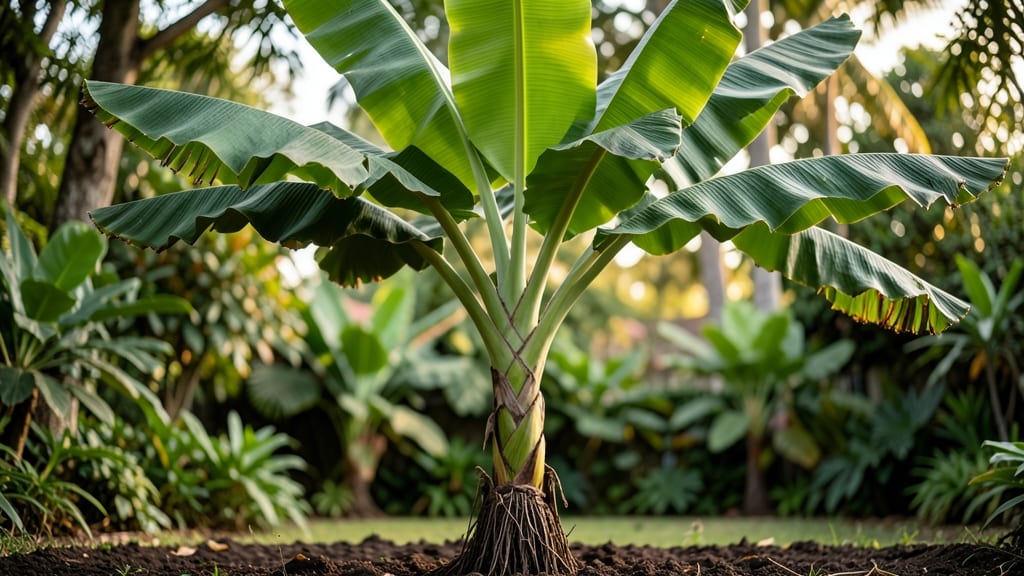
Understanding the size of a banana tree 🍌 is the first step to planning your garden—or your container setup—because what starts as a small plant can quickly become a towering presence.
Did you know some banana trees tower over 30 feet while others stay compact enough for containers? The difference isn’t just about space—it determines your harvest potential and growing strategy.
From the 10-foot Lady Finger to the 25-foot Red Dacca, variety and climate dictate just how big your banana plant will become.
In this guide, I’ll break down the growth habits of the most popular types, how to control size in small spaces, and why some varieties thrive in pots while others need room to stretch.
Whether you’re dreaming of a backyard harvest or a balcony-friendly dwarf, you’ll learn how to match your banana tree’s size to your space—and your patience.


Banana tree size by variety: dwarf vs. giant growth habits
Choosing the right banana variety isn't just about flavor—it's about understanding banana tree size. Some varieties like the Lady Finger stay under 10 feet, while others like Red Dacca can reach 25 feet or taller. This dramatic difference affects everything from your garden layout to your harvest strategy.
Most gardeners assume all banana plants grow into towering giants, but the truth is far more varied. Dwarf varieties thrive in containers and small yards, while standard varieties need spacious tropical gardens. Your climate and growing conditions also play a crucial role in how large your banana plant will become.
🌱 Banana Variety Size Comparison
| Variety | Mature Height | Growth Rate | Ideal Spacing | Best For |
|---|---|---|---|---|
| Cavendish | 12-15 ft | Moderate (1-2 ft/year) | 10-12 ft apart | Commercial, home gardens |
| Lady Finger | 6-10 ft | Slow (6-12 in/year) | 6-8 ft apart | Containers, small yards |
| Red Dacca | 20-25 ft | Fast (2-3 ft/year) | 15-20 ft apart | Large gardens, tropical climates |
| Grand Nain | 14-18 ft | Moderate (1.5 ft/year) | 12-15 ft apart | Home gardens, tropical zones |
| Blue Java | 15-20 ft | Moderate (1-2 ft/year) | 12-15 ft apart | Humid climates, large spaces |
| Manzano | 10-14 ft | Slow (6-12 in/year) | 8-10 ft apart | Small farms, containers |
| Ice Cream | 12-16 ft | Moderate (1 ft/year) | 10-12 ft apart | Home gardens, tropical zones |
| Dwarf Cavendish | 8-12 ft | Slow (6-12 in/year) | 6-8 ft apart | Containers, patios |
| Horn | 18-22 ft | Fast (2 ft/year) | 15 ft apart | Tropical climates, large gardens |
| Bluggoe | 10-14 ft | Moderate (1 ft/year) | 8-10 ft apart | Home gardens, subtropical zones |
If you're growing Lady Finger bananas, you can easily fit them in a large container, while Red Dacca plants need the space of a small tree. The Cavendish variety, one of the most popular for home gardens, typically reaches 12-15 feet at maturity, making it ideal for medium-sized yards.
For container gardening, varieties like Dwarf Cavendish or Manzano are excellent choices, reaching only 8-12 feet. These compact varieties produce fruit just as sweet as their taller counterparts but with far less space requirements.
Just ensure your container is at least 18 inches wide and 2 feet deep to accommodate root growth.
Growth rates also vary dramatically. Fast-growing varieties like
Climate factors that dramatically affect banana tree size
Banana trees thrive in warm climates, but their size and growth rate vary dramatically based on your USDA hardiness zone. In USDA zones 10-12, where frost is rare, banana trees can reach 20-30 feet tall with massive 6-foot-wide leaves.
However, in cooler zones like 9b or 10a, growth slows significantly, often capping at 10-15 feet unless you use cold-hardy varieties.
Temperature isn’t the only factor—seasonal changes also play a critical role. Tropical varieties like Cavendish grow year-round in frost-free zones but may enter dormancy in cooler months if temperatures drop below 50°F (10°C).
Meanwhile, subtropical varieties like Red Dacca can tolerate brief cold snaps but still produce smaller fruit clusters in less-than-ideal conditions.
Here’s how your climate zone impacts banana tree size, leaf span, and fruit production:
In USDA zones 10-12, banana trees grow aggressively year-round, producing large fruit bunches and towering leaves. For example, a Cavendish in Hawaii can reach 25 feet in just 2 years, while a Lady Finger in Florida stays slightly shorter at 15-20 feet but yields more compact, high-quality fruit.
In contrast, subtropical zones (9b-10a) like Southern California or parts of Texas see slower growth. A Red Dacca here might only hit 12 feet but produces larger, red-skinned bananas due to cooler nights.
Meanwhile, cold-hardy varieties like Dwarf Cavendish (if properly protected) can survive brief frosts but rarely exceed 8 feet in height.
If you’re in a cooler climate, focus on seasonal care like mulching heavily in winter and using row covers to protect young plants. Even a 5°F (3°C) drop can stunt growth, so choose microclimate spots near heat-retaining walls or greenhouses for the best results.
For container growers in Zone 9 or below, opt for dwarf varieties like Sugar Banana (though true dwarfs are rare). These stay under 6 feet but still produce edible, sweet fruit—just in smaller quantities. The key is matching your climate to the variety to avoid disappointment.