
Pruning
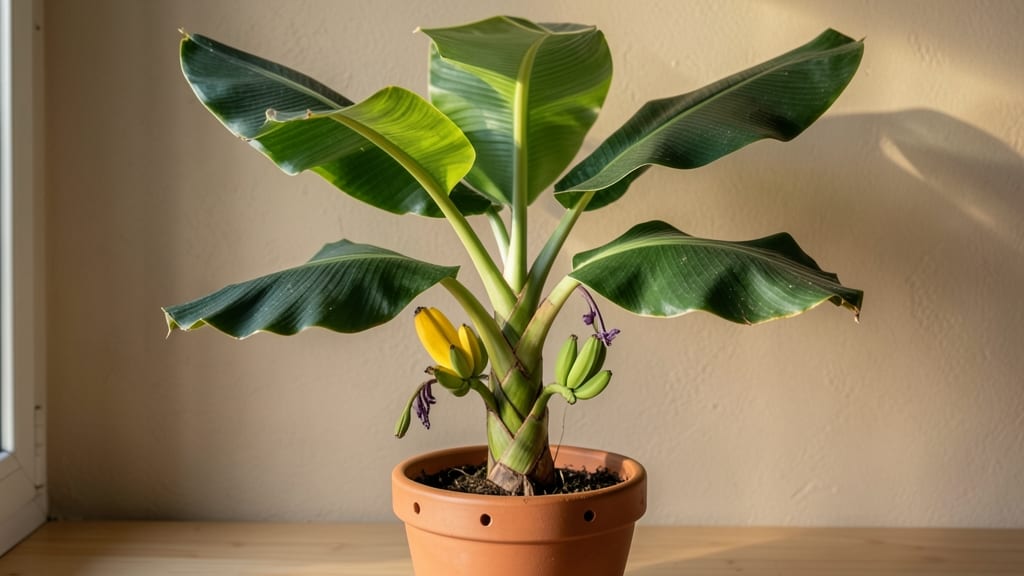
Growing a banana tree inside starts with pruning for compact growth—your key to a lush, manageable plant in small spaces. ✂️ I learned the hard way that skipping this step leads to leggy, unruly stems that outgrow any apartment.
The right cuts encourage bushier growth and keep your plant happy year-round, even in low-light conditions. You’ll need sharp pruning shears, a clean workspace, and about 30 minutes to shape your plant properly. Focus on removing the oldest, largest leaves first—they’re sapping energy that could go toward new, vibrant growth.
Banana trees respond well to pruning, so don’t be afraid to trim aggressively when needed. After pruning, you’ll notice fresh, dark green leaves emerging within 2-3 weeks, signaling your plant is thriving. The compact shape makes it perfect for corners, sunrooms, or even bright kitchens.
Just keep an eye out for yellowing leaves—they’re your cue to adjust watering or light. This method works for dwarf varieties like ‘Dwarf Cavendish’ or ‘Red Dwarf,’ but even larger types can be pruned to stay manageable. Let’s get your indoor banana tree looking its best!
📚 In This Guide
- What you need
- Instructions
- Tips and common mistakes
- Wrapping up and next steps
What you need
- ● Banana plant (Musa spp.) – Choose a dwarf variety like Musa acuminata ‘Dwarf Cavendish’ or Musa velutina for indoor spaces.
- ● Large container (15–20 gallons) – Ensure it has drainage holes and is at least 18–24 inches deep with a 12–16-inch diameter.
- ● High-quality potting mix – A blend of 60% peat moss or coconut coir, 30% perlite or pumice, and 10% compost for aeration and moisture retention.
- ● Pruning shears or sharp bypass pruners – Clean and sterilized to prevent disease (rubbing alcohol works great!).
- ● Gloves – Heavy-duty gardening gloves to protect against thorny pseudostems.
- ○ Support stake or trellis (optional but helpful) – A 3–5 ft tall stake or lightweight trellis to guide growth and prevent toppling.
- ● Slow-release fertilizer – Look for a balanced 10-10-10 or 20-20-20 formula to encourage lush growth.
- ● Grow lights (LED or fluorescent) – If natural light is limited, a 12–16 hour daily light cycle mimics tropical conditions.
- ● Mulch (orchid bark or straw) – Helps retain moisture and regulate soil temperature.
- ● Humidity tray or pebble tray – Banana trees love humidity! Add water + pebbles under the pot for extra moisture.
- ○ Pruning sealant (optional) – A tree wound sealant to coat large cuts and prevent rot.
Step-by-Step guide to pruning your indoor banana tree
Here's how to keep your tropical houseplant lush and manageable year-round.
✂️ Step 1: Identify the Right Pruning Time
Prune your banana tree in late winter or early spring before new growth begins. This is when the plant naturally slows down after its growing season. Look for yellowing or dead leaves—these are your first targets, but avoid cutting healthy green foliage unless it's obstructing light or air circulation.
I always wait until after the last frost date if I have an outdoor banana tree, but since this is an indoor plant, timing is simpler. The key visual cue is when you see new leaf buds forming at the base of the trunk—this signals it's safe to prune. Never prune during flowering or fruiting unless absolutely necessary, as this stresses the plant.
🌿 Step 2: Remove Dead and Damaged Foliage
Start by examining each leaf from the base to the tip. Use sterilized pruning shears to cut ½ inch above a leaf node (the small bump where leaves attach to the stem). This encourages new growth from that point. For completely brown or mushy leaves, remove them entirely—they're just using energy the plant doesn't need.
Here's the thing—banana trees are forgiving, but never leave stubs longer than ¼ inch. Long stubs can rot and attract pests. If you're unsure whether a leaf is dead, gently tug it. If it comes off easily, it's ready to go. Healthy leaves will resist slightly when you pull.
☀️ Step 3: Thin Out Crowded Growth
Banana trees grow in a clumping habit, and indoor plants often develop dense centers that block light and air. Focus on removing the oldest, innermost leaves first—they're the least productive. Aim to create a cone shape with the youngest, healthiest leaves on the outside.
I like to step back and visually assess the plant's shape. If you see leggy stems reaching toward the light source, those are prime candidates for pruning. Cut just above a healthy leaf node to stimulate branching. Never remove more than ⅓ of the plant's foliage at once—this prevents shock and maintains photosynthesis.
🪴 Step 4: Prune for Compact Growth
To encourage a bushier, more compact banana tree, target the tallest, most vertical stems. These are the ones that grow upward without branching. Cut them back to just above a leaf node that's facing outward. This redirects energy toward lateral growth instead of upward elongation.
Pay attention to the leaf arrangement—banana trees grow in a spiral pattern. When you prune a stem, the next leaf node below will often produce a new branch. This is how you create that lush, tropical look. If your tree has multiple trunks, prioritize pruning the tallest one first to balance the plant's shape.
⏰ Step 5: Post-Pruning Care
After pruning, water deeply to help the plant recover. The first 7-10 days are critical—keep the soil evenly moist but not soggy. Place the plant in a bright, indirect light location (no direct sun for a week) to reduce stress. You'll notice new leaf buds emerging within 2-4 weeks if everything's going well.
Here's where it gets fun—watch for pseudostems (the trunk-like structure) to thicken as the plant redirects energy. If you see yellowing at the tips of remaining leaves, it's normal and temporary. The real test is when you see new fronds unfurling—that's your reward for a job well done. Fertilize lightly with a balanced liquid fertilizer after new growth appears.
Tips & tricks for pruning your indoor banana tree
These small adjustments make all the difference when shaping your tropical plant for small spaces.
Timing is Everything: The late winter or early spring window is non-negotiable for indoor banana trees. This aligns with the plant's natural dormancy period after its growing season. Look for those tiny new leaf buds at the base of the trunk—they're nature's green light to prune. I've learned the hard way that pruning too early can stress the plant, while waiting too long means missing the optimal growth window.
The Leaf Node Technique: When cutting in Step 2 and Step 4, always aim for ½ inch above a leaf node—this is where the magic happens. The leaf node contains dormant buds that will sprout into new growth when stimulated. I mark the node with my fingernail before cutting to ensure precision, especially with banana trees that have tightly packed stems. This simple technique transforms leggy growth into bushy, compact foliage.
Visual Pruning Cues: For Step 3, step back and assess your plant's shape from three feet away. The goal is a cone shape with the youngest leaves on the outside. I use the "thirds rule"—never remove more than one-third of the foliage at once. This maintains photosynthesis while encouraging new growth. If you're unsure about a leaf, do the tug test: dead leaves come off easily, while healthy ones resist slightly.
Post-Pruning Recovery: The first 7-10 days after pruning are critical for recovery. I've found that placing the plant in bright, indirect light (like an east-facing window) during this period prevents stress. Watch for new leaf buds emerging within 2-4 weeks—this is your confirmation that the pruning worked. The temporary yellowing at leaf tips is normal as the plant redirects energy to new growth.
Pro Tips for Banana Tree Inside
- These small adjustments make all the difference when shaping your tropical plant for small spaces.
- Timing is Everything: The late winter or early spring window is non-negotiable for indoor banana trees.
- The Leaf Node Technique: When cutting in Step 2 and Step 4, always aim for ½ inch above a leaf node—this is where the magic happens.
Frequently asked questions
Got questions about growing a banana tree indoors? You’re not alone! Here are some of the most common concerns—and their solutions—to help you keep your compact banana thriving in small spaces.
Can I grow a banana tree indoors year-round?
Yes, but with care! Banana trees thrive indoors in warm climates (65°F+). Use grow lights for 12–14 hours daily, especially in winter. Choose dwarf varieties like Musa acuminata ‘Dwarf Cavendish’ for better adaptability. Just watch for yellowing leaves—this often signals low light or overwatering.
How often should I prune an indoor banana tree?
Prune lightly every 3–4 months to encourage bushier growth. Trim dead or yellowing leaves at the base with clean scissors. Avoid heavy pruning unless the plant is overgrown—bananas produce fruit on new growth, so don’t cut back more than 1/3 of the fronds at once.
What’s the best spot for an indoor banana tree?
Place it near a south- or west-facing window for maximum sunlight. If natural light is limited, supplement with a full-spectrum LED grow light 6–12 inches away. Avoid drafts (like AC vents) or cold windowsills—bananas hate temperature drops below 55°F.
Why is my indoor banana tree dropping leaves?
Leaf drop is usually stress-related. Check for:
- Underwatering: Soil should stay slightly moist but not soggy.
- Overwatering: Yellow leaves + mushy stems = root rot.
- Cold shock: Move it away from drafts or heating vents.
- Pests: Inspect for spider mites or scale insects.
Are there low-maintenance alternatives to banana trees for indoors?
If bananas seem too high-maintenance, try these easy tropical plants:
- Bird of Paradise – Thrives in bright light, grows tall but slower.
- Palm Trees (e.g., Areca) – Purifies air, handles lower light better.
- Monstera Deliciosa – Fast-growing, dramatic foliage, and forgiving.
Wrapping up and next steps
Growing a banana tree indoors isn’t just about creativity—it’s a rewarding way to enjoy tropical vibes in small spaces! With the right pruning techniques, you’ll keep your plant healthy, compact, and thriving. Start small, stay consistent, and watch your indoor jungle flourish!
Ready to take the next step? Pick a sunny spot, grab your tools, and give your banana tree the love it deserves. Happy pruning! 🌱✂️