
Trees
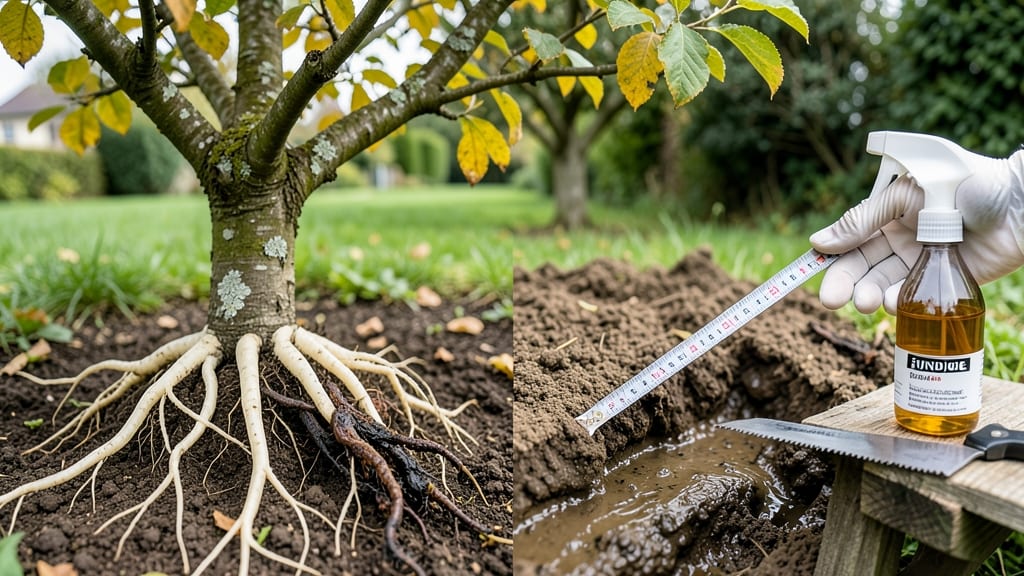
Apple tree root problems can turn your orchard into a battleground between healthy growth and silent rot. 🌳 I’ve watched girdling roots strangle my own trees, and root rot turn vibrant foliage into a sad, wilting mess—until I learned the right fixes.
The good news? Most issues are fixable with the right steps, and prevention keeps your tree thriving for decades.
Girdling roots circle the trunk like a noose, while root rot creates mushy, foul-smelling roots that can’t absorb water. Compacted soil suffocates roots, and fungal infections spread like wildfire in damp conditions. The symptoms?
Wilting leaves, stunted growth, or—worst of all—a tree that looks fine above ground but is dying below. Don’t wait until it’s too late: act now with soil aeration, proper pruning, and targeted treatments.
Here’s the game-changer: a three-step approach that works for almost any root problem. First, loosen compacted soil with a soil aerator or deep fork—roots need room to breathe. Second, prune girdling roots carefully (yes, it’s risky, but done right, it saves the tree).
Finally, treat rot or fungal issues with fungicide or organic amendments like compost. Within a season, you’ll see stronger growth and fewer warning signs.
Works for young saplings and mature trees alike, whether you’re dealing with a backyard orchard or a single prized variety. The key is catching issues early—so keep an eye on your tree’s roots, and don’t ignore the first signs of trouble. Your apple tree’s future depends on it.
Root Issues Uncovered
Understanding why apple tree roots struggle is the first step to fixing them. These problems rarely happen in isolation—they’re often the result of a mix of environmental stress, poor growing conditions, or even human interference.
Let’s break down the key culprits behind common apple tree root problems, explained in clear, actionable terms.
Apple trees thrive in well-draining soil, but when roots sit in soggy conditions, they suffocate. Here’s why it happens:
- Clay-heavy or compacted soil traps water, cutting off oxygen to roots.
Without oxygen, roots can’t absorb nutrients or fight off pathogens. - Overwatering (or heavy rainfall) forces roots to respire anaerobically, producing toxic byproducts like ethanol, which damages cells. - Low-lying planting spots or poorly sloped gardens encourage water pooling, leading to root rot (often caused by Phytophthora fungi).
💡 Pro Tip: Test your soil’s drainage by digging a 12-inch hole—if water pools after 6 hours, amend with compost or sand to improve airflow.
Pathogens love moist, stressed roots. The most destructive offenders include:
| Pathogen | How It Attacks | Signs to Watch For |
|---|---|---|
| Armillary Root Rot (Armillaria mellea) | Spreads via infected wood or soil; kills roots by blocking water/nutrient flow. | Honey-colored mushrooms at base, blackened roots. |
| Phytophthora Root Rot | Thrives in waterlogged soil; clogs root cells with gum-like ooze. | Wilting, yellow leaves, mushy brown roots. |
| Silver Leaf Fungus (Chondrostereum purpureum) | Invades through wounds; turns roots black and brittle. | Silvery leaf undersides, stunted growth. |
✨ Key Factor: Fungi spread faster in dense, poorly aerated soil or after root damage (e.g., from girdling or pruning wounds).
When roots grow in circles or get crushed, they strangle the tree’s nutrient flow. Common causes:
- Root girdling occurs when roots loop around the trunk or each other, cutting into the vascular cambium (the tree’s "plumbing").
- Construction damage (e.g., heavy machinery compacting soil) severs fine root hairs, reducing water uptake by 30–50%.
- Weak planting support (like staking too tightly) restricts root expansion, leading to one-sided growth and stress.
🔥 Warning: Girdling roots are often invisible until the tree shows sudden dieback or cankers (sunken, dead patches on the trunk).
Apple trees need balanced nutrients, but imbalances trigger root problems:
- Low nitrogen (N) → Stunted root growth, pale leaves (roots can’t support foliage).
- Excess phosphorus (P) → "Locks out" zinc and iron, causing root tips to die back (a condition called "iron chlorosis").
- High soil pH (>7.0) → Reduces availability of manganese and iron, leading to blackened, rotting roots.
📊 Soil Test Tip: Use a home pH kit (ideal range: 6.0–7.0). If pH is off, amend with sulfur (to lower pH) or lime (to raise it).
Extreme conditions force roots into survival mode, often backfiring:
- Frost heave (freeze-thaw cycles) pushes roots upward, exposing them to drying winds and pest attacks.
- Drought stress causes roots to shrink and pull away from soil, making them vulnerable to cracking when rewatered.
- Competition from weeds/grasses steals moisture and nutrients, leaving roots starved and weak.
🌡️ Climate Hack: Mulch with wood chips (3–4 inches deep) to insulate roots in winter and retain moisture in summer.
Critters like voles, grubs, and nematodes turn roots into a buffet:
- Voles gnaw roots in winter, creating clean-cut damage (unlike fungal rot, which is fuzzy).
- Grubs (Japanese beetle larvae) chew roots, leaving honeycomb-like tunnels that collapse underfoot.
- Root-knot nematodes inject galls (lumpy growths) on roots, blocking nutrient flow.
🎯 Prevention: Apply nematicides in early spring or use grub-resistant grass varieties if planting near lawns.
Mistakes at planting time set roots up for failure:
- Planting too deep (above the root flare) suffocates the trunk and encourages rot at the base.
- Over-fertilizing with nitrogen burns fine roots, while lack of potassium (K) weakens disease resistance.
- Ignoring root pruning during transplanting severs mycorrhizal fungi (beneficial root partners), slowing recovery.
👨🍳 Planting Rule: The root flare (where roots meet the trunk) should sit 1–2 inches above soil level—never buried!
Fixing Apple Tree Root Issues
Apple tree root problems can feel overwhelming, but with the right approach, you can restore your tree’s health and prevent future damage.
Below are practical, step-by-step solutions tailored to the most common root issues—girdling roots, root rot, and guttation—along with prevention tips to keep your tree thriving for years.
Problem: Roots growing in a circular pattern around the trunk (girdling) strangle the tree by cutting off vital nutrient flow.
How to Fix It:
🔪 Step 1: Prune the Girdling Roots
- Use sterilized pruning shears or a hand saw to carefully cut away the offending roots.
- Make clean, angled cuts just outside the girdling loop to avoid damaging the trunk.
- Do not remove more than 25% of the root system at once—this can shock the tree.
🌱 Step 2: Loosen Compacted Soil
- Girdling often occurs in compacted or hardpan soil. Use a garden fork to gently aerate the soil around the roots (but avoid piercing the trunk).
- Mix in compost or organic matter to improve drainage and root growth.
🌿 Step 3: Mulch Properly
- Apply 2–4 inches of organic mulch (wood chips, straw) 3–6 inches away from the trunk to encourage outward root growth.
- ⚠️ Avoid piling mulch against the trunk—this can trap moisture and invite rot.
💡 Prevention Tip:
- Plant young apple trees in well-draining soil and avoid heavy clay areas.
- Check roots annually during pruning season (late winter/early spring) for early signs of girdling.
Problem: Waterlogged soil leads to fungal root rot, causing roots to turn mushy, black, and smell foul.
How to Fix It:
💦 Step 1: Improve Drainage Immediately
- Dig a shallow trench (6–12 inches deep) around the tree’s drip line to redirect excess water.
- Add gravel or sand to the trench to create a drainage path.
- If the soil is extremely compacted, consider soil solarization (covering the area with clear plastic for 4–6 weeks in hot sun to kill fungi).
🧼 Step 2: Remove Infected Roots & Sterilize
- Carefully excavate and trim away any black, mushy roots (wear gloves—this stuff is gross!).
- Disinfect tools with rubbing alcohol or bleach solution (1 part bleach to 10 parts water).
- Do not compost infected roots—they’ll spread the fungus.
🌿 Step 3: Adjust Watering & Soil
- Water deeply but infrequently—apple trees prefer 1–2 inches per week, but avoid soggy soil.
- Amend soil with perlite or vermiculite to improve aeration.
- Apply a fungal treatment like copper fungicide or mycorrhizal inoculant to help roots recover.
💡 Prevention Tip:
- Plant apple trees on slopes or raised beds if your yard has poor drainage.
- Install French drains if water pools chronically near the roots.
- Avoid overwatering—stick your finger in the soil; if it’s damp 2 inches down, wait to water.
Problem: Tiny water droplets oozing from leaves (guttation) aren’t harmful but signal high humidity, poor drainage, or overwatering.
How to Fix It:
🌧️ Step 1: Adjust Watering Schedule
- Water in the morning (not at night) to reduce humidity around leaves.
- Check soil moisture—if the top 2 inches are dry, water; if soggy, hold off.
- Use drip irrigation instead of overhead sprinklers to minimize leaf wetness.
🌿 Step 2: Improve Airflow
- Prune nearby branches to allow sunlight and air circulation.
- Space trees properly (15–20 feet apart for dwarf varieties, 30+ feet for standards).
💡 Prevention Tip:
- Mulch correctly (as above) to regulate soil moisture.
- Avoid fertilizing during rainy seasons—excess nutrients can worsen guttation.
- Monitor for pests (like aphids) that increase sap production—treat with neem oil if needed.
| Issue | Quick Fix | Prevention |
|---|---|---|
| Compacted Soil | Aerate + add compost | Test soil annually; amend as needed |
| Pests (e.g., grubs) | Apply beneficial nematodes | Use grass-free mulch to deter pests |
| Weak Roots | Side-dress with balanced fertilizer (10-10-10) | Plant cover crops (clover) in fall |
Final Thought: Most root problems are preventable with proper planting, watering, and soil care. Act early—once roots are severely damaged, recovery takes time. With these fixes, your apple tree can bounce back and keep producing juicy, homegrown fruit for seasons to come! 🍏🌳
Frequently asked questions about apple tree root problems
Why do apple tree roots sometimes grow in circles around the trunk?
This is called girdling roots, and it happens when roots grow in tight loops, essentially strangling the tree by cutting into its nutrient pathways. It often occurs in compacted soil where roots can't spread outward naturally. The tree may show signs like stunted growth or sudden dieback before the roots become visible.
How can I tell if my apple tree has root rot?
Look for mushy, blackened roots that smell foul—these are classic signs of fungal root rot. Above ground, you might notice wilting leaves even when the soil is moist, or yellowing foliage that doesn't improve with watering. Check the base of the tree for honey-colored mushrooms, which indicate Armillary root rot.
Is it safe to prune girdling roots myself?
Yes, but proceed with caution! Use sterilized pruning tools to cut the offending roots just outside the girdling loop, avoiding the trunk. Never remove more than 25% of the root system at once, as this can shock the tree. For large trees, consider consulting an arborist—some girdling requires professional intervention to avoid permanent damage.
What’s the best way to improve drainage for waterlogged apple tree roots?
Start by digging a shallow trench (6–12 inches deep) around the tree’s drip line and filling it with gravel or coarse sand to redirect water. For severe cases, try soil solarization—covering the area with clear plastic for 4–6 weeks in hot sun to kill fungi. Always amend the soil with perlite or compost to improve aeration.
Can apple tree roots recover from compacted soil?
Use a garden fork or soil aerator to loosen compacted areas around the roots, then mix in organic matter like compost or aged manure. Mulch with wood chips (3–4 inches deep) to encourage healthy root growth over time. With proper care, roots can expand into less dense soil within a growing season.