
Watering
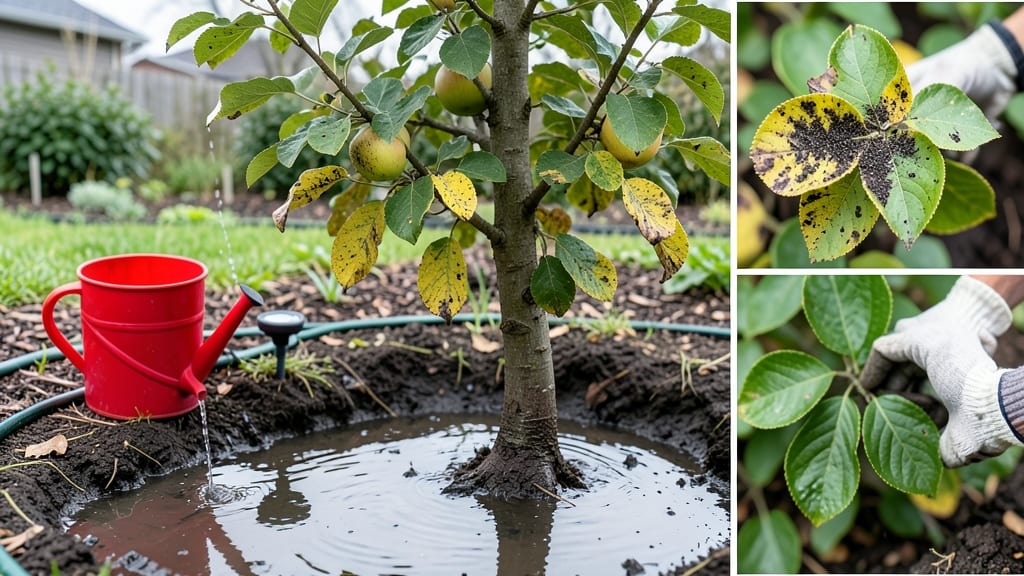
Your apple tree’s wilting leaves and mushy roots from apple tree overwatering aren’t a death sentence—just a cry for help. Overwatering smothers apple trees faster than you’d think, turning vibrant canopies into sad, drooping messes. The good news?
Root rot rescue is simpler than you’d expect, and I’ve saved more trees than I’ve lost with these three steps. First, stop watering immediately—yes, even if the soil feels dry. Apple trees hate soggy feet, and root rot thrives in standing water.
Then, check the drainage like a detective: dig a small hole near the trunk and pour a gallon of water. If it pools after an hour, your soil’s too dense. Amend it with compost or coarse sand to help water drain faster.
Within 2-3 weeks, you’ll see new growth pushing through as roots recover. Prune back any yellowing or mushy branches to redirect energy, and mulch the base with wood chips to regulate moisture. The key? Water deeply but infrequently—only when the top 6 inches of soil are bone-dry.
This method works for young saplings and mature trees alike. The worst part is over, and your apple tree’s comeback story starts now—no fancy tools or guesswork required.
Root Rot’s Silent Invaders
Overwatering an apple tree isn’t just about giving it too much love—it’s often the result of unseen factors that disrupt the delicate balance of soil moisture, oxygen, and microbial activity.
Let’s break down the real culprits behind this common but preventable problem, so you can address them before they strangle your tree’s roots.
Apple trees thrive in well-draining soil, but when water pools around their roots, it creates a anaerobic (oxygen-deprived) environment. This happens because:
- Clay-heavy soil compacts easily, acting like a sponge that holds water instead of letting it seep away. Test it: Dig a 6-inch hole near your tree—if water sits in it 6 hours later, drainage is poor.
- Shallow root systems (common in young trees or those planted too deep) struggle to reach deeper, drier soil layers when the top stays soggy.
- Improper planting: Trees set in low spots or depressions naturally collect runoff, turning the root zone into a swamp.
💡 Pro Tip: Amend clay soil with organic matter (compost, peat moss) to improve porosity. For low spots, create a berm (a raised mound of soil) around the trunk to encourage water runoff.
Even with good drainage, consistently wet soil (especially in hot or humid climates) suffocates roots. Here’s why schedules go wrong:
- Ignoring weather patterns: Watering on a rigid schedule (e.g., every Monday) fails to account for recent rain. Apple trees need 1–1.5 inches of water per week—but if it rained 3 inches last week, skip the hose!
- Drip irrigation gone wild: Leaky emitters or systems running too long can deliver double the needed water, especially in sandy soil (which drains fast but can’t absorb excess quickly).
- Mulch overkill: A thick mulch layer (over 4 inches) can traps moisture against the trunk, creating a rot-friendly zone. Rule of thumb: Keep mulch 3–4 inches deep and 2–3 inches away from the trunk.
⏰ Action Step: Use a moisture meter or the finger test (stick your finger 2 inches into soil—if it’s damp, wait). For drip systems, set timers based on soil type (e.g., 30–60 mins for clay, 15–30 mins for sand).
When soil stays waterlogged, harmful fungi like Phytophthora and Pythium multiply rapidly, outcompeting beneficial microbes. Here’s how it escalates:
- Oxygen starvation: Roots can’t respire (breathe) in soggy conditions, weakening their defenses. Fungi then penetrate root tissues, blocking water and nutrient uptake.
- Warm, humid soil (ideal for fungi) thrives in 50–86°F. Overwatering in summer creates the perfect petri dish.
- Compromised root structure: As roots rot, they release sugars into the soil, feeding fungal growth in a vicious cycle.
🌡️ Prevention Hack: If your area has high humidity, water early in the morning (so foliage dries by evening) and avoid overhead sprinklers. For fungal hotspots, apply copper fungicide or baking soda spray (1 tbsp baking soda + 1 quart water + a drop of dish soap) as a preventive.
Sometimes, the problem isn’t the watering itself—it’s how your tree’s physical environment traps moisture. Check for:
- Buried roots or girdling roots: If roots grow in circles around the trunk (from improper staking or planting), they restrict water flow and create pockets where water pools.
- Hardpan layers: A dense, compacted soil layer beneath the surface (common in urban gardens) acts as a water barrier, forcing excess moisture upward.
- Container constraints: Potted apple trees (or those in root-bound bags) have no escape for excess water. Their roots circle the container, leading to chronic sogginess.
🔧 Fix It: For hardpan, aerate the soil with a garden fork or gypsum amendments. If roots are girdling, prune them carefully (use sterilized tools) and replant with root tabs to encourage downward growth.
Fixing Overwatered Apple Trees
Now that you know the signs and causes of overwatering, it’s time to take action! The good news is that with the right steps, you can revive your apple tree and prevent future issues. Below is a cause-to-fix guide with practical solutions and prevention tips to keep your tree thriving.
Problem: Compacted, waterlogged soil cuts off oxygen, leading to root rot.
How to Fix It:
- 🔥 Stop Watering Immediately
- Let the soil dry out completely before watering again. Stick your finger 2–3 inches deep—if it’s soggy, wait.
- 🍳 Improve Soil Drainage
- For clay soil: Mix in compost, sand, or perlite (1 part amendment to 3 parts soil) to loosen it.
- For heavy mulch: Remove excess mulch (leave a 6-inch gap around the trunk) to prevent moisture buildup.
- 👨🍳 Raise the Tree’s Base (If Needed)
- If the tree sits in a low spot, mound gravel or amended soil around it to encourage runoff.
💡 Prevention Tip:
- Install a French drain or swale (shallow trench) around the tree to redirect excess water.
Problem: Fungal infections (like Phytophthora) thrive in wet conditions, attacking roots.
How to Fix It:
- ⏰ Trim Damaged Roots (Carefully!)
- Use sterilized pruners to cut away black, mushy, or hollow roots. Healthy roots are firm and white.
- ⚠️ Warning: Only do this if the tree is young or slightly affected—mature trees may not recover.
- 🌡️ Apply Fungicide (If Severe)
- Use a copper-based fungicide (like copper sulfate) or hydrogen peroxide (3%) to drench the soil.
- DIY spray: Mix 1 tbsp baking soda + 1 quart water + a few drops of dish soap for a mild antifungal treatment.
- 🎯 Boost Tree Immunity
- Fertilize lightly with balanced 10-10-10 (avoid nitrogen-heavy fertilizers, which encourage leafy growth over roots).
- Add mycorrhizal fungi (available as powder) to help roots recover.
💡 Prevention Tip:
- Water deeply but infrequently—apple trees prefer 1–1.5 inches per week (including rain). Use a soaker hose to water at the base, not overhead.
Problem: Overwatering stresses the tree, leading to nutrient deficiencies and poor fruit production.
How to Fix It:
- 🔪 Prune Affected Branches
- Remove yellowing or wilted leaves/branches to redirect energy to healthy growth.
- ✂️ Pro Tip: Sterilize pruners with rubbing alcohol to prevent spreading disease.
- 🥘 Adjust Your Watering Schedule
- Morning watering (before 10 AM) reduces evaporation and fungal risk.
- Check soil moisture with a moisture meter or the finger test (push 2–3 inches deep—dry soil = time to water).
- 📊 Monitor for Recovery Signs
- Healthy signs: New green leaves, firmer trunk, less leaf drop.
- Still struggling? Test soil pH (ideal: 6.0–7.0) and amend if needed (lime for acidic soil, sulfur for alkaline).
💡 Prevention Tip:
- Mulch correctly: Use wood chips or straw (2–4 inches thick) but keep it 6 inches from the trunk to prevent rot.
If your tree is beyond saving (extensive root rot, wilting despite fixes), consider:
- 🌿 Digging and relocating (only for young trees).
- 🌱 Replacing the tree with a drought-resistant variety (like ‘Liberty’ or ‘Enterprise’ apple trees).
✨ Final Pro Tip:
- Observe your tree’s habits—overwatering is often a habit, not a one-time mistake. Adjust slowly to avoid shocking the tree!
By following these steps, your apple tree can bounce back—stronger and more resilient than before. 🍏💪 Stay patient, and soon you’ll be enjoying homegrown apples (and fewer soggy roots)!
Frequently asked questions
How do I know if my apple tree is getting too much water?
Look for yellowing leaves, mushy roots, or leaf wilting even when soil feels damp. Dig near the base—if the top 6 inches of soil stays soggy for more than 2-3 days, you're overwatering. Also check for fungal growth (white, cottony mold) on roots.
Can I save an apple tree with root rot from overwatering?
Yes, but act fast! First stop watering immediately and improve drainage by adding compost or perlite. For mild cases, prune affected roots and apply copper fungicide. Severe cases may need replacement—watch for no new growth after 4-6 weeks of care.
What's the best way to water apple trees to prevent overwatering?
Water deeply but infrequently—1-1.5 inches per week (including rain). Use a soaker hose at the base, never overhead. Check soil moisture with your finger: if the top 2 inches are dry, it's time to water. Avoid schedules—adjust based on weather and soil type.
Will mulch help or hurt my overwatered apple tree?
Mulch can help if used correctly—keep it 2-3 inches deep and 6 inches from the trunk. Too much mulch traps moisture, worsening rot. Use wood chips or straw and avoid piling against the trunk where it can create a damp barrier.
How long does it take to recover from apple tree overwatering?
Most trees show improvement in 2-4 weeks with proper care, but full recovery can take 3-6 months. Monitor for new green leaves and firmer soil. If no progress after 8 weeks, the damage may be too severe—consider consulting an arborist.