
Pruning
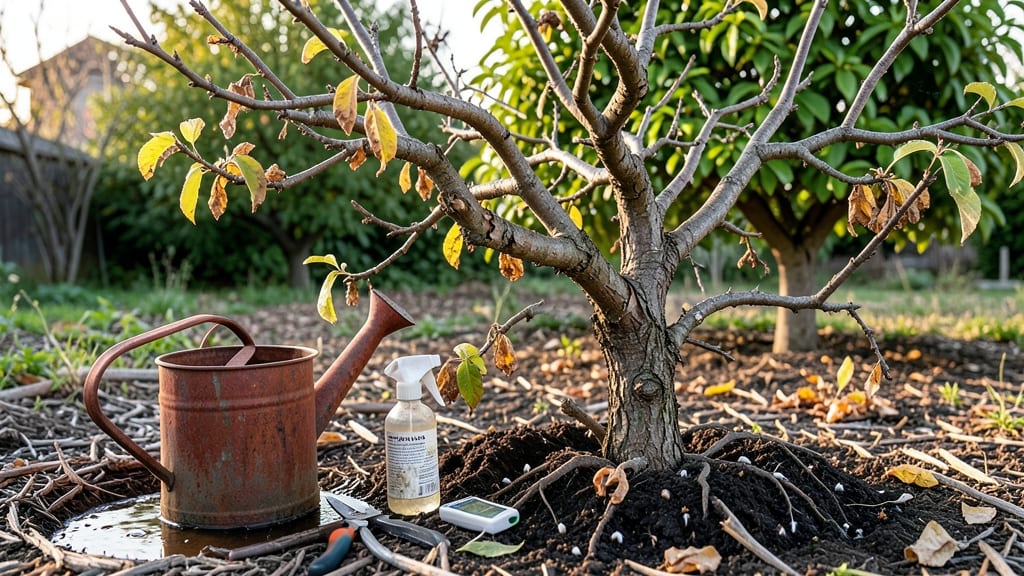
Your peach tree isn’t dying from neglect—it’s likely root rot, and there’s a foolproof way to save it. 🌱 I’ve nursed back three trees with the same techniques, and the key is acting fast before the roots give up completely.
The first sign is often yellowing leaves that refuse to respond to watering, followed by a foul smell at the base. Root rot thrives in soggy soil, so the fix starts with improving drainage.
Mix in 2-3 inches of compost around the root zone and consider raising the tree slightly with a mound of soil if your yard stays wet. Prune away any dead branches now—they’re just draining what little energy remains.
Within 4-6 weeks, you’ll see new growth if the roots are still viable. The tree might never be as vigorous as before, but with proper care, it can produce fruit again. The real test is consistency: check soil moisture weekly and avoid overwatering like the plague.
This works for any peach tree, whether it’s a young sapling or a mature tree that’s seen better days. Let’s get that soil healthy again—your tree’s survival depends on it.
Root Causes Behind a Dying Peach Tree
Peach trees are resilient, but when they start wilting, dropping leaves, or showing signs of distress, it’s often due to hidden stress factors lurking beneath the soil—or even in the air. Understanding the why behind your tree’s decline is the first step to saving it.
Below, we break down the most common culprits causing peach trees to wither, along with the science behind each issue.
Peach trees need water, but too much moisture suffocates their roots—leading to a fungal infection called root rot.
This happens when: - Poor drainage traps water around roots (common in clay soil or containers without drainage holes). - Overzealous watering keeps soil soggy for days, starving roots of oxygen. - Fungal pathogens like Phytophthora thrive in waterlogged conditions, rotting roots from the inside out.
Signs to watch for:
- Yellowing leaves (even when soil is wet).
- Mushy, dark roots when inspected.
- A foul, rotting smell at the base.
💡 Pro Tip: Stick your finger 2 inches into the soil—if it’s damp, wait before watering. If your tree is in a pot, ensure it has drainage holes and a well-draining potting mix.
Peach trees are heavy feeders, and a lack of key nutrients can weaken them over time. The most critical deficiencies include:
| Nutrient | Deficiency Signs | Quick Fix |
|---|---|---|
| Nitrogen (N) | Pale yellow leaves, stunted growth | Apply balanced fertilizer (10-10-10) in early spring. |
| Potassium (K) | Brown leaf edges, weak branches | Use potassium sulfate or wood ash. |
| Zinc (Zn) | Small, distorted leaves (little leaf) | Spray with zinc sulfate or use chelated zinc. |
| Iron (Fe) | Yellowing between leaf veins (chlorosis) | Apply iron chelate or adjust soil pH (peach trees prefer 6.0–7.0). |
🌡️ Watch Out: If your soil is too alkaline (pH > 7.5), iron becomes unavailable—test your soil and amend with sulfur if needed.
Peach trees are targets for sap-sucking pests and fungal diseases, which drain energy and invite secondary infections.
🐜 Common Pests & Damage
- Peach Tree Borers: Larvae tunnel into bark, disrupting water flow. Signs: Sawdust-like frass, oozing sap, wilting branches.
- Fix: Apply borer-specific bait (like Gort’s Borer Killer) or prune infested branches in dormant season.
- Aphids & Scale Insects: Cluster on new growth, sucking sap and spreading sooty mold.
- Fix: Blast off with water spray or use neem oil (repeat every 5–7 days).
🍄 Fungal Diseases to Spot
- Brown Rot (Monilinia fructicola): Fuzzy brown spots on fruit/leaves, leading to premature leaf drop.
- Prevent: Remove mummified fruit from last year, prune for airflow, and spray copper fungicide before blooming.
- Peach Leaf Curl: Thickened, puckered leaves in spring. Caused by Taphrina deformans.
- Fix: Apply copper-based fungicide in late fall or early spring (before buds swell).
✨ Prevention Tip: Sanitize pruners with rubbing alcohol between cuts to avoid spreading disease!
Peach trees are sensitive to extreme conditions, and sudden changes can shock them into decline.
- Freeze Damage: Late spring frosts can kill blossoms and young leaves, reducing energy for growth.
- Solution: Plant in a microclimate (e.g., near a south-facing wall) and use frost cloth if frost is forecasted.
- Heat & Drought Stress: Wilting, crispy leaf edges, or sunburnt bark (white patches) signal heat shock.
- Fix: Mulch deeply (3–4 inches) with wood chips to retain moisture, and water deeply 1–2x/week in summer.
- Poor Air Circulation: Dense foliage or overcrowded trees trap humidity, inviting fungal diseases.
- Action: Prune to open the canopy, removing suckers and crossing branches.
If your peach tree’s roots are smothered (by heavy foot traffic, construction, or compacted soil), they can’t absorb water or nutrients efficiently.
How to check:
- Dig 6 inches deep near the trunk—if roots look blackened or tangled, compaction is likely.
- Fix:
- Aerate the soil with a garden fork.
- Add organic matter (compost or aged manure) to loosen soil.
- Avoid tilling too close to the trunk (keep a 2–3 foot radius undisturbed).
Most peach tree deaths start with one of these hidden stressors—but the good news? They’re fixable if caught early. The key is acting fast (like diagnosing root rot before it’s too late) and adjusting care based on the real problem.
🔧 Next Steps: Once you’ve identified the issue, jump to our 3 Critical Fixes section to revive your tree!
Revive Your Peach Tree Now
If your peach tree is struggling, don’t panic—there’s still hope! The key is identifying the root cause (literally and figuratively) and taking action. Below are practical, step-by-step solutions tailored to the most common issues, along with prevention tips to keep your tree thriving for years.
Root rot is a silent killer, often caused by overwatering, poor drainage, or fungal infections. If the soil smells sour, the roots look mushy, or the tree wilts despite water, act fast.
🔥 Step 1: Stop Watering Immediately
- Why? Excess moisture suffocates roots and fuels rot.
- How? Let the top 2–3 inches of soil dry out before watering again. Use a moisture meter if unsure.
👨🍳 Step 2: Improve Drainage
- Dig a trench around the tree (1–2 feet deep) to redirect water away from the roots.
- Amend the soil with compost or perlite (20–30%) to loosen heavy clay.
- Raise the tree’s base by mounding soil around it (but not against the trunk) to prevent water pooling.
🍄 Step 3: Treat Fungal Infections
- Apply a fungicide (copper-based or phosphite-based) to the soil and lower trunk.
- Remove infected roots (sterilize pruners with rubbing alcohol between cuts).
- Avoid mulch near the trunk—keep it 6+ inches away to prevent moisture buildup.
✨ Prevention Tips
- Water deeply but infrequently (1–2 inches per week, adjusting for rain).
- Plant peach trees in well-draining soil (avoid low spots where water collects).
- Mulch correctly: Use wood chips or straw, but never pile against the trunk.
Yellowing leaves with dark spots? Bacterial leaf spot spreads quickly in humid weather. Act before it reaches the fruit.
🔪 Step 1: Prune Infected Branches
- Cut out severely damaged leaves/branches (sterilize tools between cuts).
- Dispose of debris in the trash (don’t compost—it can reinfect the tree).
💦 Step 2: Spray Copper Fungicide
- Apply a copper-based spray (like Copper Sulfate) every 7–10 days during wet seasons.
- Reapply after rain—it washes off quickly.
🌡️ Step 3: Improve Airflow
- Thin out dense branches to let sunlight and air circulate.
- Space new trees 15–20 feet apart to prevent future outbreaks.
🎯 Prevention Tips
- Water in the morning so leaves dry faster.
- Avoid overhead irrigation—use drip lines instead.
- Clean tools and prune in dry weather to slow bacterial spread.
Yellow leaves, stunted growth, or small fruit? Your peach tree might be starving—but not for what you think.
| Symptom | Likely Cause | Solution |
|---|---|---|
| Yellow leaves (oldest first) | Nitrogen deficiency | Apply balanced fertilizer (10-10-10) in early spring. |
| Yellow leaves (new growth) | Iron or zinc deficiency | Use chelated iron or zinc sulfate spray. |
| Small, weak fruit | Phosphorus deficiency | Add bone meal or rock phosphate to the soil. |
| Purple stems/leaves | Potassium deficiency | Use potassium sulfate or wood ash. |
📊 Pro Tips for Feeding
- Test your soil ($20 kits from garden centers) before fertilizing.
- Avoid over-fertilizing—peach trees prefer moderate nutrients, not heavy doses.
- Use organic options like compost tea or fish emulsion for gentle feeding.
Aphids, borers, or spider mites can drain your tree’s energy. Act early before they multiply.
🍳 DIY Pest Sprays (Safe & Effective)
- Neem oil spray (1 tsp neem oil + 1 tsp dish soap + 1 quart water) – repels soft-bodied pests like aphids.
- Horticultural oil – smothers overwintering insects (apply in late winter/early spring).
- Beneficial nematodes – targets borers and grubs (apply to soil in spring).
🔍 Manual Removal Tricks
- Blast pests off with a strong spray of water (early morning).
- Handpick large pests (like peach tree borers) and drop them in soapy water.
🌿 Prevention Tips
- Encourage natural predators (ladybugs, lacewings) by planting marigolds or dill nearby.
- Prune regularly to remove pest hiding spots.
- Avoid broad-spectrum pesticides—they kill beneficial insects too.
If your tree is already in critical condition (bare branches, oozing sap, or widespread rot), try these last-resort moves:
- Root Pruning (For Advanced Rot)
- Carefully expose and trim mushy roots with a sterilized knife.
- Dust cuts with cinnamon or sulfur (natural antifungal).
- Transplanting (If Soil Is Hopeless)
- Dig up the tree (best in late winter/early spring) and replant in fresh, amended soil.
- Water lightly for the first week to reduce stress.
- Grafting (For Beyond-Save Trees)
- If the trunk is dead but roots are healthy, graft a new peach scion onto the remaining rootstock.
💡 Final Reminder: Peach trees are resilient—with the right care, many "dying" trees bounce back. Act fast, but don’t overreact. Monitor progress and adjust treatments as needed. Your tree’s survival depends on consistency, not desperation!
Frequently asked questions
My peach tree leaves are yellowing—could it be a nutrient deficiency?
Yellowing leaves often signal nutrient issues, but check the pattern first. If older leaves yellow first, it’s likely nitrogen deficiency. If new growth turns yellow, you may need iron or zinc. Test your soil ($20 kits work) before fertilizing—peach trees prefer pH 6.0–7.0. Start with chelated iron or zinc sulfate spray for quick results.
I see white, fuzzy spots on my peach tree leaves—what’s causing this?
Those fuzzy spots are likely powdery mildew, a common fungal disease. Prune affected branches immediately and improve airflow by thinning dense foliage. Spray with baking soda solution (1 tsp baking soda + 1 quart water + drop of dish soap) weekly until it clears. For severe cases, use neem oil or copper fungicide.
My peach tree trunk has holes with sawdust-like frass—what’s attacking it?
Those holes are from peach tree borers, destructive larvae tunneling under the bark. Apply borer-specific bait like Gort’s Borer Killer or make a horticultural oil spray (1 tbsp oil + 1 tsp soap per gallon of water). Wrap the trunk with tree wrap to deter adult moths from laying eggs. Act fast—borers can kill trees in weeks.
Should I remove all the dead branches from my dying peach tree?
Not necessarily. Remove only branches with obvious signs of disease or pest infestation (like oozing sap or holes). Healthy-looking dead branches can still provide some structure while new growth develops. Sterilize your pruners with rubbing alcohol between cuts to prevent spreading infections. Focus on opening the canopy to improve airflow.
How often should I water a struggling peach tree?
Water deeply but infrequently—1–2 inches per week is ideal, adjusting for rain. Check soil moisture by sticking your finger 2 inches deep. If it’s damp, wait. If your tree is in containers, water when the top 1 inch of soil feels dry. Overwatering is the #1 cause of root rot, so let the soil dry between waterings, especially in clay-heavy soils.