
Trees
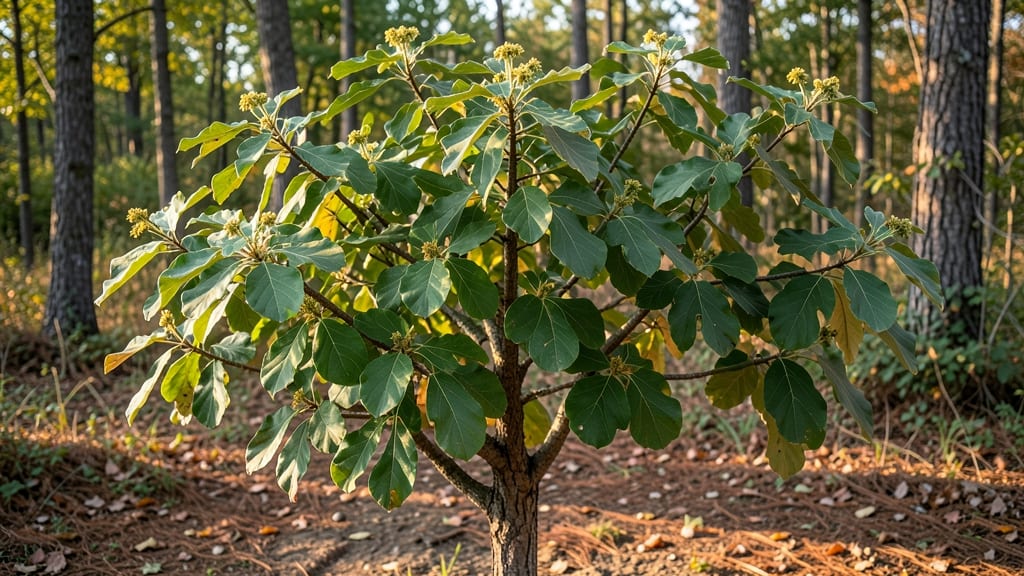
Wild persimmon tree leaves transform your garden into a self-sustaining ecosystem—no compost bin required. 🌿 Their tough, leathery texture and deep green hue make them the ultimate year-round mulch, suppressing weeds while feeding the soil as they decompose.
Unlike other trees, these leaves don’t turn into a soggy mess; they break down slowly, releasing nutrients exactly when your plants need them most.
You’ll recognize them instantly: oval-shaped with jagged edges and a glossy sheen, they cling to the tree even after frost. Drop a handful around perennials or shrubs in fall, and by spring, your soil will be richer than ever—no extra work, just nature’s slow-release fertilizer.
The best part? They’re free, abundant, and work just as well in containers or raised beds as they do in the ground.
📚 In This Guide
- What you need
- Instructions
- Tips and common mistakes
- Wrapping up and next steps
What you need
- ● Wild persimmon tree leaves: Collect fresh or dried leaves (avoid diseased or pest-ridden ones). Aim for 5–10 gallons (or ~1–2 large bags) per 10 sq. ft. of garden bed.
- ● Garden gloves: A pair of nitrile or leather gloves to protect your hands from thorns or rough edges.
- ● Pruners or sharp scissors: For harvesting leaves from higher branches (if needed). Opt for bypass pruners for clean cuts.
- ● Heavy-duty trash bags or burlap sacks: 2–3 large bags (30–50 gallons each) to haul leaves. Burlap is eco-friendly and biodegradable!
- ● Garden rake or pitchfork: To spread leaves evenly over soil or mulch layers. A bowl-style rake works best for fine-tuning.
- ○ Watering can or hose: For lightly moistening leaves before mulching (optional but helpful for decomposition).
- ● Compost accelerator: A handful of worm castings or compost tea to speed up decomposition if using leaves as mulch.
- ● Leaf shredder or lawn mower: To chop leaves into smaller pieces (¼–½ inch) for faster breakdown. A mulching mower works great!
- ● Soil pH tester: Wild persimmon leaves are slightly acidic (pH ~5.5–6.5). Test your soil first if you’re sensitive to pH changes.
- ● Mulch layer markers: Stakes or flags to mark mulched areas for easy maintenance.
How to harvest and use wild persimmon leaves as year-round mulch
This is the mulching method that transforms fallen leaves into a nutrient-rich, weed-suppressing powerhouse.
🌿 Step 1: Identify and Collect Mature Leaves
Wild persimmon leaves are broad, oval, and glossy with serrated edges—look for healthy, fully mature leaves that have fallen naturally or can be gently pruned from branches. I collect them in late summer or early fall when they're at peak nutrient density but haven't yet decomposed. Avoid leaves with brown spots or signs of disease, as these can introduce pathogens to your soil.
Use clean, sharp pruning shears to harvest leaves from branches if needed, cutting just above a leaf node to encourage new growth. I like to work on dry days when the leaves are crisp—this makes them easier to handle and reduces the risk of tearing. Collect leaves in a large mesh bag or directly into your garden area to avoid compaction during transport.
🌱 Step 2: Shred or Chop the Leaves for Faster Breakdown
Whole persimmon leaves take much longer to decompose, so I always shred them first. Use a heavy-duty shredder or a sharp knife to cut the leaves into ½- to 1-inch strips. The smaller the pieces, the faster they'll break down and enrich your soil. If you don't have a shredder, a pair of sharp scissors works well—just be patient and methodical.
For larger batches, I run the leaves through my lawnmower with the deck raised, which chops them efficiently. Wear gloves to protect your hands from any sharp edges or sap. Once shredded, spread the pieces out in a single layer to dry for 24-48 hours if possible—this prevents mold and makes them easier to handle when mulching.
💧 Step 3: Apply as Mulch in Garden Beds
Spread the shredded persimmon leaves 2-3 inches thick over garden beds, avoiding direct contact with plant stems to prevent rot. This thickness suffocates weeds while retaining moisture—ideal for drought-prone areas. I like to apply it in early spring or after harvesting to give the leaves time to decompose before the next growing season.
For established trees or shrubs, create a 4-inch deep mulch ring around the base, keeping it 6 inches away from the trunk. This mimics natural forest conditions and encourages strong root growth. Water the mulch lightly after application to help it settle and begin breaking down. Over time, the leaves will transform into a dark, crumbly humus that improves soil structure and fertility.
⏰ Step 4: Refresh and Maintain Through the Seasons
In late winter or early spring, before new growth appears, rake the decomposed mulch into the top 1-2 inches of soil to incorporate nutrients. This is when the real magic happens—the leaves have broken down into a rich, earthy compost that feeds your plants. Add a fresh layer of shredded persimmon leaves on top to repeat the cycle.
Throughout the growing season, top up the mulch as needed to maintain the 2-3 inch thickness. This is especially important in hot, dry climates where mulch breaks down faster. I check my beds every 4-6 weeks during peak summer to ensure the mulch layer stays effective. Over time, you'll notice healthier soil, fewer weeds, and plants that thrive with minimal effort.
☀️ Step 5: Extend Benefits to Potted Plants and Pathways
Don’t limit persimmon leaves to garden beds—use them in containers too. Mix 1 part shredded leaves with 2 parts potting soil for a nutrient-rich growing medium. This works especially well for acid-loving plants like blueberries or azaleas. Water the mix lightly before planting to help the leaves settle and begin decomposing.
For pathways or bare soil areas, spread a thin layer of shredded leaves to suppress weeds and prevent erosion. This is a great way to use up any leftover leaves after mulching your garden. Over time, the leaves will break down into a fine, dark mulch that blends seamlessly into the landscape while continuing to enrich the soil beneath.
Tips & tricks for perfect wild persimmon leaf mulch
These insights will help you maximize the benefits of your persimmon leaf mulch while avoiding common pitfalls.
Leaf Selection: When harvesting persimmon leaves, focus on those that are fully mature but haven't yet started decomposing. I look for vibrant green leaves with no yellowing or brown spots—these indicate peak nutrient content. The crisp texture you feel when handling them is a good sign they're ready for collection. Confession: I skipped this step for years and wondered why my mulch didn't break down as quickly as I expected.
Shredding Strategy: For the fastest decomposition, aim for leaf strips between ½- to 1-inch in size. I've found that using a lawnmower with the deck raised is the most efficient method for larger quantities, but a sharp knife works perfectly for smaller batches. The key is consistency—uneven shredding leads to uneven breakdown rates across your mulch layer. Real talk: Don't rush this step; patience here pays off in nutrient-rich soil later.
Drying Time: The 24-48 hour drying period before applying mulch is crucial for preventing mold and creating a more manageable material. I spread my shredded leaves in a single layer on a clean tarp or directly on the garden bed. This drying time also helps eliminate any potential pests that might be hiding in the leaves. Between us, I've seen mold develop when I skipped this step during humid weather.
Application Timing: Early spring application gives persimmon leaves plenty of time to decompose before the growing season begins. I've noticed that applying in late winter actually gives me an extra boost for early spring planting. For established trees, the 4-inch deep mulch ring creates an ideal microclimate that encourages strong root development. Don't make my mistake: Applying too close to the trunk can actually suffocate the roots.
Pro Tips for Wild Persimmon Tree Leaves
- These insights will help you maximize the benefits of your persimmon leaf mulch while avoiding common pitfalls.
- Leaf Selection: When harvesting persimmon leaves, focus on those that are fully mature but haven't yet started decomposing.
- Shredding Strategy: For the fastest decomposition, aim for leaf strips between ½- to 1-inch in size.
Frequently asked questions
about wild persimmon tree leaves—your go-to guide for turning garden waste into nutrient-rich mulch! Whether you're curious about timing, safety, or alternatives, we’ve got the answers.When is the best time to harvest wild persimmon leaves for mulch?
Harvest leaves in late fall or early winter after they’ve naturally fallen but before they decompose. Fresh leaves (summer/early fall) can mat down too tightly; dried leaves break down more evenly. Avoid wet or moldy leaves—they can introduce fungi to your soil.
Are wild persimmon leaves safe for vegetable gardens or compost?
Yes! They’re non-toxic and nutrient-rich, but avoid leaves treated with pesticides (common in urban areas). For compost, chop them first to speed decomposition. If you’re unsure about contamination, test a small patch of soil first—wild persimmon leaves are generally safe for edible plants.
What’s the difference between using wild persimmon leaves vs. store-bought mulch?
Wild persimmon leaves are free, local, and packed with tannins that suppress weeds and retain moisture better than many commercial mulches. However, they break down faster—ideal for annual mulching (reapply yearly). Store-bought mulch lasts longer but may lack the soil-boosting benefits of organic leaf litter.
How do I prevent wild persimmon leaves from attracting pests like slugs or mold?
Shred or chop leaves before applying to disrupt pest habitats. Spread them thinly (2–3 inches) to allow airflow and deter slugs. If mold appears, fluff the mulch or add a layer of straw on top. Avoid piling leaves against plant stems—this traps moisture and encourages rot.
Can I use wild persimmon leaves for anything other than mulch?
Try these eco-friendly hacks:
- Leaf mold tea: Steep decomposed leaves in water for 2–3 weeks to create a liquid fertilizer.
- Pathway mulch: Press dry leaves into garden paths for erosion control.
- Wildlife habitat: Leave some leaves in shady spots to attract beneficial insects.
Wrapping up and next steps
Discovering the magic of wild persimmon tree leaves as a year-round mulch is a game-changer for any gardener! 🌿 These nutrient-rich leaves improve soil health, suppress weeds, and even deter pests—all while being completely free and sustainable.
Whether you're a seasoned green thumb or just starting your gardening journey, this natural solution offers effortless benefits that work hard for your garden.
Ready to transform your garden beds? Start by gathering those fallen leaves this season and let nature do the rest. Your soil—and your plants—will thank you! 🌱