
Plants
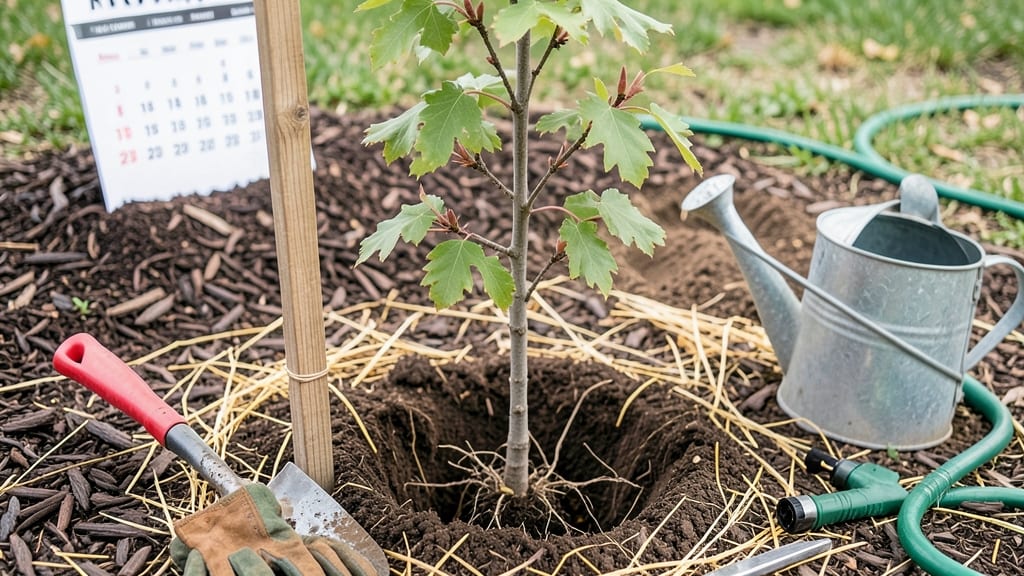
Planting a tree in Iowa at the right time means the difference between a thriving 🌳 that stands for decades and one that struggles just to survive.
You’ve picked the perfect spot, maybe even the perfect species, but if you plant outside Iowa’s frost-free window, you risk winter damage or poor root establishment.
The best time to plant a tree in Iowa isn’t just about the calendar—it’s about matching your tree’s needs to the soil, weather, and your region’s microclimate.
In USDA zones 5a-5b, early spring (March–April) and fall (September–October) are your golden windows. But whether you’re in northern Iowa’s colder pockets or southern Iowa’s milder stretches, timing matters even more than you might think.
Here’s how to choose the best months for your tree, prepare the soil like a pro, and avoid the mistakes that sink even the hardiest species before they take root.
Iowa’s frost-free window: best planting months by region
Timing your tree planting in Iowa means aligning with the frost-free window—the period between last spring frost and first fall frost. Iowa spans USDA Zones 4a-5b, so planting windows vary by region.
Northern Iowa’s shorter growing season demands earlier action, while southern Iowa offers more flexibility. Let’s break down the best months for each region to maximize root establishment and survival.
For northern Iowa (Zones 4a-4b), the frost-free window typically runs from May 1 to October 15. This means your best planting months are April (bare-root trees) and September-October (container-grown trees).
In this region, late spring planting risks frost damage, while late fall planting leaves insufficient time for roots to settle before winter. Southern Iowa (Zones 5a-5b) enjoys a longer window, with March-April and September-November as ideal.
Central Iowa (Zone 5a) falls in between, with a frost-free window from April 15 to October 15. Here, you can plant bare-root trees in early April or container-grown trees through October.
The key is avoiding waterlogged soil in spring and frozen ground in late fall. Always check local almanac frost dates—they can shift yearly due to climate variability.
🌳 Iowa Tree Planting Calendar by Region
| Region | USDA Zone | Last Frost Date | First Frost Date | Best Planting Months | Avoid Planting |
|---|---|---|---|---|---|
| Northern Iowa | 4a-4b | May 1 | October 15 | April (bare-root), September-October (container) | May-June, November |
| Central Iowa | 5a | April 15 | October 15 | March-April, September-November | July-August, December |
| Southern Iowa | 5a-5b | April 1 | October 30 | March-April, September-November | June-July, December |
💡 Pro Tip: Use container-grown trees for fall planting—they establish roots faster than bare-root varieties.
Spring planting in Iowa should focus on bare-root trees in March-April (northern) or February-March (southern). This gives roots time to establish before summer heat. For container-grown trees, late spring (May) is riskier due to drought stress, but it’s acceptable in well-watered sites.
Always dig a hole twice as wide as the root ball and no deeper—this prevents root suffocation.
Fall planting offers a second chance for Iowa gardeners. In September-October, soil stays warm enough for root growth but cools before winter. Oak, maple, and fruit trees thrive when planted in fall, as they enter dormancy naturally.
Avoid planting evergreens like pine in fall—they need time to establish before winter desiccation. Water deeply before the first hard frost to protect roots.
Iowa’s microclimates can shift frost dates by weeks. Urban areas like Des Moines often warm faster than rural zones, while river valleys (e.g., Mississippi River) may experience earlier last frosts. Use local Cooperative Extension Service data or weather station records to refine your timing.
For example, Dubuque’s last frost averages May 10, while Sioux City’s is May 5—a critical difference for early spring planting.
If you miss the ideal window, don’t despair. Container-grown trees can be planted in late fall (November) as long as the ground isn’t frozen. Mulch heavily with 4-6 inches of wood chips to insulate roots.
For bare-root trees, wait until early spring—planting in December-January risks frost heave and root damage. Always prioritize root establishment over leaf growth in Iowa’s unpredictable climate.
For fruit trees like apple or cherry, Iowa’s chill hour requirements matter. Plant in early spring (March-April) so trees experience full winter chilling. Shade trees like oak or hickory are more flexible—fall planting often yields stronger growth.
Test soil pH (ideal: 6.0-7.0) and amend with compost or lime before planting to ensure nutrient availability.
Remember: Iowa’s frost-free window isn’t just about dates—it’s about soil temperature. Use a soil thermometer to confirm ground temps are above 40°F for spring planting or 50°F for fall.
This prevents root shock in marginal conditions. With the right timing, your tree will thrive for decades, providing shade, wildlife habitat, and curb appeal.
Soil preparation & tree species: matching timing to root needs
Timing your tree planting in Iowa isn’t just about avoiding frost—it’s about matching your soil prep to the root development needs of specific tree species. Spring and fall offer distinct advantages, but each requires different soil conditions to ensure your new tree thrives from day one.
For spring planting, focus on loosening compacted soil and adding organic matter like compost. This gives roots a head start before summer heat arrives. In contrast, fall planting benefits from cooler temperatures, allowing roots to establish without competing with top growth.
The key is preparing your soil 4-6 weeks before planting, regardless of season.
Iowa’s USDA zones 5a-5b mean most trees can handle fall planting, but some species—like fruit trees—prefer early spring to avoid winter stress. Evergreens, such as pine trees, also need special care, as their roots should establish before winter dormancy begins.
| Tree Type | Best Planting Time | Soil Prep Focus | Why This Timing? |
|---|---|---|---|
| Oak (Quercus spp.) | Early spring (March-April) | Loosen clay soil, add sand | Avoids summer drought stress |
| Maple (Acer spp.) | Fall (September-October) | Well-draining, slightly acidic | Establishes roots before winter |
| Pine (Pinus spp.) | Late spring (May-June) | Sandy, acidic soil | Prevents winter desiccation |
| Fruit Trees (Apple, Pear) | Early spring (March-April) | Rich compost, good drainage | Encourages early bloom |
When preparing your soil for spring planting, prioritize aeration and moisture retention. Mix in 2-3 inches of compost and a balanced fertilizer (10-10-10) to jumpstart root growth. For fall planting, focus on improving drainage—especially in Iowa’s clay-heavy soils—and avoid over-fertilizing, which can stimulate late-season growth vulnerable to frost.
One common mistake I see is planting bare-root trees too late in spring or container-grown trees too early in fall. Bare-root trees need moist soil to re-establish roots, while container-grown trees should have 6-8 weeks to acclimate before winter.
Adjust your timing based on your tree’s root ball size and local frost forecasts.
For Iowa gardeners, late September to early October is often ideal for most species, but always check your local frost dates. If you’re unsure, err on the side of early fall planting—your tree’s roots will thank you by next spring. 🌱🌳