
Propagation
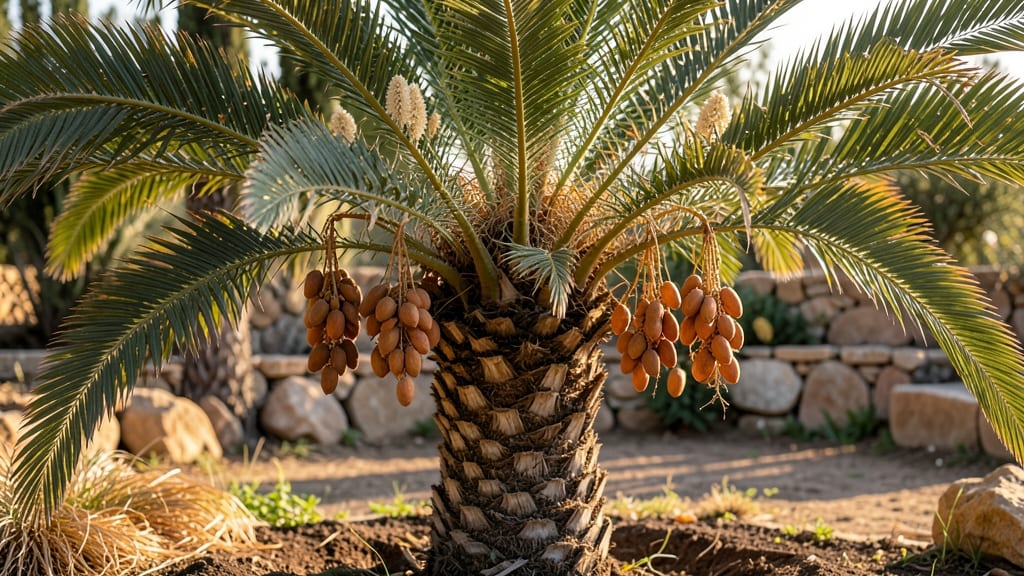
Dates come from the date palm tree (Phoenix dactylifera), a resilient desert palm that thrives in hot, dry climates and produces sweet, nutrient-rich fruit clusters. This iconic tree has been farmed for millennia across the Middle East and North Africa.
The date palm isn't just any tree—it's a botanical marvel adapted to extreme conditions, where its deep roots access groundwater and waxy leaves minimize moisture loss. 🌵 Unlike tropical palms, date palms prefer arid climates with temperatures above 75°F and well-draining soil.
What's fascinating is how their male and female flowers develop on separate trees, requiring careful pollination for fruit production. Many home growers use hand pollination techniques to ensure successful harvests, especially in regions outside traditional growing zones.
This ancient fruit's connection to its tree goes beyond cultivation—date palms have played vital roles in desert ecosystems and human history. Their fronds provide shade, their sap makes syrup, and their wood serves as building material.
The Medjool variety, for instance, grows best in Morocco's oases, while Deglet Noor thrives in California's desert-like conditions. Understanding these regional preferences helps gardeners replicate optimal growing conditions, whether you're planting a single specimen or managing a commercial grove.
💡 In This Article
- Identifying and Cultivating Date Palm Trees
- Date Palm Varieties and Their Growing Regions
Identifying and cultivating date palm trees
The date palm (Phoenix dactylifera) stands out with its towering, unbranched trunk that can reach 100 feet tall in ideal conditions. Its fronds—each 5-6 feet long—grow in a perfect circle at the top, resembling a feather duster with 150-200 individual leaflets per frond.
These leaves aren't just decorative; they're adapted to desert life with a waxy coating that reduces water loss by up to 40% compared to tropical palms. The tree's root system extends 10-15 feet deep, allowing it to access groundwater in arid regions where surface water is scarce. 🌵
Cultivating date palms requires understanding their specific needs. They thrive in USDA hardiness zones 9-11, where temperatures stay above 75°F year-round. The soil must be well-draining—sandy loam is ideal—since the tree cannot tolerate waterlogged roots.
Watering is crucial during the first 2-3 years to establish the root system, but once mature, date palms need surprisingly little water, often surviving on 1-2 inches per month during dry seasons.
Pollination is another critical factor: male and female flowers grow on separate trees, so growers must either plant both types or manually transfer pollen using a small brush during the spring flowering season.
For home gardeners, starting with a 1-2 year-old sapling is ideal. Planting should occur in late winter or early spring when temperatures are mild. The sapling's first 5-6 years are the most vulnerable, requiring protection from frost and consistent moisture.
What's fascinating is how the tree's growth rate accelerates after 5 years, with some varieties producing their first fruit by 7-10 years.
The key to successful cultivation lies in mimicking the tree's natural desert environment—minimal water, full sun exposure (8+ hours daily), and protection from strong winds that can damage the delicate fronds.
One common misconception is that date palms grow quickly like tropical palms. In reality, they're slow growers, with mature trees gaining only 1-2 feet per year. This patience pays off, however, as a well-cared-for date palm can live for 100-150 years, producing fruit for decades.
The tree's ability to thrive with minimal intervention makes it a sustainable choice for desert landscapes, where it provides both food and shade. Understanding these growth patterns helps gardeners set realistic expectations and provides the care needed for long-term success. 🌱
Advanced growers often experiment with different cultivation techniques. For instance, some use drip irrigation systems to deliver water directly to the roots while avoiding the fronds, which can develop fungal issues if kept too wet. Others practice pruning old fronds to redirect the tree's energy toward fruit production.
The timing of these interventions matters—removing dead fronds in late winter before new growth begins ensures the tree isn't stressed during critical development periods. These nuanced practices can increase fruit yield by up to 20% in optimal conditions.
What truly sets date palms apart is their dual role as both a food source and an ecological anchor. Their deep roots prevent soil erosion in desert regions, while their fruit provides essential nutrients like potassium, magnesium, and fiber.
The tree's cultural significance spans millennia, from ancient trade routes to modern-day groves. For those attempting to grow date palms in non-traditional climates, using greenhouse cultivation during colder months can extend the growing season and protect young trees from frost.
This approach has allowed date palms to thrive in regions as diverse as California, Australia, and even parts of Spain. 🌍