
Watering
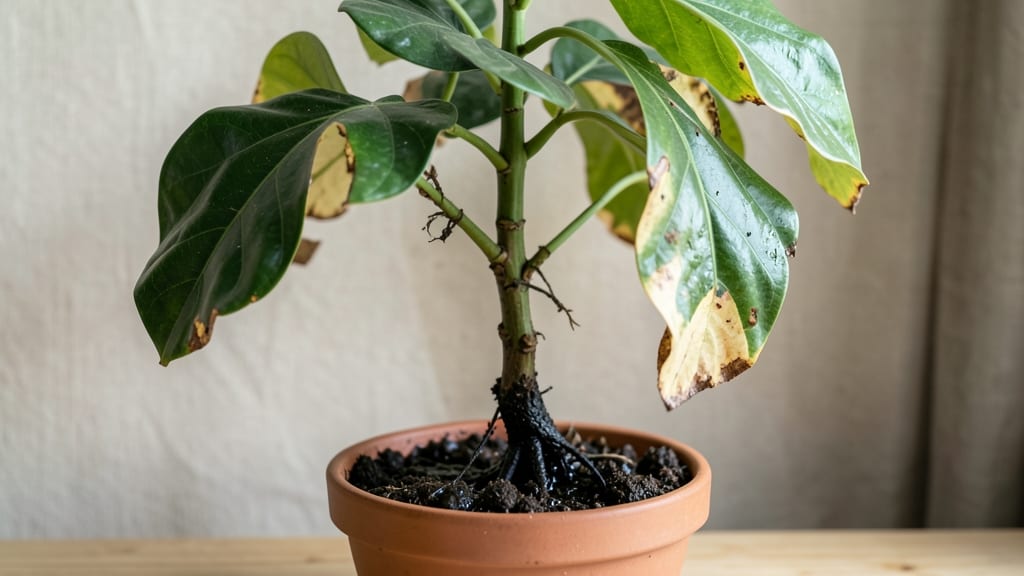
What does an overwatered ficus tree look like? It reveals itself through a dramatic yellowing of leaves that starts at the tips and spreads inward—like someone took a marker to your plant. 🌿 I once mistook this for nutrient deficiency until I noticed the mushy, black roots that smelled like wet socks. The leaves also droop heavily, even when the soil feels damp, and the canopy loses its usual lushness, looking more like a sad, deflated umbrella.
Here's the thing—ficus trees hate soggy roots. When you overwater, the roots suffocate, cutting off oxygen and inviting root rot. The soil stays clinging to your fingers instead of crumbling, and you might even spot mold or fungus growing on the surface.
My first overwatered ficus lost half its leaves before I caught on, but once I adjusted to watering only when the top inch of soil was bone dry, it bounced back within weeks.
You'll know you've fixed it when new growth emerges with vibrant green leaves and the drooping stops. The roots should feel firm and white when you check them, not mushy or dark.
With the right watering routine, your ficus will reward you with glossy, healthy foliage that makes your space feel alive again.
This works for both potted and in-ground ficus trees—just adjust your watering schedule to match your climate. In humid areas, you might need to water even less frequently. The key is patience: ficus trees recover faster than you think when you give them the right care.
Common Causes Of Overwatering Ficus Trees
Overwatering your ficus tree isn’t just about giving it too much water—it’s a complex mix of environmental, soil, and care-related factors that disrupt its natural balance. Understanding these triggers helps you avoid soggy roots and wilting leaves. Here’s why it happens:
Ficus trees thrive in well-draining soil, but compacted, clay-heavy, or peat-based mixes can trap excess moisture. When water isn’t able to escape, it pools around the roots, suffocating them by cutting off oxygen. Root rot—a fungal infection—quickly follows, turning healthy roots mushy and brown.
- Why it’s dangerous: Ficus roots need aeration to breathe. Without it, they drown in their own "swamp," leading to nutrient starvation and leaf yellowing.
- Actionable fix: Amend soil with perlite, sand, or orchid bark (20-30% mix) to improve porosity. Repot if using heavy garden soil.
While ficus trees love consistency, some owners overcompensate for forgetfulness by drowning the plant in water. The "soak-and-dry" myth often backfires: if the topsoil isn’t dry before rewetting, roots stay waterlogged. Even worse? Automated drip systems or self-watering pots can overdeliver without you noticing.
- Science behind it: Ficus roots absorb oxygen through tiny pores. When submerged, these pores fill with water, blocking gas exchange—a process called anoxia, which kills cells within days. - Pro tip: Stick your finger 2 inches deep.
If damp, wait. If dry, water slowly until it drains freely from the bottom.
Small pots restrict root growth, forcing roots to circle tightly in a confined space. When you water, the limited soil volume can’t absorb excess moisture fast enough, leading to permanent saturation. Conversely, oversized pots hold too much water, delaying evaporation and keeping roots damp for weeks.
- The math: A 6-inch pot holds ~1.5 gallons of soil. If you water 1 cup daily, that’s 20% of the pot’s capacity per day—far more than roots can process. - Solution: Choose pots 1-2 inches wider than the root ball.
Terracotta (unglazed) pots help wick away moisture faster.
Ficus trees are tropical but still need moderate humidity (40-50%) and stable temps (65-80°F). Cold drafts, air conditioning blasts, or humidifiers near the plant can disrupt transpiration—the process where leaves release water vapor. When transpiration slows, excess moisture lingers in the soil.
- Hidden danger: Low light + high humidity = a recipe for fungal growth. Fungus like Phytophthora thrive in cool, damp conditions, attacking roots first. - Fix: Use a hygrometer to monitor humidity.
Increase airflow with a small fan (not directly on leaves) and avoid placing the plant near drafts.
Repotting a ficus into a larger container without adjusting watering habits is a common mistake. Bigger pots = more soil = more water retention. If you keep watering as before, the excess simply sits longer, promoting rot.
- Key insight: Ficus trees in larger pots may need weeks to dry out between waterings. Reduce frequency by 30-50% after repotting.
- Warning sign: If the soil stays wet for over 5 days, your pot is too big.
Tap water with high salts, chlorine, or fluoride can alter soil chemistry, making it harder for water to drain properly. Over time, these minerals accumulate, creating a crusty, water-repellent layer that traps moisture against the roots.
- Test it: If your water leaves white residue in the pot or on leaves, it’s mineral-heavy. Use distilled or rainwater instead.
- Quick test: Fill a clear glass with tap water. If it takes >24 hours to evaporate completely, it’s likely too "heavy" for ficus soil.
Even with proper watering, existing pathogens in soil or pots can multiply when conditions are ideal (warm, wet, and stagnant). Ficus trees are particularly susceptible to:
- Pythium (soft, water-soaked roots)
- Rhizoctonia (black, mushy roots)
- Bacterial leaf spot (which spreads to roots via water splashes)
- Prevention: Sterilize pots with bleach (1:10 ratio) before repotting. Add 1 part sand to 3 parts soil to inhibit fungal growth.
When you prune a ficus or move it to a new location, the plant undergoes transpirational stress. To compensate, it reduces water uptake—but if you keep watering on schedule, the roots can’t keep up, leading to temporary waterlogging.
- Recovery tip: Reduce water by 50% for 2 weeks post-pruning. Monitor leaves for wilting (underwatering) vs. yellowing (overwatering).
💡 Key Takeaway: Overwatering is rarely just about "too much water"—it’s about misaligned care factors that prevent the plant from processing moisture efficiently. Audit your setup: drainage, pot size, water quality, and environmental conditions. Small tweaks can turn a drowning ficus into a thriving one!
Fixing an Overwatered Ficus Tree
Reviving your ficus tree starts with identifying the root of the problem—literally! Overwatering can turn your leafy friend into a soggy mess, but with the right steps, you can nurse it back to health.
Below, we’ll break down cause-specific fixes and share prevention tips to keep your ficus thriving. Let’s get your tree back on track!
If your ficus is sporting yellowing leaves or a limp, droopy canopy, it’s likely suffering from root rot or waterlogged soil. Here’s how to fix it:
🔥 Step 1: Stop Watering Immediately
Overwatering is the #1 culprit. Cut off all water for at least 3–5 days to let the soil dry out. This gives roots a chance to recover before they suffocate.
🍳 Step 2: Check the Soil Moisture
Stick your finger 1–2 inches deep into the soil. If it’s: - Cold and clumpy → Too wet.
Wait longer before watering. - Dry but heavy → Drain excess water by letting it sit in a tray for 10–15 minutes, then empty it.
👨🍳 Step 3: Repot if Necessary (For Severe Cases)
If the soil smells musty or feels slimy, your ficus may need a fresh start. 1. Remove the tree gently from its pot.
- Inspect the roots: - Healthy roots = Firm, white, or light tan. - Rotten roots = Mushy, black, or smell foul. Trim these with sterilized scissors!
- Repot in well-draining soil (see tips below) and a clean pot with drainage holes.
🥘 Step 4: Water Correctly Moving Forward
Once the soil is dry, water deeply but infrequently:
- Water only when the top 1–2 inches of soil are dry (test with your finger!).
- Use room-temperature water to avoid shocking the roots.
- Avoid saucers unless you empty them after 30 minutes.
If you spot white, fuzzy mold (fungus) or mushy, decaying roots, your ficus is in critical condition. Don’t panic—here’s how to save it:
🔪 Step 1: Prune the Damage
- Trim away all infected roots with sterilized pruning shears.
- Dust the cuts with cinnamon powder or fungicide to prevent spread.
⏰ Step 2: Disinfect the Pot
- Wash the pot with a 10% bleach solution (1 part bleach to 9 parts water).
- Rinse thoroughly and let it dry in the sun.
🌡️ Step 3: Revive with Fresh Soil & Airflow 1. Repot in a mix of:
- 60% well-draining potting soil
- 30% perlite or orchid bark (for aeration)
- 10% coconut coir (for moisture control) 2. Place in bright, indirect light (no direct sun yet—it stresses weak roots).
- Mist lightly every 2–3 days to boost humidity without drowning roots.
Once your ficus is on the mend, prevent future overwatering with these easy habits:
| Problem | Solution |
|---|---|
| No drainage holes | Repot in a container with drainage holes or use a cache pot trick. |
| Overly compact soil | Mix in perlite, sand, or bark for better airflow. |
| Watering on a schedule | Check soil moisture first! Use a moisture meter if unsure. |
| Large pots = more water | Downsize the pot if it’s too big—roots shouldn’t outgrow the container. |
| Cold or humid climates | Reduce watering in winter or when humidity is high. |
- 🌿 Test the soil before watering—if it’s still damp, wait! - 🍂 Yellow leaves? They’re already dead—trim them to redirect energy to healthy growth. - 🌡️ Ficus trees hate soggy feet—if in doubt, underwater slightly rather than overdo it. - 🎯 Monitor for 2–3 weeks after repotting.
If new leaves appear, you’re on the right track!
With these steps, your ficus should bounce back in 4–6 weeks. Remember: Less water = happier roots! 🌱💧 Now go give your tree the dry-but-not-dead love it deserves.
Frequently asked questions about overwatered ficus trees
How can I tell if my ficus tree is overwatered vs. underwatered?
Overwatered ficus trees show yellowing leaves that start at the tips and spread inward, while underwatered trees have dry, crispy brown edges. Check the soil: overwatered soil stays cold and clumpy, while underwatered soil feels dry and crumbly. Drooping leaves with a mushy stem indicate overwatering, but wilting with dry soil means thirst.
Why do some ficus leaves turn yellow but others stay green?
This classic pattern—yellowing leaves with green veins—is a classic sign of root rot from overwatering. The green veins stay alive because they're still connected to healthy root sections, while the leaf tissue dies from oxygen deprivation. Trim the yellow leaves to help the plant focus energy on recovery.
Can I save a ficus tree with black, mushy roots?
Yes, but you'll need to act fast! Trim all black, mushy roots with sterilized scissors, then repot in fresh, well-draining soil with perlite. Reduce watering to once every 7-10 days until new growth appears. Keep the plant in bright, indirect light to support recovery.
How often should I water my ficus tree after fixing overwatering?
Wait until the top 2 inches of soil are completely dry—this could take 10-14 days after your last watering. Use your finger as a gauge: if it comes out clean, water lightly until it drains from the bottom. In winter, reduce to every 3-4 weeks as growth slows.
Will my ficus tree recover if I just stop watering it?
Not always—stopping watering alone won't fix root rot. The plant needs dry soil and fresh air to recover. Remove the tree from its pot, inspect roots, trim any rotten sections, and repot in fresh soil. Keep it in bright, indirect light and avoid watering for at least 5 days to break the rot cycle.