
Plants
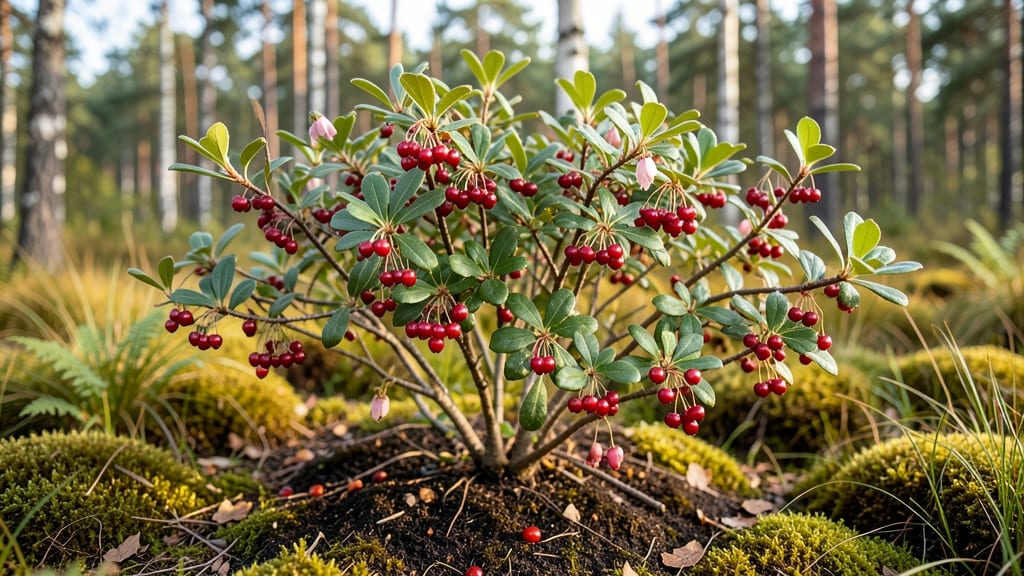
A cranberry tree looks like a compact evergreen shrub with dense, oval-shaped leaves that stay vibrant green year-round. In spring, it bursts with clusters of small white flowers, followed by glossy red berries that ripen in fall. The tree's smooth gray bark and low-growing, rounded shape set it apart from other shrubs.
A cranberry tree's most striking feature is its year-round foliage, which stays lush and glossy even in winter. 🌿 Unlike many fruit-bearing plants, these trees don't lose their leaves, making them excellent for year-round interest in gardens.
The berries, which turn a deep crimson when ripe, grow in tight clusters along the branches—unlike cranberry vines, which spread horizontally.
I've found that the tree's compact size (typically 6-10 feet) makes it perfect for small yards, while its sprawling branches create a natural, bushy appearance that's both functional and decorative.
The white spring flowers are another key identifier, appearing in delicate clusters that contrast beautifully with the dark green leaves. These flowers eventually give way to the berries, which remain on the tree well into winter if not harvested.
What's interesting is how the tree's growth habit differs from its vine counterpart—the tree grows upright, while cranberry vines spread along the ground, requiring different cultivation approaches.
💡 In This Article
- Identifying Cranberry Tree Bark, Leaves, and Fruit Features
- Cranberry Tree vs. Cranberry Vine: Key Differences
Identifying cranberry tree bark, leaves, and fruit features
The cranberry tree's leaves are its most distinctive year-round feature, measuring about 1-2 inches long with a smooth, oval shape and finely serrated edges.
Their deep green color comes from a thick, leathery texture that resists frost damage, allowing them to stay vibrant even in winter. 🌿 The undersides are slightly lighter, giving them a two-toned appearance when held up to light—a trait that helps distinguish them from blueberry bushes, whose leaves are more uniform in color.
When examining the bark, you'll notice its smooth, grayish-brown surface that develops subtle horizontal ridges as the tree matures. Younger branches have a slightly reddish tint, while older stems develop a more muted, silvery-gray hue. This bark texture contrasts sharply with blueberry bushes, which often have rougher, more scaly bark.
The tree's branches grow in a sprawling, rounded shape, creating a dense canopy that can reach 6-10 feet wide—much wider than its height.
The white spring flowers are another key identifier, appearing in clusters of 5-10 blossoms along the branch tips. Each flower has five delicate petals and measures about ¼ inch wide, creating a frothy, lace-like appearance that lasts for several weeks.
These flowers eventually give way to the iconic red berries, which start green and gradually turn a deep crimson as they ripen in late summer to fall. The berries grow in tight clusters, unlike cranberry vines where they dangle from long stems.
What sets cranberry tree berries apart is their firm, waxy skin that protects the tart-sweet flesh inside. When fully ripe, they measure about ½ inch in diameter and have a glossy sheen that makes them stand out against the dark green foliage.
The berries remain attached to the tree well into winter unless harvested, providing a striking contrast against the snow. This persistent fruit display is a major reason gardeners love these trees for both their ornamental value and harvest potential.
Seasonal changes are particularly noticeable in cranberry trees. In spring, new growth emerges with a fresh, bright green hue that gradually deepens throughout the summer. Fall brings the most dramatic transformation as the leaves maintain their color while the berries ripen, creating a vibrant red-and-green contrast.
Winter reveals the tree's true structure with its dense branching pattern and persistent foliage, making it a standout feature in winter landscapes.
One common point of confusion is distinguishing cranberry trees from blueberry bushes. While both belong to the same family (Ericaceae), cranberry trees have larger, glossier leaves and produce berries that stay attached to the branches, whereas blueberry bushes have smaller, duller leaves and berries that grow on upright stems.
The cranberry tree's overall growth habit—sprawling and rounded—also differs from the more upright, bushy shape of blueberry plants.