
Landscaping
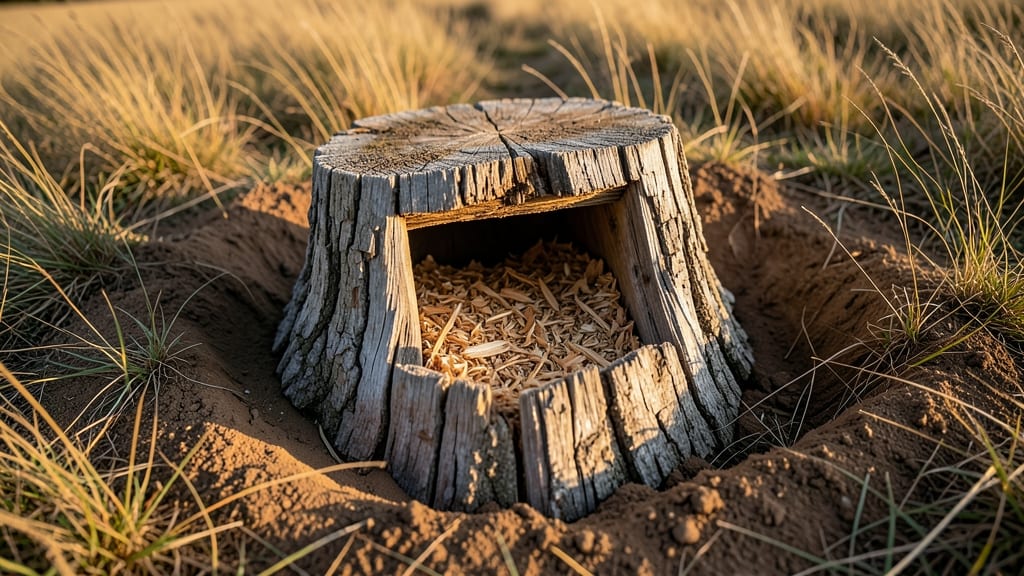
Transform old tree stumps into charming birdhouses that blend seamlessly with your garden while providing safe nesting spaces for local wildlife. These creative designs repurpose natural materials and turn yard waste into functional art.
Hollowed Stump Woodpecker Nesting Box
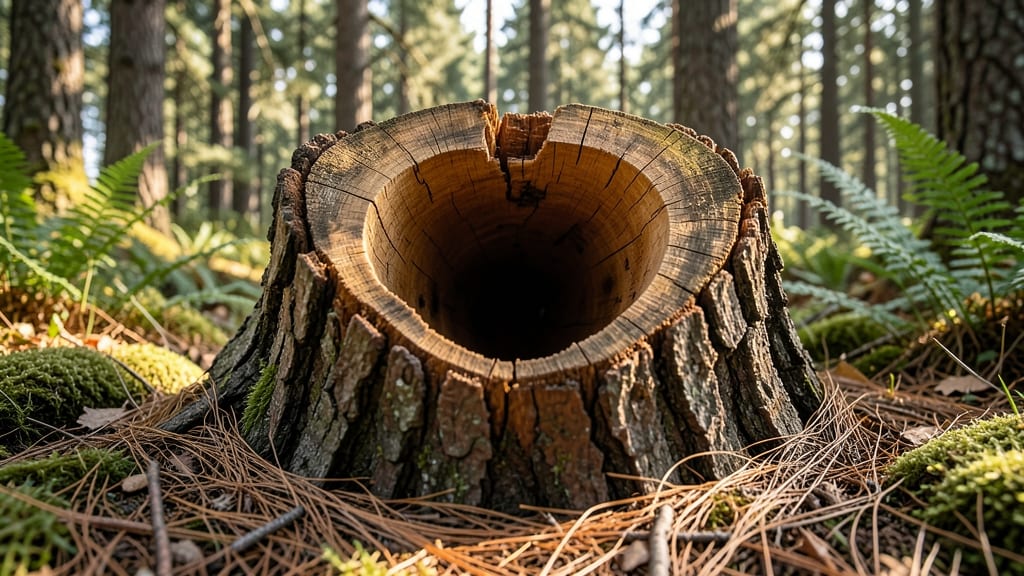
Want to attract woodpeckers, chickadees, and nuthatches to your garden while keeping it looking wild and natural? A hollowed stump woodpecker nesting box is the perfect solution—it mimics the exact cavities these birds seek in dead trees, using untreated wood for authenticity.
Start by selecting a rot-resistant hardwood stump (like oak or maple) and carve a 3-4 inch entrance hole on the side, about 5-10 feet off the ground. Leave the natural bark intact to blend seamlessly with your landscape. These birds prefer rough, textured surfaces, so avoid sanding or smoothing the interior. Place it near mature trees or dense shrubs for added security, and watch as your garden becomes a hotspot for cavity-nesting birds by spring. 🌱
Miniature Stump Suet Feeder House
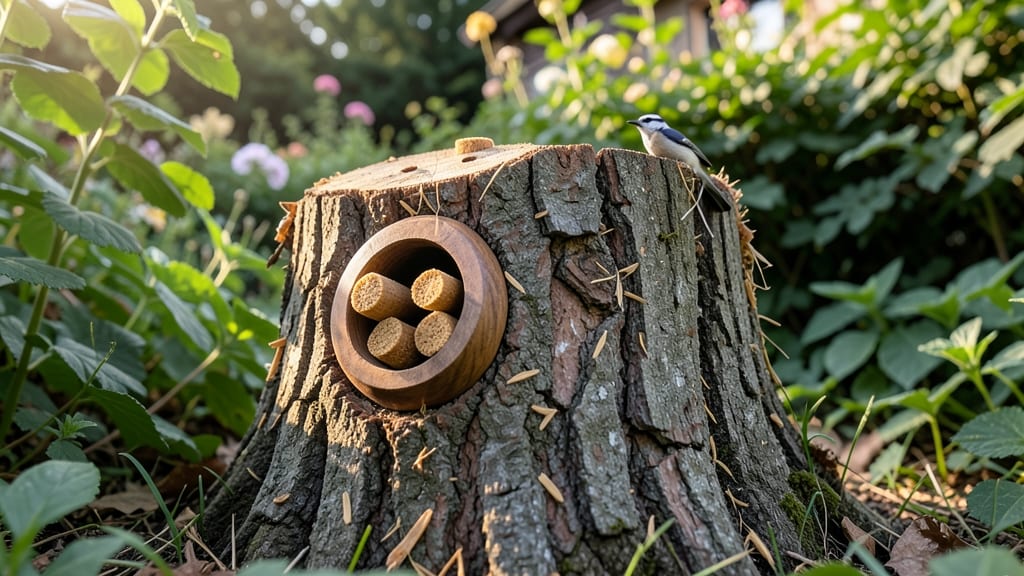
Small gardens deserve big wildlife action—and this miniature stump suet feeder house delivers both nesting space and a built-in buffet. Unlike traditional birdhouses, this dual-purpose design gives woodpeckers and nuthatches a year-round food source while providing a safe place to raise their young.
Carve a shallow compartment at the top for nesting material (like pine shavings or dry grass) and add a suet cake holder on the side. Use untreated cedar or pine for durability, and mount it on a 4-foot post to deter ground predators. The compact size (about 12 inches tall) makes it perfect for patios or small yards where space is limited.
Urban gardeners and balcony dwellers will love how this design maximizes functionality without sacrificing charm. Plus, watching birds feast and nest in one spot is pure garden magic. 💚
Stacked Stump Bluebird Habitat
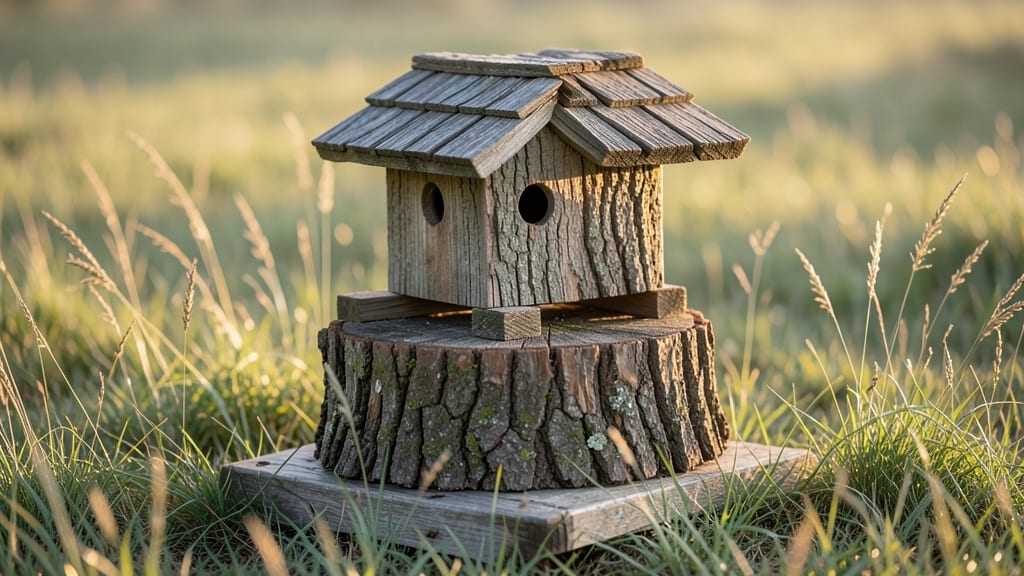
Bluebirds need all the help they can get in open grasslands, where predators lurk just below the surface. A stacked stump bluebird habitat elevates their nesting space while keeping them safe from ground-based threats like snakes and raccoons—all while adding rustic charm to your garden.
This design uses two stumps stacked vertically with the bluebird house mounted between them at a height of 4-6 feet. The lower stump creates a natural barrier, while the upper stump provides additional predator deterrence. Use untreated cedar or pine for durability, and include multiple chambers (even if unused) to confuse predators about the active nest location. Place it in a sunny, open area with nearby perches like fence posts or shrubs.
Perfect for gardeners in open meadows or rural settings, this habitat mimics the natural nesting conditions bluebirds prefer. It’s especially rewarding for those who love wildlife conservation and want to see these striking birds thrive in their yard. 💚
Moss-Covered Stump Hummingbird Perch
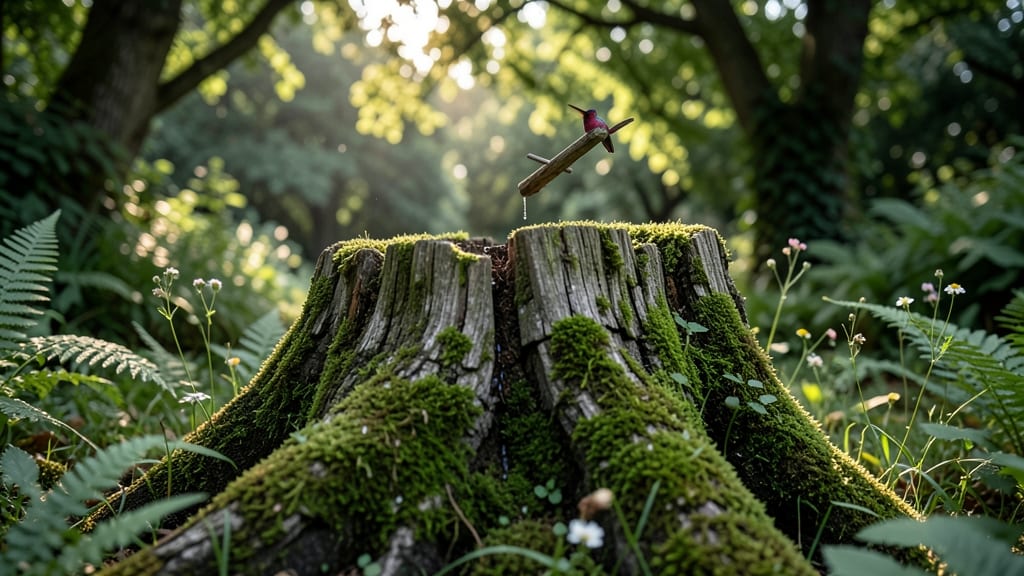
Want to attract hummingbirds to your shaded garden without sacrificing natural beauty? A moss-covered stump hummingbird perch creates a woodland-inspired haven these tiny jewels adore. Unlike bright feeders that stand out, this design mimics their preferred habitat—moist, mossy forest floors—while providing essential perches and nesting spaces.
Start with a preserved stump (untreated cedar or oak works best) and wrap it in sheet moss secured with natural twine. Carve horizontal perches at varying heights (hummingbirds prefer 3-6 inches above a shallow cavity) and add a small nesting recess (2-3 inches deep). Place it in partial shade near flowering plants like bee balm or salvia for extra appeal. The moss retains moisture, mimicking their natural environment.
This design is perfect for gardeners who love low-maintenance, wildlife-friendly projects that double as decor. Hummingbirds will visit for both nectar and nesting, while your garden gains a whimsical, organic focal point. 🌿
Carved Stump Bat Box Hybrid
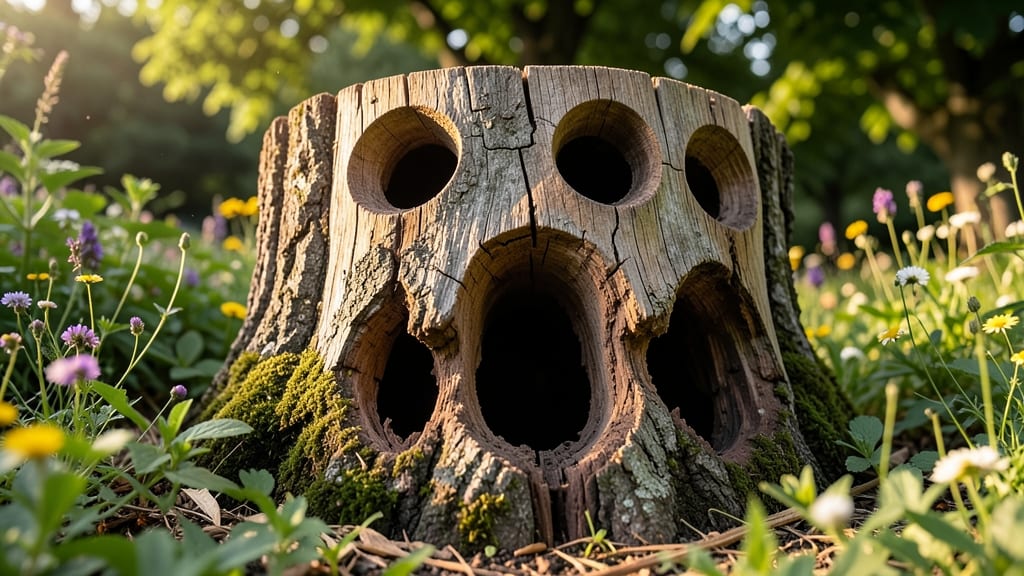
Turn your urban garden into a thriving ecosystem with a carved stump bat box hybrid—a clever two-in-one design that invites both birds and bats to take up residence. This innovative setup uses the stump's natural shape to create upper chambers for birds while adding lower crevices perfect for bats, doubling your wildlife impact in one project.
For the bat-friendly section, carve 12-18 inch deep crevices on the lower sides of the stump, facing away from prevailing winds. Birds will prefer the upper chambers (6-8 inches deep) with 1.5-inch diameter entrance holes. Mount the stump 6-10 feet high on a sturdy post or wall, ensuring bats have a south-facing side for evening emergence. Use untreated cedar or pine for durability and natural appeal.
This design is perfect for city gardeners looking to boost local biodiversity—bats control pests like mosquitoes, while birds add song and pollination. Plus, the rustic charm blends beautifully with any outdoor space. 🌟
Hanging Stump Wren House
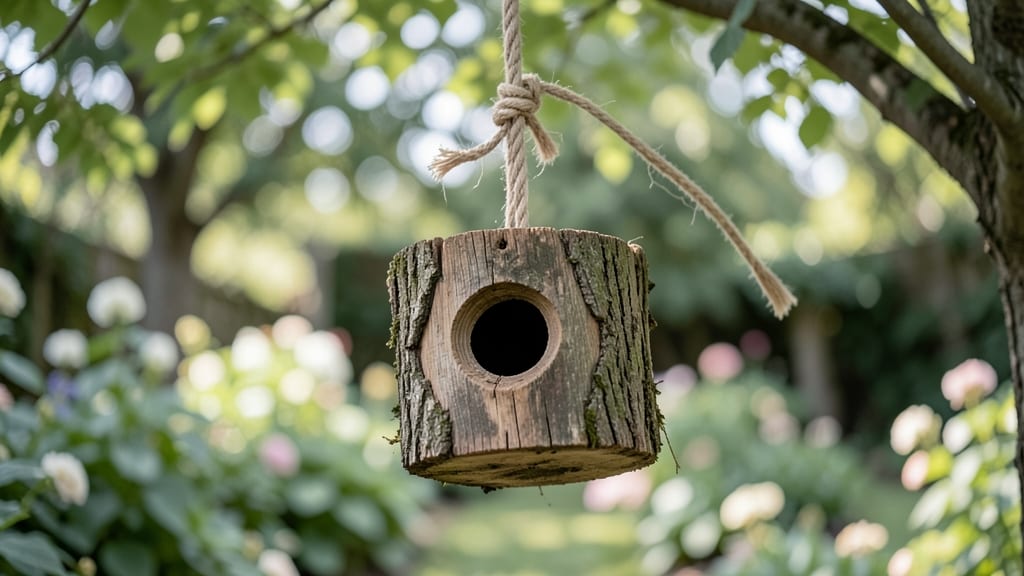
Looking to attract wrens to your garden without taking up precious ground space? A hanging stump wren house offers a whimsical, space-saving solution that mimics the natural cavities these birds prefer.
Simply carve a 1.5-inch diameter entrance hole into a small tree stump section, then suspend it from a sturdy branch or hook using thick rope or chains. Position it 5-10 feet off the ground and at least 5 feet from shrubs to deter predators. Wrens love these elevated, enclosed spaces—especially in small urban gardens or balconies where traditional birdhouses might not fit.
This design works particularly well for gardeners in small spaces who want to blend wildlife habitat with rustic decor. The natural wood texture makes it nearly invisible to predators while providing a cozy home for your feathered friends. 🌿
Sculpted Stump Oriole Nesting Pod
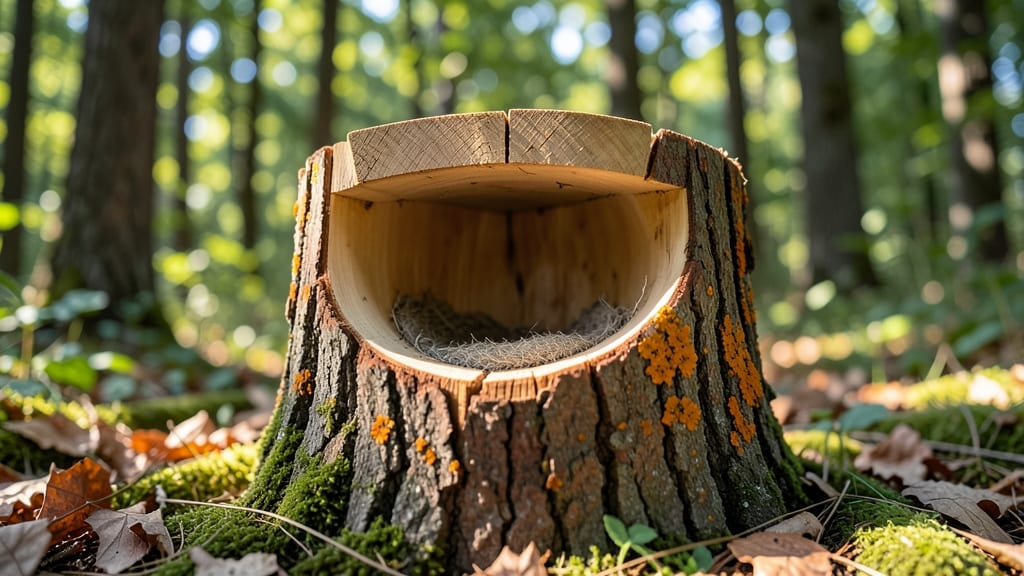
If you’ve ever spotted northern orioles weaving their intricate nests in open woodlands, you’ll want to recreate that experience in your garden. These vibrant songbirds prefer exposed, open-fronted nests where they can easily access materials—making a sculpted stump nesting pod the perfect solution.
Carve an open-fronted cavity into the stump’s top, leaving the sides exposed for easy access. Line the interior with hanging twine or natural fibers so orioles can weave their nests as they would in the wild. Mount the stump on a 6-foot pole in an open area with nearby trees for perching. Orioles are drawn to goldenrod, milkweed, and sumac, so plant these nearby to attract them further.
This design is ideal for gardeners in open meadows or sunny edges, offering a naturalistic alternative to enclosed birdhouses. With its rustic charm and functional appeal, it’s a must-try for wildlife lovers. ✨
Miniature Stump Finch Feeder House
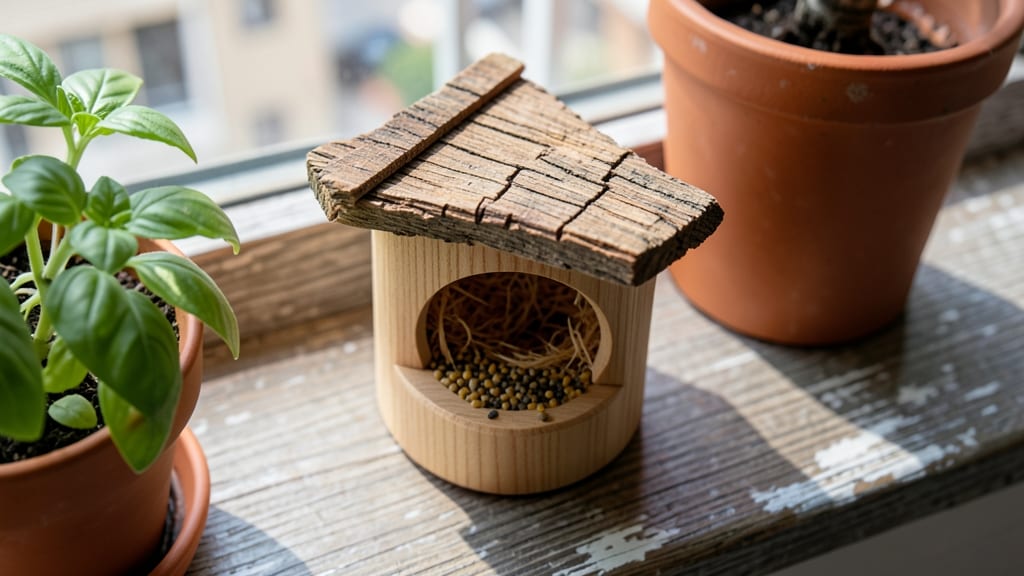
Balcony gardeners and urban dwellers with limited space can still create a finch and sparrow paradise with a miniature stump finch feeder house. This pint-sized design combines nesting space with a built-in seed tray, making it perfect for tiny gardens, windowsills, or even patio tables.
Use a small, weather-resistant stump (like cedar) and carve a shallow seed storage compartment on one side, covered with a removable lid. Above it, add a nesting cavity (2-3 inches wide) to attract house finches, sparrows, and chickadees. Place it near shrubs or feeders for easy access, and fill the tray with black oil sunflower seeds—a favorite of these tiny birds. The compact size means you can place it almost anywhere without sacrificing charm. 🌿
Painted Stump Songbird Condo
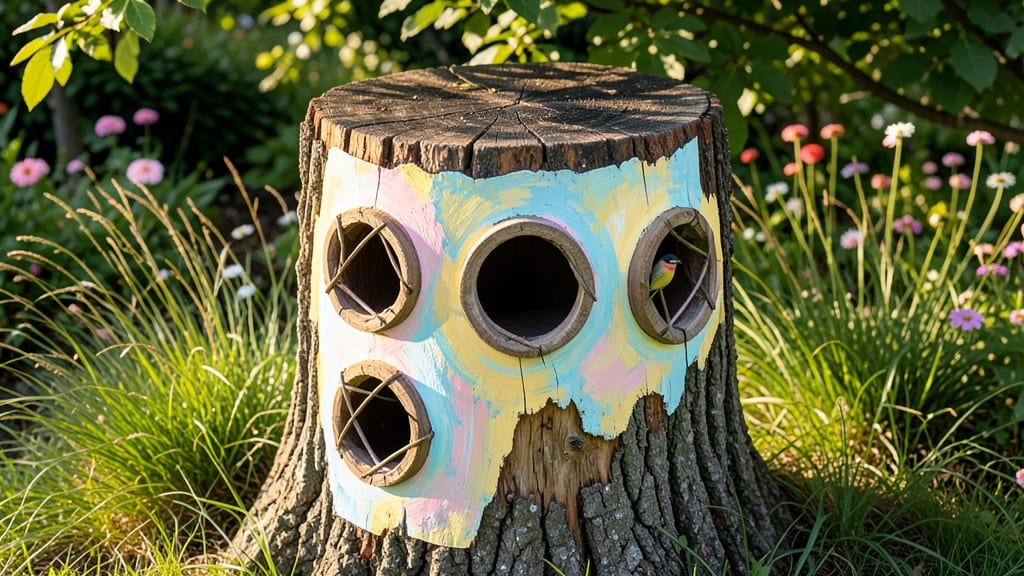
Brighten up your garden while creating a cozy home for songbirds with a painted stump songbird condo—where cheerful colors meet functional wildlife habitat. This design transforms a simple stump into a multi-chambered apartment perfect for tiny birds like titmice and warblers, who love snug nesting spaces with easy access.
Start with a weather-resistant cedar or oak stump and carve 3-4 small chambers (2-3 inches wide) on the sides, each with a 1.25-inch entrance hole. Use non-toxic, water-based acrylic paints in soft pastels or earthy tones to add visual interest while keeping it safe for birds. Mount the stump on a fence or post at 5-6 feet high, placing it near shrubs or flowering plants for cover and food sources. The painted details won’t deter birds—many species prefer textured surfaces as long as the paint is fully cured and non-toxic.
This project is ideal for gardeners who love colorful, whimsical decor that doubles as wildlife support. It’s especially great for urban or suburban yards where natural nesting sites are scarce, and the cheerful hues will brighten up any garden corner. 🌻
Sunken Stump Ground-Nesting Box

For gardeners with open fields or rural landscapes, a sunken stump ground-nesting box offers a clever way to protect vulnerable birds like quail, doves, and pheasants from ground predators. Unlike elevated birdhouses, this design mimics the natural nesting habits of these species, which prefer concealed, low-to-the-ground spaces in grasslands and meadows.
To create one, select a small, weather-resistant stump (cedar or oak works well) and carve a shallow, camouflaged entrance on the side, just above ground level. Partially bury the stump so only the entrance is visible, then surround it with native grasses or wildflowers to blend seamlessly into the landscape. Place it in a sunny, open area with minimal tree cover—these birds thrive in spaces where they can spot predators from a distance. Avoid placing it near dense shrubs, where snakes or raccoons might lurk.
This design is ideal for farmers, rural homesteaders, or wildlife enthusiasts who want to support ground-nesting species while keeping their gardens functional. The natural camouflage reduces stress for nesting birds, leading to healthier chicks and more successful breeding seasons. 🌻