
Pruning
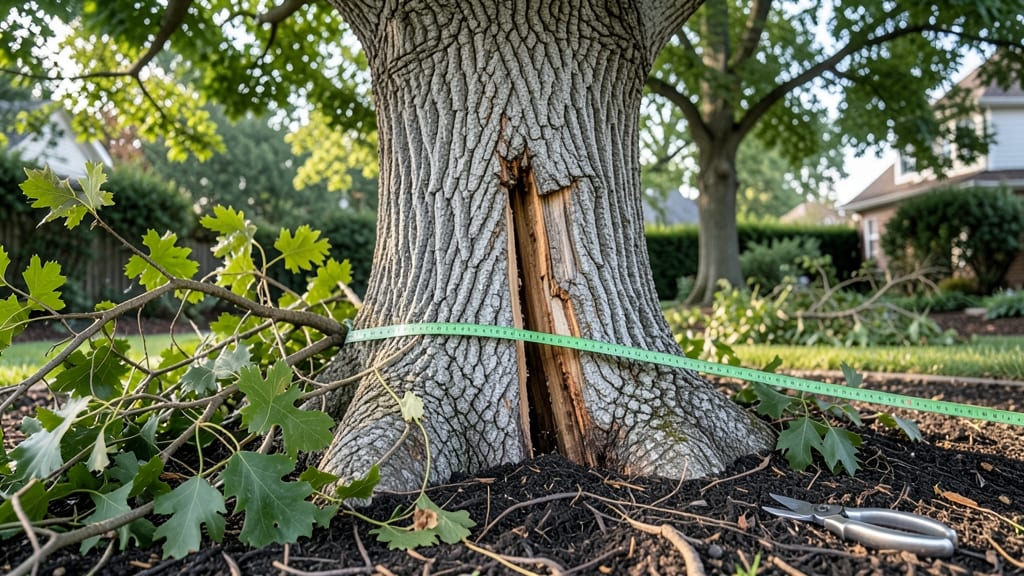
A tree that broke in half is every gardener’s worst nightmare—but here’s the good news: you can still save it. 🌳 The first 24 hours are critical, so grab your tools and let’s assess the damage before deciding what to do next.
I’ve fixed snapped branches myself, and with the right steps, your tree might just pull through.
Start by checking the break itself—is it clean, jagged, or torn? A clean break means the tree might heal; torn wood signals severe damage. Look for green leaves above the break: if they’re still alive, there’s hope.
But if the trunk is split all the way through or the top is leaning dangerously, professional help is a must.
For temporary stabilization, use sturdy rope or bungee cords to gently tie the broken sections together, supporting the weight without crushing the bark. Keep the area clear of people and pets, and water the tree deeply if the soil is dry—stressed trees need extra care to recover.
Long-term, you’ll need to prune dead wood and monitor for signs of rot or pest invasion. Some trees bounce back surprisingly well, while others may need bracing or even removal. Either way, acting fast gives your tree the best shot at survival.
Understanding Tree Failure Causes
When a tree suddenly snaps in half, it’s rarely a random event—it’s usually the result of long-term stress or sudden forces. Understanding the root causes (pun intended) can help you prevent future damage and save other trees on your property.
Below, we break down the most common reasons trees split apart, from natural aging to human-induced stress.
A tree’s structural integrity relies on healthy, solid wood. When internal rot or fungal infections take hold, the wood weakens from the inside out—often without visible signs above ground.
- 🍄 Fungal Decay (Heart Rot): Fungi like Heterobasidion annosum or Armillaria thrive in damp, wounded wood, breaking down cellulose and lignin—the "glue" that holds fibers together. By the time you see mushrooms at the base or cracks in the trunk, the tree may already be a hollow shell.
- Actionable Tip: 💡 Inspect trees annually for conk fungi (shelf-like growths) or spongy, discolored wood when pruning. If decay is confined to the center, the tree may still stand—but avoid heavy limbs.
- 🦠 Bacterial Infections: Bacteria like Erwinia or Pseudomonas can cause wetwood, turning the heartwood into a mushy, odoriferous mess. This reduces structural support, making the tree prone to snapping under stress.
- Red Flag: 🚨 Sweet, fermented smells near the base or oozing sap are warning signs.
- 🌧️ Waterlogged Soil: Poor drainage leads to anaerobic conditions, where fungi and bacteria flourish. Trees like oaks and maples are especially vulnerable to Phytophthora root rot, which spreads upward.
Even the healthiest trees can’t withstand extreme external forces. High winds, ice buildup, or lightning strikes apply immense torque or compression, causing clean breaks or jagged splits.
- 🌪️ Wind Throw or Uprooting:
- Trees with shallow roots (common in clay or compacted soil) are easily toppled. The root-to-trunk ratio matters—mature trees need roots extending at least 1.5 times the canopy width.
- Pro Tip: ✨ Plant deep-rooted species (like white oaks or bald cypress) in windy areas, and stake young trees until established.
- 🍃 Ice or Snow Load:
- Heavy ice accumulates like a natural weight, bending branches until they snap. Coniferous trees (pines, spruces) are most at risk because their needles create drag, increasing surface area for ice adhesion.
- Actionable Step: 🔪 Prune lower branches to reduce ice buildup, and avoid planting large trees near power lines.
- ⚡ Lightning Strikes:
- A direct hit can cause explosive wood failure, where steam from sap vaporization splits the trunk. Trees with thin bark (like birch) or high moisture content are prime targets.
- Prevention: 🌡️ Avoid planting solitary, tall trees in open fields—cluster them to create windbreaks.
Human error accounts for many tree failures. Aggressive pruning, improper cuts, or physical trauma can compromise a tree’s ability to heal and support its own weight.
- 🔪 Improper Pruning Cuts:
- Topping (removing large branches back to a stub) creates weak regrowth sprouts, which are prone to splitting. It also disrupts the tree’s natural weight distribution.
- Correct Technique: 👨🍳 Use the three-cut method for large branches: undercut, then make the final cut just outside the branch collar (the swollen area where the branch meets the trunk).
- 🪓 Girdling Roots or Wounds:
- Roots or branches that grow in a circular pattern (girdling) strangle the tree by cutting into its own bark, disrupting nutrient flow. Even a small wound can invite decay if not properly sealed with pruning paint (for cuts > 2" in diameter).
- Fix: 🔥 Remove girdling roots or branches early—once the wound exceeds 1/3 of the trunk’s circumference, the tree is at high risk.
- 🚜 Construction or Lawn Equipment Damage:
- Compaction from heavy machinery or buried roots can suffocate a tree’s vascular system. A single deep gouge from a lawnmower can introduce pathogens.
- Solution: 🛠️ Use root barriers for construction sites and keep mulch 3–4 inches deep (never piled against the trunk).
Like humans, trees have a lifespan. As they age, their wood becomes brittle, and hidden defects emerge—often with catastrophic results.
- 📅 Natural Aging (Brittle Wood Syndrome):
- Older trees (especially oaks, elms, and maples) develop heartwood that loses moisture, becoming prone to seasonal cracking in winter. Cold temperatures make wood more brittle.
- Signs: 🚨 Look for vertical or horizontal cracks (called "shakes") in the trunk. If they’re <1/4" wide, the tree may still be safe—but monitor closely.
- 🪵 Co-Dominant Stems:
- Trees with two or more leaders (central trunks) growing upward create a "V" where they meet. This weak junction is a common failure point, especially in storms.
- Remedy: ✨ Prune one leader early to encourage a single, strong trunk.
- 🌿 Poor Species Selection:
- Some trees are inherently weak. Bradford pears, silver maples, and willows have brittle wood and are prone to splitting. Native species like white oak or red maple are better choices for structural stability.
By recognizing these causes early, you can take steps to reinforce at-risk trees—whether through proper pruning, soil improvements, or strategic planting. The next section will cover emergency repair techniques to stabilize a snapped tree and prevent further damage.
Fixing a Split Tree Safely
When a tree breaks in half, panic might set in—but acting quickly and correctly can save both the tree and your property.
Below are practical, step-by-step solutions tailored to the most common causes of a snapped trunk or branch, along with prevention tips to keep your trees strong for years to come.
🔧 Immediate Steps to Take:
- Assess the Risk 🚨
- If the broken section is still attached but unstable, do not climb or touch it. Call a professional arborist immediately—especially if the tree is near power lines, structures, or people.
- Look for hanging debris (like large branches) that could fall unexpectedly. Mark the area with caution tape or cones if needed.
- Remove Loose or Dangerous Pieces 🪓 - Use pruning shears, a handsaw, or a chainsaw (with proper safety gear) to cut away dead or dangling sections that pose an immediate threat. - Never use a ladder to reach high breaks—this increases injury risk.
Instead, use ropes, pulleys, or a crane if the debris is heavy.
- Stabilize the Tree (If Possible) 🌱 - For smaller breaks (under 6 inches in diameter), you might be able to splice the two halves back together using: - Tree repair clips (metal or plastic brackets designed for trunk splits). - Strong twine or wire (temporarily) to hold the break while a professional makes a permanent fix. - ⚠️ Warning: This is a short-term fix only.
A professional should evaluate whether the tree can recover or if removal is safer.
- Call an Arborist 📞 - A certified arborist can determine if the tree is salvageable or if it should be removed.
They may: - Perform a cable bracing system to support weak trunks. - Recommend pruning to reduce weight and stress on the remaining structure. - Assess for internal rot or decay (common in storm-damaged trees).
💡 Prevention Tips for Future Storms:
- Prune regularly to remove weak, crossing, or dead branches (especially before hurricane season).
- Thin the canopy to allow wind to pass through instead of pushing against the tree.
- Plant wind-resistant species (e.g., oaks, maples, or willows) in high-risk areas.
- Avoid topping trees—this weakens the structure and makes them more prone to splitting.
🔧 How to Strengthen or Remove It:
- Check for Decay or Rot 🍄
- Tap the trunk with a hammer—if it sounds hollow or mushy, the tree has internal rot and is likely beyond saving.
- Look for fungal growth, oozing sap, or cracks—these are signs of disease.
- Prune Aggressively (If the Tree Is Still Healthy) ✂️
- Remove all dead, diseased, or weakly attached branches to reduce weight.
- Thin out the canopy by 20-30% to improve airflow and reduce stress on the trunk.
- Consider Cabling or Bracing 🛠️
- If the tree is structurally weak but not yet dead, an arborist can install:
- Steel cables to support heavy branches.
- Bolted plates to reinforce splits.
- ⚠️ Note: This is not a cure—it’s a temporary support system for trees with genetic weaknesses (like co-dominant stems).
- If the tree is structurally weak but not yet dead, an arborist can install:
- Remove the Tree If Necessary 🪓
- If the tree is rotten, leaning dangerously, or beyond repair, removal is the safest option.
- DIY removal is risky—hire a licensed tree service with insurance to avoid property damage or injury.
💡 Prevention Tips for Weak Trees:
- Water deeply but infrequently to encourage deep root growth (shallow roots = easier to uproot).
- Mulch properly (2-4 inches of organic mulch, kept away from the trunk) to protect roots.
- Avoid over-fertilizing—too much nitrogen can weaken wood structure.
- Inspect trees annually for cracks, mushrooms at the base, or unusual leaf drop.
🔧 How to Correct Mistakes:
- Stop Pruning Until You Learn Proper Techniques 📚
- Never remove more than 25% of the canopy in one year—this stresses the tree.
- Avoid "topping" (cutting the top flat)—this creates stubs that rot and weakens the tree.
- Fix Improper Cuts ✂️
- If a poorly made cut caused the split:
- Remove the damaged section with clean, angled cuts (never leave stubs).
- Seal the wound (for large cuts) with tree wound dressing (though research shows this is controversial—focus on proper pruning instead).
- If a poorly made cut caused the split:
- Protect the Tree from Further Damage 🛡️
- Fence off the area if kids or pets might climb the tree.
- Remove nearby obstacles (like swings or play structures) until the tree is stable.
💡 Prevention Tips for Pruning Mistakes:
- Learn proper pruning techniques (or hire a pro) to avoid over-pruning, flush cuts, or tearing bark.
- Prune in late winter or early spring (when the tree is dormant but before new growth).
- Use sharp, clean tools to make smooth cuts without crushing branches.
If the tree is: ✅ Leaning severely (more than 15% of its height). ✅ Showing signs of rot or fungus. ✅ In a high-traffic or high-value area (near homes, cars, or power lines). ✅ Beyond professional repair (e.g., split at the base with no salvageable trunk).
💡 Pro Tip: Always check local regulations—some areas require permits for tree removal, especially if the tree is protected or historic.
| Situation | DIY? | Hire a Pro? |
|---|---|---|
| Small branch break (under 3" diameter) | ✅ (if safe) | ❌ |
| Large trunk split or storm damage | ❌ | ✅ |
| Tree near power lines or structures | ❌ | ✅ |
| Suspected disease or rot | ❌ | ✅ |
| Need long-term stabilization (cabling) | ❌ | ✅ |
🌟 Remember: A tree that’s partially broken but still alive can sometimes recover with proper care—but safety always comes first. When in doubt, call an arborist before attempting repairs!
Frequently asked questions about a broken tree
Can a tree survive if it breaks in half?
It depends on the break and the tree’s health. If the split is clean and the tree still has green leaves above, there’s hope—especially for younger trees or species like willows or maples. However, if the trunk is split all the way through or the tree is hollow inside, it’s likely beyond saving. Always check for signs of rot or fungus first.
What should I do immediately after a tree breaks?
First, clear the area of people and pets—hanging branches can fall unexpectedly. Remove any loose or dangerous debris with proper tools (like a chainsaw), but avoid climbing near unstable sections. For large breaks, call an arborist immediately, especially if the tree is near structures or power lines.
How can I temporarily stabilize a broken tree?
For small breaks (under 6 inches), use tree repair clips or sturdy rope to gently tie the two halves together. Avoid using wire or anything that could cut into the bark. This is only a temporary fix—an arborist should assess whether the tree can recover or needs removal.
When should I call a professional arborist instead of trying to fix it myself?
Call an arborist if the break is large, the tree is leaning dangerously, or you suspect rot or disease. Never attempt repairs near power lines, and avoid DIY fixes for trees over 15 feet tall or those near buildings. Professionals can safely assess whether the tree can be saved or needs removal.
Can I save a tree that broke during a storm?
Some storm-damaged trees recover with proper care, but it depends on the extent of the damage. Prune dead branches, water deeply, and monitor for signs of stress (like leaf drop). If the tree has internal rot or a split trunk, it’s often safer to remove it. Storms can mask underlying issues like weak wood or disease.