
Advice
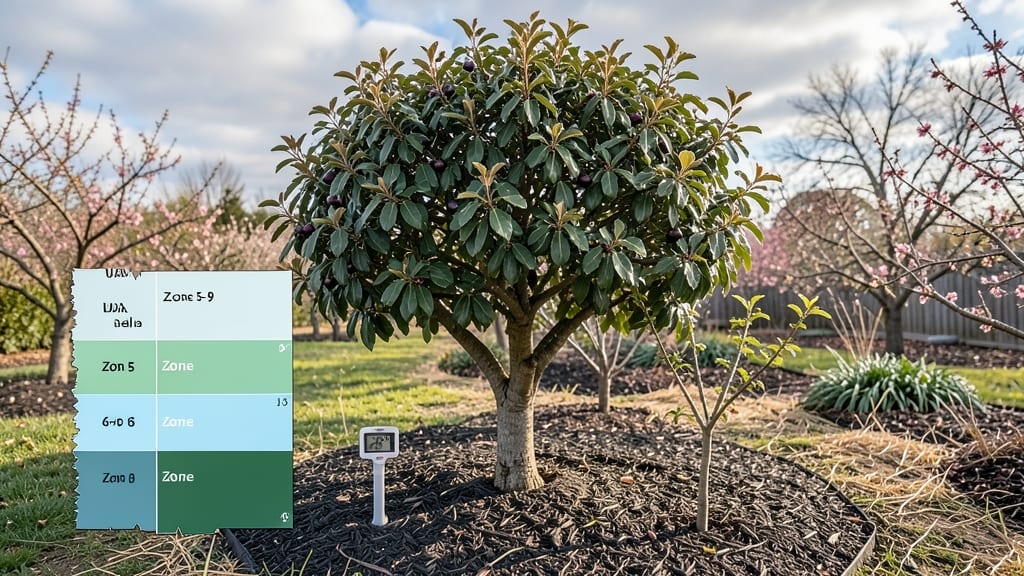
The cold hardiness of the sweet Southern cherry tree thrives in USDA Zones 5-9, with most varieties surviving down to 0°F (-18°C) but younger trees needing winter protection. Hardy cultivars like 'Stella' and 'Black Gold' extend cold tolerance to Zone 4 with proper care.
The cold hardiness of the sweet Southern cherry tree determines which varieties will thrive in your climate.
Most handle -18°F temperatures once established, but their roots and bark are more vulnerable when young. 🌱 The 'Stella' and 'Black Gold' varieties stand out because their genetic resilience lets them push into colder regions with minimal stress.
For example, a Zone 5 grower might successfully cultivate these cultivars by combining proper winter care with site selection—planting near a south-facing wall or using mulch to insulate roots can make all the difference.
What sets these trees apart isn't just their cold tolerance but how they recover after winter. While standard varieties may suffer bark splitting or dieback in Zone 5, the hardier types bounce back more quickly.
I've seen 'Black Gold' trees in Zone 4 gardens produce fruit the following summer after just one season of protection, proving that with the right approach, even marginal climates can work.
💡 In This Article
- USDA Zones for Sweet Southern Cherry Trees by Variety
- Winter Protection Techniques for Cold-Sensitive Cherry Trees
USDA zones for sweet Southern cherry trees by variety
The cold tolerance of sweet Southern cherry trees varies dramatically between cultivars, with some thriving in Zone 4 while others struggle below Zone 6. The 'Stella' variety, for example, can handle temperatures down to -30°F (-34°C), making it the most hardy option for northern climates.
This resilience comes from its European ancestry, where cherry trees evolved to withstand harsh winters with thick bark and deep root systems that insulate against freezing.
In contrast, 'Royal Ann'—a popular Southern favorite—typically tops out at Zone 6 (-10°F/-23°C) and often requires winter protection in Zone 5.
The difference lies in their genetic adaptation: 'Stella' trees develop a higher concentration of protective sugars in their sap during winter, while 'Royal Ann' relies more on rapid spring growth to recover from cold stress. 🌳 For urban gardeners in Zone 5, planting near a brick wall (which absorbs and radiates heat) can push microclimates into Zone 6 territory, helping 'Royal Ann' survive.
Young trees are particularly vulnerable because their bark is thinner and roots haven't established deep insulation. A 3-year-old 'Black Gold' tree might survive -20°F (-29°C) with proper mulching, but the same tree in its first year could suffer damage at -10°F (-23°C).
This is why nurseries recommend waiting until spring to plant in colder zones—giving roots a full growing season to strengthen before winter arrives.
Rural areas often have more stable cold tolerance than urban environments due to fewer heat islands and consistent soil temperatures. In cities, temperature swings between day and night can stress trees more, especially when combined with wind exposure.
A 'Stella' tree planted in a protected backyard might survive Zone 4 winters, while the same tree in an exposed city lot could struggle in Zone 5.
For precise zone matching, check your local USDA Plant Hardiness Map and adjust for elevation—trees at 5,000 feet may experience 5-10°F colder winters than valley locations.
The 'Black Gold' variety often performs best in these transitional zones because its moderate hardiness (Zone 4-7) makes it adaptable to changing climates.
Consider these key factors when selecting a variety:
- Zone 4-5: 'Stella' or 'Black Gold' (best for northern gardens)
- Zone 6-7: 'Royal Ann' or 'Sunburst' (moderate cold tolerance)
- Zone 8-9: 'Bing' or 'Lambert' (heat-tolerant but frost-sensitive)