
Size
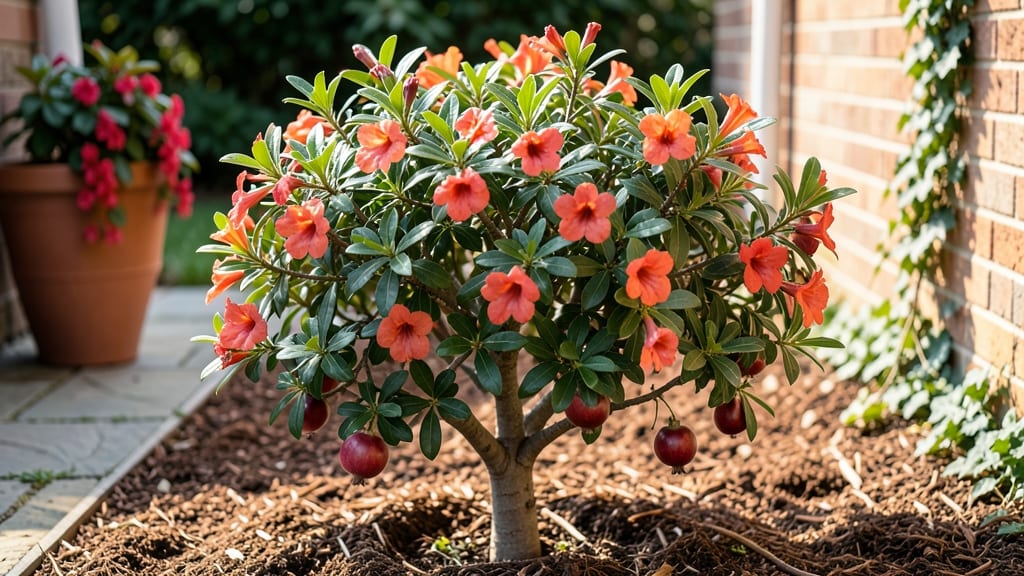
The size of the Russian Pomegranate Tree can grow between 8 and 12 feet tall at maturity, with some varieties reaching even taller if left unpruned.
If you're dreaming of a stunning Russian Pomegranate Tree but wondering whether it’ll dwarf your backyard or fit perfectly in a container, understanding its mature size is key to planning your garden like a pro.
This medium-sized tree isn’t just about height—its spread can reach 10 to 20 feet, making space requirements just as important as vertical growth. Whether you’re working with a small urban yard or a sprawling rural plot, knowing these dimensions helps you avoid overcrowding and ensures your tree thrives.
Below, I’ll break down the exact height and spread ranges by variety, how growth habits change with pruning, and even whether you can grow one successfully in a container—so you can choose the perfect spot for your Russian Pomegranate Tree.


Mature Russian pomegranate tree size by variety: heights & spread compared
If you're planning to grow a Russian pomegranate tree in your garden, knowing its mature size is essential for proper spacing and design. These trees vary significantly in height and spread depending on the variety, with some reaching towering heights while others stay compact.
For example, the 'Wonderful' variety can grow up to 12 feet tall, while dwarf varieties like 'Granatny' remain under 6 feet. Choosing the right variety ensures your tree thrives in your space without overcrowding other plants.
The spread of a Russian pomegranate tree is almost as important as its height, especially if you're planting near a fence or patio. Most varieties develop a wide canopy, with spreads ranging from 5 to 20 feet.
This means you’ll need ample space—at least 10 feet in diameter—for a standard tree to grow comfortably. If you're working with limited space, opting for a dwarf or semi-dwarf variety can save the day while still delivering delicious fruit.
Now, let’s dive into the specifics. Below is a detailed comparison of popular Russian pomegranate varieties, including their mature heights, spreads, and growth habits. This will help you pick the perfect tree for your garden, whether you have a sprawling backyard or a cozy balcony.
| Variety | Mature Height (ft) | Mature Spread (ft) | Growth Habit | Best For |
|---|---|---|---|---|
| 'Wonderful' | 10–12 ft | 10–15 ft | Upright, spreading | Large gardens, landscapes |
| 'Eversweet' | 8–10 ft | 8–12 ft | Semi-upright, dense | Medium yards, containers (with pruning) |
| 'Granatny' | 6–8 ft | 6–10 ft | Compact, rounded | Small spaces, patios, containers |
| 'Dwarf Russian' | 4–6 ft | 5–8 ft | Bushy, controlled | Balconies, urban gardens |
| 'Sweetheart' | 8–10 ft | 10–14 ft | Spreading, wide canopy | Backyard planting, privacy screens |
The 'Wonderful' variety is a classic choice for gardeners with ample space, as it can grow into a stately tree with a height of 10–12 feet and a spread of up to 15 feet. This makes it ideal for large gardens or as a focal point in landscapes.
Its upright growth habit ensures it doesn’t sprawl uncontrollably, but you’ll still need to account for its wide canopy when planning nearby plantings.
If you're working with a smaller garden, the 'Eversweet' variety is a fantastic middle-ground option. It matures at 8–10 feet tall and 8–12 feet wide, making it versatile for medium-sized yards or even large containers with proper pruning.
Its dense growth habit also means it produces fruit efficiently, even in slightly tighter spaces.
For those with limited space, the 'Granatny' and 'Dwarf Russian' varieties are game-changers. These compact trees stay under 6 feet tall and 8 feet wide, making them perfect for balconies, patios, or small urban gardens.
Their rounded growth habit ensures they don’t take up excessive space while still delivering a bountiful harvest. These varieties are also easier to manage in containers, provided you use a pot that’s at least 15 gallons in size.
When choosing a variety, consider not only the mature size but also the growth rate and pruning requirements. Some varieties, like 'Sweetheart', grow quickly and develop a wide, spreading canopy, which is great for creating natural privacy screens.
Others, like 'Dwarf Russian', grow more slowly and require less frequent pruning, making them low-maintenance options for busy gardeners.
One common mistake is underestimating the spread of a pomegranate tree. Even if a variety is labeled as "dwarf," its width can still reach 5–8 feet. Always measure your planting area and leave extra room for the tree’s branches to spread naturally.
If space is a concern, regular pruning can help control the tree’s size while encouraging healthier fruit production.
For container gardening, stick to dwarf or semi-dwarf varieties and use pots with adequate drainage. A 30-gallon container is ideal for a mature dwarf pomegranate tree, as it provides enough room for root growth without becoming unwieldy.
Remember to repot every 2–3 years to refresh the soil and prevent root-bound issues.
In summary, the size of your Russian pomegranate tree depends heavily on the variety you choose. Whether you have a sprawling backyard or a cozy balcony, there’s a perfect fit out there. Plan
How Russian pomegranate tree growth habits affect size & pruning needs
Understanding your Russian pomegranate tree's growth habits is the first step to managing its size and shape. Some varieties like 'Wonderful' grow upright and compact, reaching 8-12 feet tall but only 5-6 feet wide, while others like 'Granatny' sprawl wider with a 10-15 foot spread.
These differences directly impact your pruning strategy and garden planning.
The seasonal growth patterns also play a crucial role. Russian pomegranates experience rapid spring growth (up to 12 inches per season in ideal conditions) followed by slower summer expansion.
In cold climates (USDA Zone 6), growth nearly stops during winter, making late winter or early spring the best time for major pruning.
- 🌱 Growth Habit: Upright varieties (e.g., 'Wonderful') need vertical pruning to control height, while sprawling types (e.g., 'Granatny') require horizontal shaping for width.
- 🌿 Spring Growth: Prune 1/3 of new growth in late winter to encourage dense branching and fruit production.
- ☀️ Summer Pruning: Light trimming after harvest to remove dead wood and crossing branches—avoid heavy cuts to prevent stress.
- ❄️ Winter Care: In cold climates, prune only after dormancy (late February) to protect new growth from frost.
- ✂️ Tool Tip: Use sterilized pruners to prevent disease spread—wipe blades with rubbing alcohol between cuts.
For upright-growing varieties, focus on thinning central leaders to improve airflow and reduce disease risk. Remove suckers at the base to redirect energy to fruit-bearing branches. In contrast, sprawling types benefit from open-center pruning, where you remove inner branches to let sunlight reach the center canopy.
If you're growing in containers or small spaces, prune aggressively in early spring to maintain a 4-6 foot height. Use a 3-year pruning cycle: heavy in Year 1, moderate in Year 2, and light maintenance thereafter.
Always prune just above a bud or branch collar to promote healthy regrowth.
Remember, over-pruning can stress your tree and reduce fruit yield. Aim to remove no more than 25% of foliage in any single session. Pair pruning with seasonal fertilization (spring and early summer) to support new growth and flowering.
With the right approach, you can shape your Russian pomegranate into a manageable size while maximizing its ornamental value and fruit production. Start small, observe how your tree responds, and adjust your pruning schedule each year for the best results. 🌳