
Trees
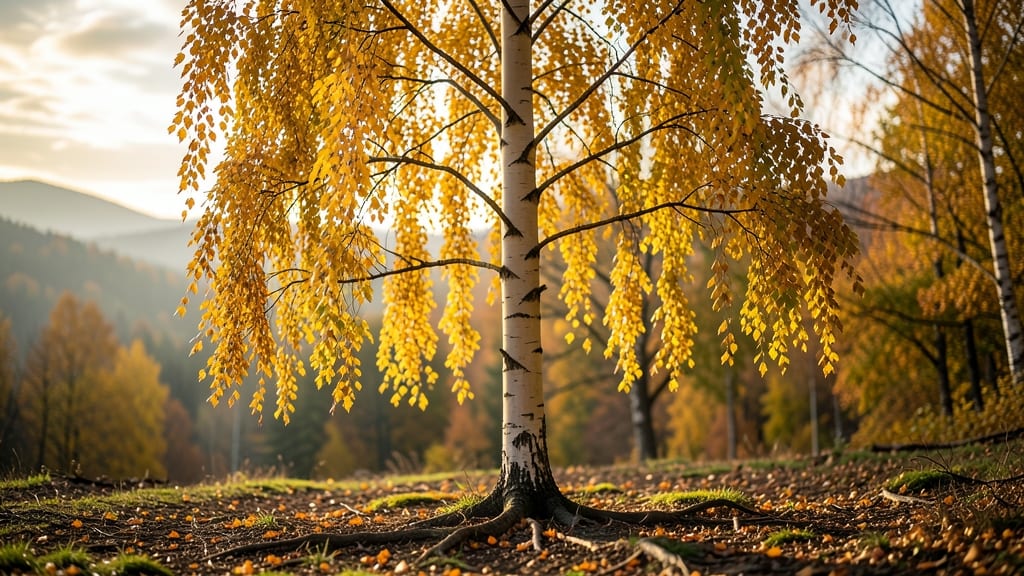
When poplar tree leaves change in fall, they typically shift to a muted yellowish-green before falling, lacking the bright reds or oranges of other trees. This occurs because their chlorophyll breaks down quickly while producing minimal anthocyanins, usually between mid-October and November.
Poplar trees stand out in autumn because their foliage transformation is subtler than many other species. 🌳 Unlike maples or oaks that burst with fiery reds, poplar leaves fade to a duller palette due to their limited production of anthocyanins—the pigments responsible for deep reds and purples.
The timing of this change depends heavily on your local climate, with cooler temperatures and shorter daylight hours triggering the process earlier in northern regions.
What makes this shift interesting is how quickly it happens—often within just a few weeks. The rapid chlorophyll breakdown means poplar trees can appear almost bare by late fall, leaving behind a carpet of yellowish leaves that decompose quickly.
This natural cycle also makes them less appealing for vibrant fall landscapes compared to trees like sweetgums or aspens.
💡 In This Article
- Scientific Reasons Behind Poplar Fall Foliage Changes
- How to Care for Poplar Trees During Fall Leaf Drop
Scientific reasons behind poplar fall foliage changes
The muted yellowish-green transformation of poplar leaves in autumn stems from their unique biochemical makeup. Unlike trees that produce vibrant reds, poplars lack significant anthocyanin production—the pigments that create deep red and purple hues.
Instead, their leaves rely primarily on carotenoids (yellow-orange pigments) and residual chlorophyll breakdown, which occurs more rapidly than in species like maples or oaks. 🌿 This rapid chlorophyll degradation exposes the yellow tones, but without the red overlay that makes other trees' foliage so striking.
Temperature plays a critical role in this process. Poplar trees begin their color shift when nighttime temperatures consistently drop below 50°F (10°C), typically triggering leaf senescence (aging) within 3-4 weeks. Daylight hours also matter—shorter days reduce chlorophyll production, accelerating the breakdown.
In northern climates, this often happens by early October, while southern regions may see changes as late as November. The lack of bright colors isn't due to poor health; it's simply their genetic adaptation to maximize energy conservation before leaf drop.
Comparing poplars to other species highlights their biochemical differences. Maple leaves, for example, produce high levels of anthocyanins when stressed by cold, creating fiery reds. Poplars, however, prioritize quick nutrient recycling—breaking down chlorophyll and reabsorbing nutrients into their branches before shedding leaves.
This efficiency explains why their foliage fades so uniformly, often appearing duller than the vivid displays of neighboring trees. 🍂
Another factor is the tree's native habitat. Poplars thrive in moist, fertile soils and often grow quickly, which diverts energy toward growth rather than pigment production. Their leaves also contain higher levels of tannins, which can inhibit some pigment formation.
This combination of rapid growth, nutrient recycling, and limited pigment production creates the characteristic muted fall palette that gardeners and nature enthusiasts often overlook.
Understanding these mechanisms helps explain why poplar trees rarely deliver the dramatic autumn shows of other species. Their leaves prioritize function over flashy displays—a trade-off that makes them less visually striking but equally vital to their ecological role.
The subtle yellow-green hues serve as a reminder that nature's beauty comes in many forms, not just the most vibrant ones. 🌳