
Pruning
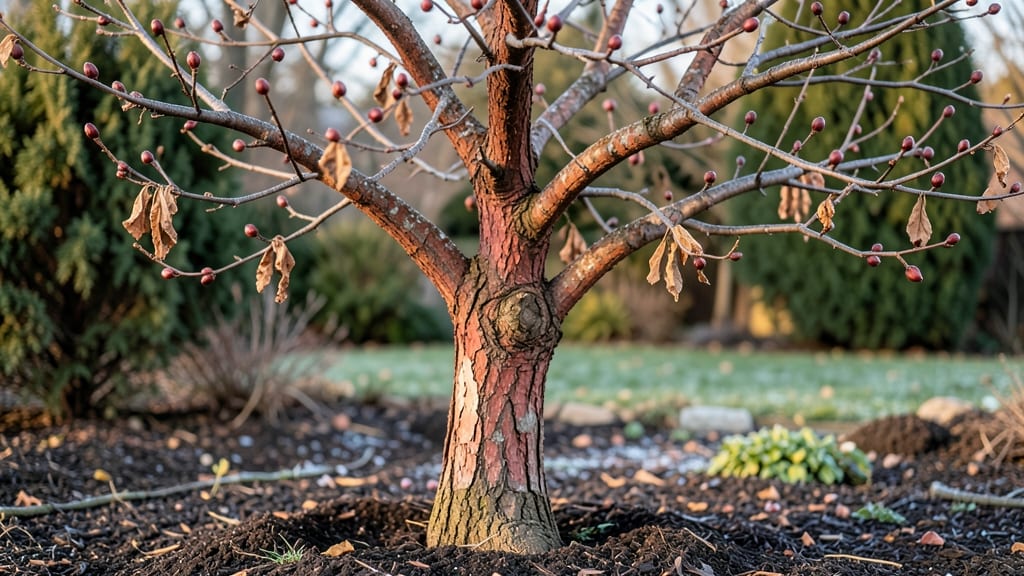
To care for a pomegranate tree in winter, protect its roots with 3-4 inches of mulch, wrap the trunk with burlap or frost cloth, and prune damaged branches in early spring to prevent cold stress and promote healthy regrowth.
Winter can be brutal for pomegranate trees, especially when temperatures drop below 15°F. 🌡️ The roots are most vulnerable to freezing, which disrupts nutrient absorption, while sudden temperature swings cause bark to crack—both leading to irreversible damage.
I’ve seen trees survive harsh winters by creating a protective barrier around the base and trunk, which mimics the natural insulation of their Mediterranean origins. Mulching isn’t just about keeping roots warm; it also regulates soil moisture, preventing heaving that can uproot young trees.
Another critical step is timing—apply mulch after the first frost but before the ground freezes solid. For trunk protection, burlap is my go-to because it breathes while still blocking harsh winds.
If you’re in an area with extreme cold snaps, consider moving potted pomegranates to a sheltered spot or wrapping them in bubble wrap for extra defense. The key is balance: too much mulch can suffocate roots, while too little leaves them exposed to freeze-thaw cycles.
💡 In This Article
- How Cold Affects Pomegranate Tree Roots and Branches
- Step-by-Step Winter Protection Guide for Pomegranate Trees
How cold affects pomegranate tree roots and branches
Pomegranate trees, native to regions with mild winters, struggle when temperatures plummet below 15°F. The roots—especially the feeder roots—are the first to suffer. These delicate structures freeze when soil temperatures drop, disrupting the tree's ability to absorb water and nutrients.
The root zone can become a battleground between survival and decay, with frozen soil acting like a brick wall that blocks essential moisture flow. 🌡️ What's worse, thawing cycles cause soil to expand and contract, physically damaging roots and creating air pockets that suffocate them.
Above ground, the bark becomes brittle in freezing conditions. Sudden temperature swings—common in winter—cause the outer bark to contract while the inner layers stay slightly warmer. This mismatch creates microscopic cracks that deepen over time, inviting fungal infections and pests.
The trunk's cambium layer, responsible for new growth, is particularly vulnerable. When exposed to prolonged cold, it can die back, leaving the tree weakened for the next growing season.
This is why dormant pruning matters: removing damaged branches in early spring prevents further stress and allows the tree to redirect energy to healthy growth.
Science shows that pomegranate trees handle cold best when their roots stay above 32°F—the freezing point of water. Mulch acts as a thermal blanket, slowing heat loss from the soil by up to 50% compared to bare ground.
Without protection, roots can freeze solid in just 2-3 hours during a -10°F snap. The bark's resilience varies by cultivar, but most commercial varieties (like 'Wonderful' or 'Eversweet') struggle below 10°F without intervention.
This is why microclimates matter—trees planted near south-facing walls or under deciduous trees often fare better due to radiant heat retention.
Another critical factor is moisture content. Dry soil conducts cold more efficiently than moist soil, which retains heat better. This is why winter watering (before the ground freezes) is a game-changer—it creates a moisture reservoir that buffers against temperature extremes.
However, overwatering can backfire by increasing soil conductivity, so aim for 50-75% soil moisture before freezing sets in. The goal is to keep roots hydrated enough to withstand cold but not so saturated that they become vulnerable to rot when temperatures fluctuate.
Pruning plays a dual role in winter care. While you shouldn't prune during active cold snaps (it stresses the tree), removing dead or cracked branches in early spring sends a clear signal to the tree: "Focus your energy here."
This practice also improves air circulation, reducing humidity around the trunk that could promote fungal growth. The timing is precise—wait until the last frost has passed but before new growth begins, typically 4-6 weeks after the average last freeze date in your zone.
This window ensures the tree isn't shocked by sudden cold returns while still having time to heal before spring.
For those in zones 6 or colder, consider these advanced strategies: burying the root ball with 12+ inches of mulch (like straw or wood chips) or using a tree wrap infused with reflective material to deflect radiant heat.
Container-grown pomegranates offer the most control—simply move them to a garage or wrapped porch when nighttime temps drop below 20°F. The key insight? Pomegranate trees don't handle winter like hardy fruit trees; they need our help to survive the cold season's harshest challenges. 💫