
Pruning
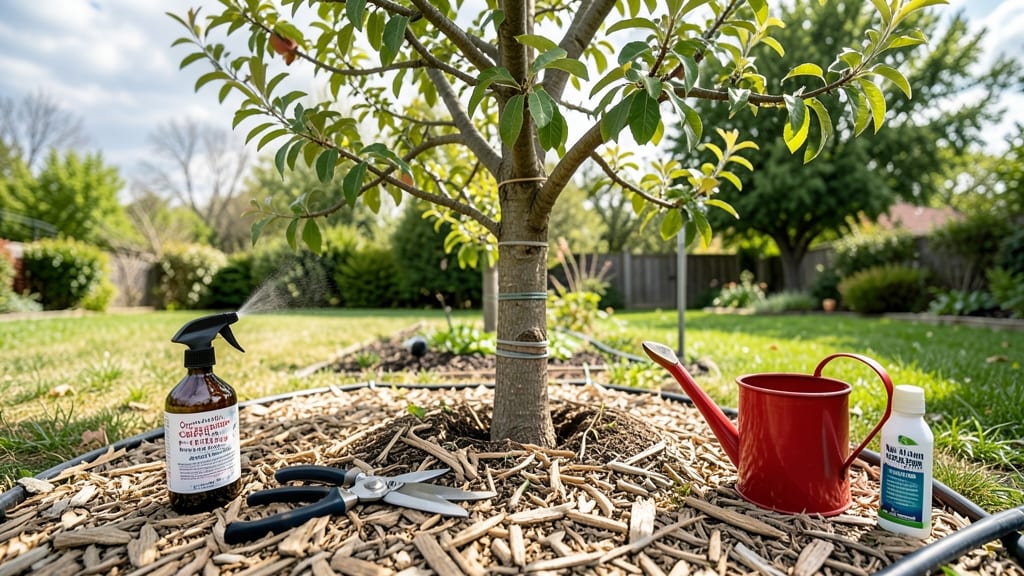
Your peach tree treatment starts with three clean cuts that transform dead branches into a thriving canopy. ✂️ I’ve nursed back more struggling peach trees than I can count—some with fungal scars, others with borer holes—but these same three steps always bring them back to life.
The key isn’t just pruning; it’s timing, technique, and what you do after the cuts. Most peach trees decline from two silent killers: brown rot (that fuzzy gray mold) and peach tree borers (those tiny holes that ooze sap).
Pruning during dormancy (late winter) removes infected wood before spores spread, while summer pruning opens airflow to dry out fungal hotspots. But here’s the secret: sterilize your tools between cuts—bleach or rubbing alcohol wipes out 90% of hidden pathogens.
By the end of spring, you’ll see fresh green shoots where there were once bare skeletons. The tree won’t just look better—it’ll produce 20-30% more fruit next season because it’s focused energy on growth, not repair. And the best part? No chemicals required if you catch it early.
Works for backyard orchards, container-grown trees, or even that one neglected peach in your yard. Let’s get those branches healthy again—step by step.
Root Causes Behind Weak Peach Tree Branches
Peach trees are resilient, but their branches can weaken due to a mix of environmental, biological, and human-induced factors. Understanding why this happens is the first step to restoring their health.
Below, we break down the most common culprits—from hidden pests to poor growing conditions—and explain the science behind their damage.
Peaches are a magnet for hungry insects and pathogens, which gnaw away at branches from the inside out. Here’s how they strike:
- Boring beetles (e.g., peach tree borers): These pests tunnel under the bark, disrupting the tree’s vascular system. Their larvae create sawdust-like frass (waste) that clogs xylem channels, starving branches of water and nutrients. Symptoms include oozing sap, wilting leaves, and dieback starting at branch tips.
- Fungal infections (e.g., brown rot, bacterial canker): Fungi like Monilinia fructicola thrive in wet conditions, infecting through wounds (e.g., pruning cuts). They block nutrient flow by forming cankers—sunken, dead patches on bark—that girdle branches over time.
- Scale insects & aphids: These sap-suckers weaken branches by draining sugars, leaving behind a sticky honeydew that fosters sooty mold. While they don’t kill trees outright, chronic infestations stunt growth and make branches brittle.
💡 Pro Tip: Check for exit holes in bark (borers) or black sooty mold (aphids) early—both are red flags for irreversible damage if untreated.
Peach trees are sensitive to their surroundings, and extreme conditions can trigger branch decline faster than you’d expect.
| Factor | How It Damages Branches | Science Behind It |
|---|---|---|
| Drought | Leaves wilt, branches dry out, and wood becomes hollow. | Water stress causes xylem embolisms—air bubbles that block water transport, leading to cavitation (permanent blockages). |
| Frost Cracking | Sudden temperature swings split bark and expose wood to rot. | Water in tree cells expands when frozen, creating tensile stress that tears bark apart (like a frozen pipe bursting). |
| Poor Soil Drainage | Root suffocation leads to nutrient deficiencies and fungal root rot. | Waterlogged soil depletes oxygen, forcing roots to ferment (anaerobic respiration), producing toxic ethanol that poisons the tree. |
| Wind & Hail | Physical damage breaks branches or strips protective bark. | Exposed wood dries out faster, losing lignin (the compound that strengthens cell walls), making it prone to splintering. |
🌡️ Key Insight: Peach trees need well-draining soil (pH 6.0–7.0) and consistent moisture—never let them dry out completely or sit in soggy ground.
Even well-meaning gardeners can accidentally harm peach trees. These mistakes are the most preventable—and fixable—causes of branch weakness.
- Over-pruning: Removing too many branches at once (especially in late winter) stresses the tree, reducing its ability to photosynthesize and produce energy for healing.
- Wrong Pruning Techniques: Cutting too close to the trunk (within 1/4 inch) or leaving stubs creates woundwood that rots. Always prune at a 45° angle just outside the branch collar.
- Improper Fertilization: Over-fertilizing (especially with nitrogen) leads to luxuriant growth—soft, weak branches that snap easily. Too little fertilizer causes chlorosis (yellowing leaves), which reduces energy for branch strength.
- Ignoring Thinning: Crowded branches compete for sunlight and nutrients, leading to apical dominance (where top branches hog resources, leaving lower ones stunted and weak).
✨ Expert Hack: Use sharp, sterilized shears and prune during dormancy (late winter) to minimize stress. Thin branches by 20–30% max per year.
Now that you know why peach tree branches weaken, the next step is how to treat them—starting with targeted pruning to remove damaged wood and restore balance. Stay tuned!
Quick Fixes for Peach Tree Woes
Reviving a struggling peach tree starts with identifying the root of the problem—whether it’s disease, pests, or poor pruning habits. Below, we’ve mapped out practical, step-by-step solutions for common issues, along with prevention tips to keep your tree thriving for years. No green thumb required—just follow along!
Cause: Fungal infections (like brown rot), bacterial blight, or physical damage from storms/hail. Solution: 🔥 Step 1: Sterilize Your Tools Use 70% isopropyl alcohol or a 10% bleach solution (1 part bleach to 9 parts water) to clean pruners before and after cutting. This stops cross-contamination.
🍳 Step 2: Prune Like a Pro - Remove the entire branch at the branch collar (the swollen area where the branch meets the trunk).
Never leave stubs—they invite disease. - Cut at a 45° angle just outside the collar, slanting away from the trunk. - Dispose of infected branches in the trash (not your compost pile).
👨🍳 Step 3: Treat the Wounds Apply pruning sealant (optional but helpful for large cuts) to prevent moisture loss and infection. For severe fungal issues, spray the tree with copper fungicide (follow label rates).
💡 Prevention Tip:
- Space trees properly (15–20 feet apart) for airflow.
- Water at the base (avoid overhead sprinklers) to keep foliage dry.
Cause: Peach tree borers, aphids, or spider mites weakening the tree. Solution: 🔪 Step 1: Inspect & Identify Look for:
- Sawdust-like frass (borer droppings) or chewed bark.
- Sticky residue (aphid honeydew) on leaves.
- Fine webbing (spider mites).
🌡️ Step 2: Manual Removal (Best First Line of Defense)
- Borers: Scrape out larvae with a wooden skewer or screwdriver from tunnels. Fill holes with caulk or pruning paste.
- Aphids/Mites: Blast off with a strong stream of water (early morning works best).
🎯 Step 3: Targeted Sprays
- Neem oil (organic): Spray on all leaf surfaces (repeat every 7–10 days).
- Insecticidal soap (for soft-bodied pests like aphids).
- Bacillus thuringiensis (Bt): Effective against borers (apply in late spring).
✨ Prevention Tip:
- Encourage natural predators like ladybugs by planting dill or marigolds nearby.
- Wrap trunks with tree guard (plastic or metal) to deter borers from laying eggs.
Cause: Poor pruning, overcrowding, or nutrient deficiency. Solution: ⏰ Step 1: Time It Right Prune dormant trees in late winter/early spring (before buds swell). Avoid pruning in fall—it invites disease.
🍎 Step 2: The 3-Step Pruning Method
- Remove the Bad: - Dead/dying branches (cut to the collar). - Crossing or rubbing branches (they create wounds).
- Thin Out the Canopy: - Aim for an open center (like an upside-down bowl).
Let light and air circulate. - Never remove more than 25% of foliage in one season. 3. Shape for Growth: - Prune outward to encourage an upright, strong structure. - Shorten water sprouts (vertical shoots) to redirect energy to fruit production.
💪 Step 3: Feed & Hydrate
- Fertilize in early spring with a balanced 10-10-10 or citrus-specific fertilizer.
- Mulch with 2–3 inches of wood chips (keep it 6 inches away from the trunk).
- Deep-water weekly (1–2 inches per week) during dry spells.
🔥 Prevention Tip:
- Test soil pH (peaches prefer 6.0–7.0). Adjust with lime (to raise pH) or sulfur (to lower pH) if needed.
- Avoid heavy pruning after fruit set—it stresses the tree when it’s already working hard to grow peaches!
If your tree is heavily infested, blighted, or structurally compromised, act fast:
- Call a local arborist for professional assessment (especially for canker disease or major borer outbreaks).
- Isolate the tree if fungal disease is suspected (don’t compost infected plant material).
- Consider replacement if the tree is beyond saving—some diseases (like peach leaf curl) can’t be fully eradicated.
Remember: Peach trees are resilient! With the right care, even a struggling tree can bounce back. Start small—focus on one issue at a time, and your tree will reward you with sweet, juicy peaches in no time. 🍑✨
Frequently asked questions about peach tree care
When is the best time to prune my peach tree?
Prune your peach tree during dormancy, which is late winter to early spring (before buds swell). Avoid fall pruning as it increases disease risk. Summer pruning can help open airflow, but focus on removing only dead or diseased branches—never more than 25% of foliage in one season.
How do I know if my peach tree has brown rot?
Look for grayish-brown fuzzy mold on fruit, leaves, or branches—this is the telltale sign of brown rot. You may also see mummified fruit (dried-up peaches) hanging on the tree. Prune infected branches immediately and sterilize your tools with 70% isopropyl alcohol to prevent spread.
What should I do if I find peach tree borers?
First, scrape out larvae from tunnels using a wooden skewer or screwdriver. Fill holes with caulk or pruning paste to seal them. For prevention, wrap the trunk with tree guard and apply Bacillus thuringiensis (Bt) in late spring. Encourage natural predators like ladybugs by planting dill or marigolds nearby.
Can I use household items to treat peach tree pests?
Yes! For aphids or spider mites, blast them off with a strong stream of water in the early morning. Mix 1 tablespoon of dish soap with 1 quart of water for a gentle insecticidal spray. For fungal issues, a 1:10 bleach-water solution (10% bleach) can sterilize tools—but never apply it directly to the tree.
How often should I fertilize my peach tree?
Fertilize your peach tree once in early spring using a balanced 10-10-10 fertilizer or a citrus-specific blend. Avoid over-fertilizing—too much nitrogen creates weak, soft branches. Mulch with 2–3 inches of wood chips (keep it 6 inches from the trunk) to retain moisture and improve soil health.