
Pruning
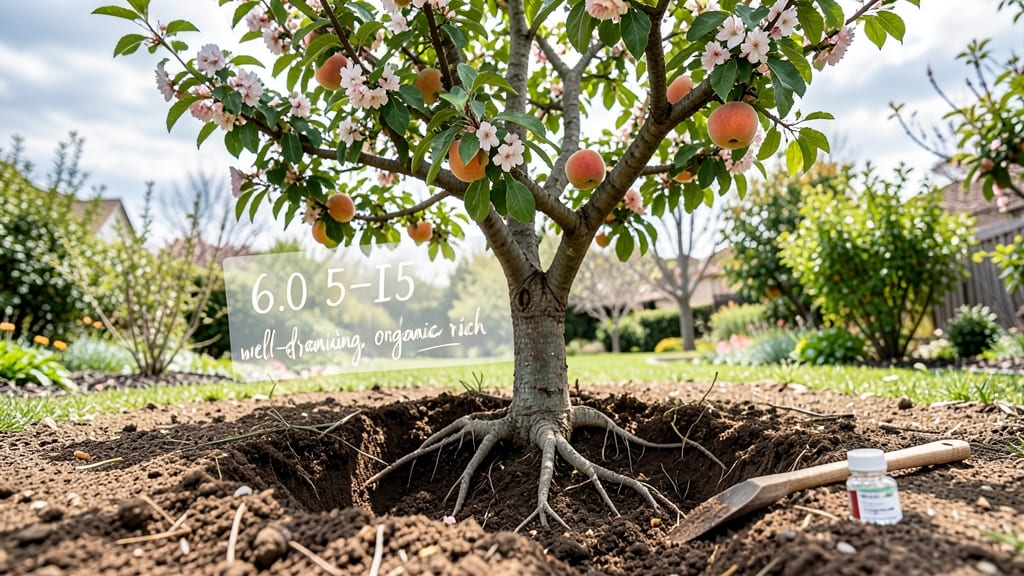
Growing a thriving peach tree 🍑 starts with the right soil requirements—well-draining, nutrient-rich, and balanced pH.
Struggling to get that sweet, juicy fruit you dream of? The secret isn’t just in sunlight or water—it’s in the soil beneath your tree’s roots. Get this part right, and you’ll watch your peach tree transform from a struggling sapling into a fruit-bearing powerhouse.
Peach trees crave loamy soil with a pH between 6.0 and 7.0, packed with organic matter like compost. Too much clay or sand? That’s a recipe for root stress, poor drainage, and stunted growth.
I’ll show you how to test your soil, fix common issues, and keep it in peak condition all season long.
From planting day to harvest time, these soil tips will help you avoid yellowing leaves, weak fruit set, and other headaches. Ready to give your peach tree the perfect foundation?
Ideal soil pH and composition for peach tree growth
Peach trees thrive when planted in soil that mimics their natural habitat—well-draining, nutrient-rich, and slightly acidic. The right soil mix ensures strong root development, vibrant foliage, and abundant fruit production.
If your soil is too heavy, compacted, or alkaline, your peach tree will struggle, leading to stunted growth or poor fruit quality. Let’s break down the essential soil requirements to set your peach tree up for success.
First, focus on the pH level, which is critical for nutrient uptake. Peach trees prefer a slightly acidic to neutral pH range of 5.0 to 6.5. Soil that’s too alkaline (above 7.0) locks out essential nutrients like iron and zinc, causing leaf yellowing and poor fruit set.
Testing your soil’s pH before planting is a game-changer—it’s the first step to creating the perfect growing environment for your tree.
| Soil Requirement | Specification | Why It Matters |
|---|---|---|
| pH Level | 5.0 - 6.5 | Optimal nutrient availability for root and fruit growth |
| Organic Matter | 3% - 5% | Improves water retention and microbial activity |
| Soil Texture | Loamy (40% sand, 40% silt, 20% clay) | Ensures proper drainage and aeration |
| Drainage | Well-draining (no standing water) | Prevents root rot and suffocation |
| Nutrient Balance | High in nitrogen, phosphorus, potassium | Supports leaf growth, root development, and fruit production |
The texture of your soil is just as important as its pH. Peach trees love loamy soil, which is a balanced mix of sand, silt, and clay. This ideal texture ensures proper drainage while retaining enough moisture to support deep root systems.
If your soil is too sandy, it drains too quickly, starving roots of nutrients. Conversely, clay-heavy soil can suffocate roots by trapping excess water, leading to root rot and poor growth.
To achieve the perfect loamy texture, consider amending your soil with compost or well-rotted manure. These organic materials improve soil structure, add essential nutrients, and encourage beneficial microbial activity.
Aim for 3% to 5% organic matter in your planting area. This range provides the right balance of fertility and moisture retention without compacting the soil.
Another critical factor is drainage. Peach trees hate soggy roots, so avoid planting in low-lying areas where water pools. If your yard has heavy clay soil, create raised beds or plant your peach tree on a mound to improve drainage.
You can also mix in coarse sand or perlite to lighten the soil and prevent waterlogging. Always ensure the planting hole is at least 12 inches deep to accommodate root growth without restricting airflow.
Don’t overlook the role of nutrients in your soil. Peach trees are heavy feeders and require a steady supply of nitrogen (N), phosphorus (P), and potassium (K). Nitrogen promotes leafy growth, phosphorus supports root development and flowering, and potassium strengthens the tree’s overall health and fruit quality.
A balanced 10-10-10 fertilizer applied in early spring and mid-summer keeps your peach tree thriving.
If your soil is already deficient in nutrients, consider adding bone meal for phosphorus or kelp meal for potassium. These amendments provide a slow-release boost to your soil’s fertility.
For nitrogen, use composted manure or a slow-release organic fertilizer to avoid overstimulating growth, which can lead to weak wood and poor fruit set. Always follow package instructions to avoid over-fertilizing, which can harm your tree.
Finally, mulching around your peach tree helps maintain ideal soil conditions. Apply a 3-inch layer of organic mulch, such as wood chips or straw, to retain moisture, regulate soil temperature, and suppress weeds.
Keep the mulch 6 inches away from the tree trunk to prevent rot and pest issues. Replenish the mulch annually to keep your soil healthy and your peach tree productive.
By focusing on these soil fundamentals, you’ll create the perfect environment for your peach tree to flourish. Healthy soil equals healthy trees, and healthy trees yield sweet, juicy peaches for years to come.
Start with a soil test, amend as needed, and watch your peach tree thrive from the ground up! 🌱
How to test and improve your soil for peach trees
Your peach tree's success starts with the soil—this is where roots anchor and nutrients flow. Before planting, test your soil to ensure it meets the ideal requirements for peach trees: well-draining loam with a pH of 6.0–7.0.
If your soil falls short, don’t worry—simple amendments can transform it into a thriving foundation for your tree.
Peach trees thrive in soil that’s rich in organic matter (3–5%) and balanced with nitrogen, phosphorus, and potassium. Sandy soil drains too quickly, while clay soil holds too much moisture—both can stunt growth.
The key is creating a loamy texture that retains moisture without waterlogging, ensuring roots stay healthy year-round.
Step-by-Step Guide to Testing and Amending Soil
- Step 1: Test your soil’s pH using a home test kit or send a sample to your local cooperative extension office. Aim for a pH of 6.0–7.0—peach trees prefer slightly acidic to neutral soil.
- Step 2: Check soil texture by squeezing a moist handful. If it crumbles easily, it’s sandy (add compost or peat moss). If it forms a tight ball, it’s clay (add sand or perlite).
- Step 3: Amend heavy clay soil by mixing in 2–3 inches of compost and sand (50/50 ratio) into the top 12 inches of soil. For sandy soil, add well-rotted manure or leaf mold to improve water retention.
- Step 4: Add organic matter like composted leaves or aged manure to boost nutrient density. Spread a 2–3 inch layer around the tree’s drip line and lightly till into the topsoil.
- Step 5: Apply balanced fertilizer (e.g., 10-10-10 NPK) at planting and again in early spring to kickstart growth. Follow up with a low-nitrogen fertilizer (e.g., 5-10-10) in summer to support fruiting.
- Step 6: Mulch heavily with wood chips or straw to retain moisture, regulate soil temperature, and suppress weeds. Keep mulch 3–4 inches thick but 6 inches away from the trunk to prevent rot.
- Step 7: Monitor and adjust annually. Retest soil every 2–3 years and reapply amendments if pH or texture shifts. Peach trees reward consistent care with bountiful harvests!
For clay-heavy soil, focus on improving drainage by incorporating coarse sand or gypsum. Work these amendments into the top 12–18 inches of soil before planting.
If your soil is too sandy, blend in peat moss or coconut coir to help retain moisture and nutrients—critical for peach trees during dry spells.
Don’t overlook the role of micronutrients like zinc, iron, and manganese. Peach trees are sensitive to deficiencies, which can cause leaf yellowing or poor fruit set. A chelated micronutrient spray applied in early spring can prevent these issues. Pair this with regular compost top-dressing to maintain soil fertility naturally.
Once your soil is amended, plant your peach tree in a hole twice as wide as its root ball but no deeper. Backfill with a mix of native soil and compost, then water deeply to settle the roots.
Mulch immediately to lock in moisture and protect against temperature fluctuations—this sets the stage for a healthy, productive tree.
With the right soil prep, your peach tree will establish strong roots, resist disease, and produce sweet, juicy fruit for years. The effort you put into testing and amending soil today will pay off with a thriving orchard tomorrow! 🌱🍑