
Pruning
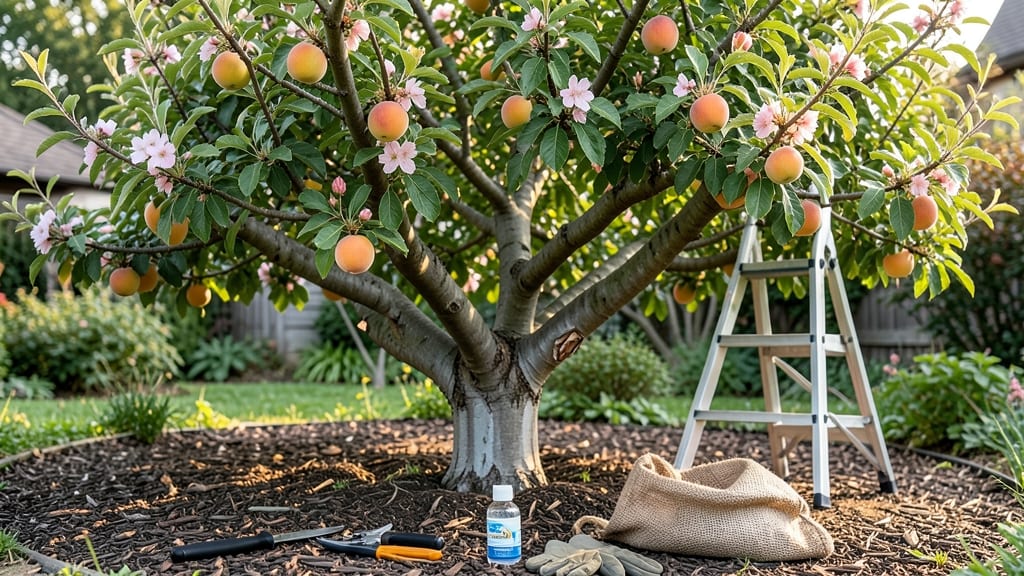
Pruning peach trees in Texas isn’t just about shaping—it’s about surviving brutal summers and fungal threats. ✂️ I’ve turned my once-sickly tree into a drought-tolerant powerhouse by pruning at the right times and with the right cuts, and you can too.
The key? Winter pruning for structure, summer pruning for disease control, and a few tricks to keep branches from snapping under Texas heat.
You’ll need sharp pruners, a ladder (for higher branches), and a bucket to collect debris—no fancy tools, just the right approach. Start by removing dead or crossing branches first, then thin out the canopy to let air and light reach the center.
Texas peach trees hate humidity, so open spaces reduce fungal risks like brown rot. The goal is a vase-like shape with a strong central leader and sturdy scaffold branches.
By late spring, you’ll see the difference: fewer broken limbs, more sunlight reaching fruit, and a tree that actually thrives in 100°F heat. The fruits ripen evenly, and the tree fights off pests better because it’s not stressed from overcrowded branches.
This is how you prune for Texas—where survival isn’t just possible, it’s the standard.
Fair warning: summer pruning is tricky here—do it wrong, and you’ll invite fungal infections. But if you time it right (after fruit harvest but before monsoon season), you’ll keep your tree healthy through another brutal summer.
The payoff? A peach tree that outlasts the heat and keeps producing year after year.
📚 In This Guide
- What you need
- Instructions
- Tips and common mistakes
- Wrapping up and next steps
What you need
- ● Pruning shears (bypass or anvil type) – Sharp, clean blades (10-12" length) for small branches (up to ½ inch thick). Sterilize with rubbing alcohol between cuts to prevent disease.
- ● Loppers – 18-24" long, with bypass blades for branches ½ to 1½ inches thick. Look for ratcheting models for easier cutting.
- ● Pruning saw – For branches 1½+ inches thick. A bow saw or folding pruning saw works best.
- ● Gloves (cut-resistant) – Heavy-duty leather or synthetic to protect hands from thorns and rough bark.
- ○ Disposable pruning sealant – Optional but helpful for larger cuts to prevent disease entry (e.g., Tanglefoot Tree Wound Pruning Seal).
- ● Ladder or step stool – Sturdy, 6-8 ft tall for reaching higher branches safely.
- ● Bucket or tarp – For collecting debris (bonus points if it’s drought-resistant fabric to reuse!).
- ● Hose with nozzle – For cleaning tools and rinsing cuts (Texas heat means sterilization is key!).
- ○ Drip irrigation kit (optional) – For post-pruning hydration. Texas peach trees hate stress—keep soil moist for 2-3 weeks after pruning.
- ● Mulch (wood chips or straw) – 2-3 inches thick, kept 6" away from trunk to retain moisture and regulate soil temp.
- ● Shade cloth (lightweight) – For young trees or extreme heat days (30-50% shade reduces transpiration).
- ● Check weather forecast – Prune on a cool, cloudy day (avoid midday Texas heat—over 90°F stresses trees).
- ● Tree health assessment – Inspect for pests (aphids, peach tree borers) or disease (leaf curl). Report outbreaks to your local Texas AgriLife Extension.
- ● Personal protective equipment (PPE) – Sunglasses, hat, and sunscreen (SPF 30+). Peach tree thorns are no joke!
Step-by-step guide to pruning peach trees for Texas heat
Here’s how I shape peach trees to handle Texas’s scorching summers while keeping them productive.
✂️ Step 1: Prune in Late Winter for Best Drought Resistance
Start pruning your peach tree in late February to early March, just before buds swell but before new growth begins. This timing lets the tree heal before the heat sets in. I always prune on a dry, sunny day—wet wood spreads disease faster in Texas’s humidity.
Focus on removing dead, diseased, or crossing branches first. These compete for water and stress the tree during drought. Use sharp pruning shears to make clean cuts at a 45-degree angle, about ¼ inch above an outward-facing bud. This encourages new growth to sprout away from the center, improving airflow and reducing fungal risks.
☀️ Step 2: Thin the Canopy for Sunlight and Airflow
Peach trees need full sun to thrive, but Texas’s intense heat can scorch leaves if the canopy is too dense. Remove 20-30% of the smallest branches to open up the tree’s interior. I target branches that are thinner than a pencil—they’re less productive and use more water than they’re worth.
Look for branches growing straight up or inward. These create shade and trap moisture, inviting pests. Cut them back to a side branch or bud that grows outward. Leave only 3-5 main scaffold branches—this shape makes harvesting easier and reduces water stress during dry spells.
🌱 Step 3: Shape for Water Efficiency in Summer
After thinning, step back and visualize the tree’s open-center shape. The goal is a rounded dome that lets sunlight reach all branches evenly. In Texas, peach trees with dense centers waste water trying to keep inner leaves alive. I prune to leave 6-12 inches between branches at the outer edges.
If your tree has suckers (shoots growing from the base), remove them immediately. They drain water from the main tree without producing fruit. Use a small hand pruner for these—don’t pull them by hand, or you’ll damage the root system.
⏰ Step 4: Post-Pruning Care for Texas Heat
Water the tree deeply right after pruning to help it recover. Aim for 1-2 inches of water per week, delivered at the base—not overhead. Mulch with 2-3 inches of organic mulch (like wood chips) to retain moisture and protect roots from temperature swings.
Monitor the tree for new growth in 4-6 weeks. Healthy shoots should be dark green and sturdy. If you see weak, leggy growth, it’s a sign the tree is stressed—reduce water slightly and provide afternoon shade until it stabilizes.
🪴 Step 5: Summer Maintenance to Preserve Drought Resistance
During the growing season, prune only to remove dead wood or diseased branches. Avoid heavy pruning in summer—it stresses the tree when it’s already fighting heat. Instead, thin out a few fruit clusters if the tree is overloaded. Too many peaches drain water and energy.
Watch for fire blight, a common Texas problem that causes blackened branches. If you spot it, prune 6 inches below the infected area and sterilize your tools with rubbing alcohol. This prevents the disease from spreading to healthy parts of the tree.
Tips & tricks for pruning peach trees in Texas heat
These simple tricks will help your peach tree thrive in Texas's brutal summers while keeping it healthy and productive.
Timing is Everything: The late February to early March window is critical for Texas peach trees. If you miss it, you risk stressing the tree during the hottest months. I've seen trees in Austin that were pruned too late end up with weak growth—don't make that mistake! The goal is to let the tree heal before the heat sets in, which is why we avoid pruning when buds are already swelling.
Visual Cues for Pruning: In Step 2, when thinning the canopy, look for branches that are thinner than a pencil—they're the ones to remove first. These small branches use more water than they're worth and create shade that can scorch leaves. Also, watch for branches growing straight up or inward; these are the ones that create that dense center we want to avoid. Think of it like sculpting—you're creating an open, rounded dome shape that lets sunlight reach all parts of the tree.
Post-Pruning Care Matters: After you've finished pruning, don't forget the deep watering right away. I can't emphasize this enough—Texas heat will dry out those fresh cuts quickly. Aim for that 1-2 inches per week, delivered at the base. And remember, mulch is your best friend here. That 2-3 inches of organic mulch acts like a blanket, keeping roots cool and moisture locked in during those scorching summer afternoons.
Fire Blight Watch: This is a Texas peach tree's worst nightmare, and it's why we prune 6 inches below infected areas. The bacteria spreads through sap, so sterilizing your tools with rubbing alcohol between cuts is non-negotiable. I've had to completely remove trees before because I didn't catch fire blight early enough—don't let that happen to you. Keep an eye out for those blackened branches, especially after wet springs.
Pro Tips for Peach Tree Pruning Texas
- These simple tricks will help your peach tree thrive in Texas's brutal summers while keeping it healthy and productive.
- Timing is Everything: The late February to early March window is critical for Texas peach trees.
- Visual Cues for Pruning: In Step 2, when thinning the canopy, look for branches that are thinner than a pencil—they're the ones to remove first.
Frequently asked questions
Got questions about pruning your peach tree in Texas’s scorching climate? You’re not alone! Whether you’re a first-time pruner or a seasoned gardener, these FAQs will help you navigate the process like a pro—especially when drought and heat are in the mix.
When is the best time to prune a peach tree in Texas?
Prune your peach tree late winter to early spring (February–March) while it’s still dormant but before buds swell. Avoid pruning in summer or fall—Texas heat and pests make wounds slow to heal. Pro tip: If you must prune in summer (e.g., for safety), do it early morning to reduce stress.
How often should I prune my peach tree?
Young trees (1–3 years) need annual pruning to establish structure. Mature trees (4+ years) can be pruned every 2–3 years, focusing on removing dead wood, crossing branches, and thinning for airflow. Key rule: Never remove more than 25% of the canopy in one session to avoid shock.
What should I do if my peach tree has brown, dead branches after pruning?
Brown branches post-pruning are normal if you cut into healthy wood (look for green cambium under the bark). If branches die after pruning, it may signal bacterial canker or fire blight—common in Texas. Sterilize tools with rubbing alcohol, remove infected branches 6 inches below the damage, and avoid pruning during wet weather.
Can I prune a peach tree for better fruit production?
Prune to open the canopy (thin out crowded branches) and remove suckers (shoots at the base). Focus on scaffold branches (main structural limbs) to direct energy to fruit-bearing wood. Texas tip: Heavy fruit loads can stress trees in drought—balance pruning with watering deep roots (1–1.5 inches/week).
Are there alternatives to traditional pruning for drought-prone peach trees?
Yes! For Texas’s dry conditions, try selective thinning (removing only the most water-thirsty branches) or escalator pruning (raising the canopy to reduce ground-level heat stress). Mulch with 2–3 inches of organic matter (straw or wood chips) to retain moisture. Bonus: Dwarf varieties need less pruning but produce fruit faster—ideal for small spaces!
Wrapping up and next steps
Pruning your peach tree in Texas isn’t just about shaping—it’s about preparing for the heat, conserving water, and boosting fruit production. 🌵 With the right tools, timing, and techniques, you’ll create a resilient tree that thrives in the Lone Star State’s climate.
Now that you’re armed with knowledge, there’s only one step left: roll up your sleeves and get pruning!
Start small if you’re new—focus on one section at a time, and soon, your peach tree will reward you with abundant, juicy fruit and a stunning silhouette. Happy pruning! 🍑✨