
Pruning
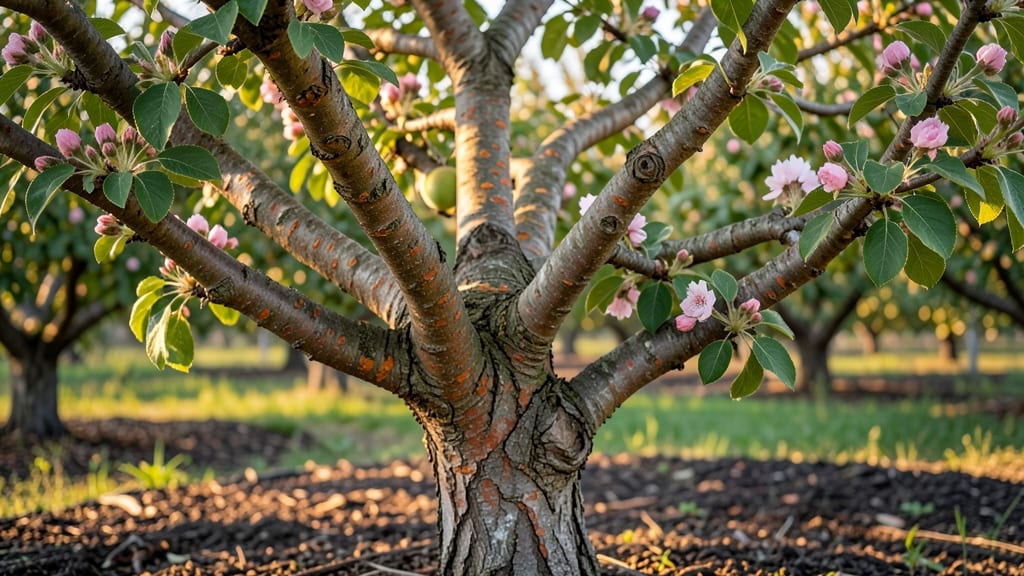
Strategic cuts turn a peach tree's tangled branches into a productive, disease-free framework. ✂️ I've spent years watching neglected trees struggle with weak limbs, fungal spots, and those dreaded borer holes—until I learned the right timing and technique.
The difference between a thriving tree and one that barely fruits often comes down to what you do (or don't) do with those branches.
Start by removing dead, diseased, or crossing branches first—they're the tree's weak points. Use sharp pruners to make clean cuts just outside the branch collar, and always sterilize your tools between cuts to prevent spreading fungal infections.
My biggest mistake? Waiting until spring to prune—summer and winter cuts actually reduce stress on the tree.
What you end up with is a stronger structure that produces bigger, healthier fruit and resists pests better. The tree's energy focuses on growth instead of fighting weak limbs, and you'll notice fewer fruitless branches by next season.
This method works for both young trees you're shaping and mature ones needing renewal.
Works in any climate where peaches grow, from mild winters to hot summers. The key is adapting timing to your local frost dates—just remember, the right cut at the right time prevents years of frustration. Let's get those branches in shape!
📚 In This Guide
- What you need
- Instructions
- Tips and common mistakes
- Wrapping up and next steps
What you need
- ● Pruning shears: Bypass pruners (for small branches, ¼"–¾" diameter) – 1 pair (look for sharp, stainless steel blades for clean cuts).
- ● Loppers: Long-handled bypass loppers (for branches ¾"–2" diameter) – 1 pair (choose an ergonomic design to avoid hand fatigue).
- ● Pruning saw: Curved-tooth pruning saw (for branches 2"+ diameter) – 1 saw (avoid cheap saws—they dull quickly!).
- ● Gloves: Heavy-duty gardening gloves (cut-resistant, like mechanic’s gloves) – 1 pair (protects from thorns and splinters!).
- ● Disinfectant: 70% isopropyl alcohol or bleach solution (1 part bleach to 9 parts water) – small spray bottle or wipe (prevents disease spread).
- ● Extension pole: Adjustable pruning saw or loppers (for high branches) – 1 unit (saves your back!).
- ● Tarp or drop cloth: Heavy-duty plastic or canvas – 1–2 sheets (catch debris and protect the ground).
- ○ Tree wound paint: Pruning sealant (optional; controversial—skip if your tree is healthy!).
- ● Safety gear: Safety glasses (if working near your face) and closed-toe shoes (for stability).
- ● Notebook & pen: For sketching your tree’s structure before/after pruning.
- ● Know your peach tree’s age and variety (young trees need lighter pruning; mature trees may need structural cuts).
- ● Check the weather forecast—prune on a dry, calm day (rain or wind makes cuts messy).
- ● Have a clear goal for pruning (e.g., open the center for airflow, remove dead wood, or shape for harvest access).
- ● Wear comfortable, flexible clothing (long sleeves/pants to avoid scratches from thorns).
Instructions for pruning peach tree branches
Here's how to keep your peach tree thriving with clean, strategic cuts at the right times.
✂️ Step 1: Prune for Winter Dormancy (Late Fall)
Start by removing any dead, diseased, or crossing branches first. These are your priority—they'll only drain energy from healthy growth. Use clean, sharp pruning shears to make cuts at a 45-degree angle just outside the branch collar (the swollen area where the branch meets the trunk). This prevents water from pooling and rotting the wound.
Next, thin out the canopy by cutting back one-third of the oldest branches to encourage new growth. Look for branches that are thinner than a pencil or growing inward—they'll compete with stronger limbs for sunlight and nutrients. I like to make these cuts on a dry day when the tree is fully dormant, usually after the first hard frost but before winter storms arrive.
☀️ Step 2: Light Pruning in Early Spring
Once buds begin to swell (around late February to early March depending on your climate), do a quick inspection for any branches that died over winter. These will be brittle and won't bleed sap when cut—healthy branches ooze a little when pruned. Remove them immediately to prevent disease spread.
Now focus on shaping the tree by cutting back any branches that grew too vigorously last season. Aim to open up the center so sunlight reaches all fruit-bearing limbs. I target branches that are growing straight up ("water sprouts") or rubbing against others—these cuts encourage a more open, productive structure. Use hand pruners for branches up to ½ inch thick and loppers for thicker limbs.
🌿 Step 3: Summer Pruning for Fruit Production
After harvest but before mid-July, do a final light pruning to remove any suckers (shoots growing from the base) and branches that produced poor-quality fruit. These cuts stimulate new growth that will bear next year's crop. Look for branches with fruit spurs (small, knobby areas where fruit forms)—these are your tree's future production zones, so protect them.
Thin out crowded fruit clusters to 6-8 inches apart on each branch. This might seem counterintuitive, but it ensures larger, higher-quality peaches. I use my fingers to gently twist off excess fruit rather than cutting stems—less stress on the tree. Water deeply after pruning to help the tree recover from the minor stress of cutting.
⏰ Step 4: Cleanup and Maintenance Year-Round
Whenever you prune, collect all clippings and dispose of them properly. Don't compost peach tree branches—they can harbor bacterial leaf spot and other diseases. Burn them or put them in the trash. I also sterilize my pruning tools with 70% rubbing alcohol between cuts to prevent spreading pathogens.
Monitor your tree regularly for signs of stress like yellowing leaves or oozing sap. These often indicate fungal issues or pest problems that need immediate attention. Healthy peach trees have smooth bark, vibrant green leaves, and no excessive suckers growing from the base. Adjust your pruning approach each year based on what you observe—every tree develops its own personality!
Tips & tricks for pruning peach tree branches
Real talk: Proper pruning transforms your peach tree from a tangled mess into a fruit-bearing powerhouse. Here's what nobody tells you about keeping your tree healthy year-round.
The Right Tools Matter: Never use dull shears—they tear bark instead of making clean cuts. I invest in bypass pruners for branches under ½ inch thick and loppers for thicker limbs. A sharp saw handles branches over 2 inches. Sterilize tools between cuts with 70% rubbing alcohol to prevent spreading diseases like bacterial leaf spot. This simple step saved my first tree from fungal infections after I skipped it.
Timing is Everything: The late fall pruning in Step 1 should happen after the first hard frost when the tree is fully dormant. If you prune too early, you risk encouraging new growth that won't harden off before winter. In Step 3, that mid-July deadline is critical—pruning after July delays next year's fruit production. Mark your calendar now: late February-March, mid-July, and late fall are your target windows.
Visual Cues for Healthy Cuts: When making your 45-degree cuts in Step 1, look for the branch collar—the swollen ridge where the branch meets the trunk. Your cut should be just outside this collar, never flush with it. For the one-third canopy thinning, imagine removing every other branch that's growing inward or thinner than a pencil. This opens up the center for sunlight while maintaining the tree's natural shape. I sketch a rough diagram before starting to visualize the final structure.
Seasonal Stress Signals: After pruning, watch for these red flags: yellowing leaves or oozing sap often indicate fungal issues or pest problems. Healthy peach trees have smooth bark, vibrant green leaves, and minimal suckers at the base. If you notice excessive suckers, these energy vampires drain nutrients from fruit production. Remove them completely at the base during your summer pruning in Step 3.
Pro Tips for Peach Tree Branches
- Real talk: Proper pruning transforms your peach tree from a tangled mess into a fruit-bearing powerhouse.
- The Right Tools Matter: Never use dull shears—they tear bark instead of making clean cuts.
- Timing is Everything: The late fall pruning in Step 1 should happen after the first hard frost when the tree is fully dormant.
Frequently asked questions
Got questions about pruning your peach tree branches? You’re not alone! Here are answers to the most common concerns—whether you're a beginner or a seasoned gardener looking to refine your skills.
When is the best time to prune peach tree branches?
The ideal time is late winter or early spring (before buds swell) to prevent disease spread. Avoid pruning in fall—it can leave wounds vulnerable to fungal infections. For light shaping, you can trim in summer, but avoid heavy cuts during fruit production.
How much can I safely remove from my peach tree?
Remove no more than 20-25% of the tree’s total branches in one season to avoid stress. Focus on dead, crossing, or diseased branches first. Thin out crowded areas to improve airflow and sunlight penetration—this boosts fruit quality and reduces pests.
What if my peach tree branches are bleeding sap after pruning?
Sap bleeding is normal for peach trees in early spring but can weaken the tree if excessive. Seal large cuts (over ½ inch) with pruning sealant, but skip it for small cuts—air-drying is fine. Keep the area clean to prevent bacterial infections.
Can I prune peach tree branches in summer?
Yes, but lightly! Summer pruning helps control size and shape, but avoid heavy cuts. Trim only suckers, water sprouts, or overcrowded branches after harvest. Heavy summer pruning can stress the tree and reduce next year’s fruit production.
What should I do with the branches after pruning?
Dispose of diseased branches in the trash not the compost pile. Healthy branches can be chopped for mulch, used as stakes, or even turned into rustic garden art! Just avoid burning them—it can spread pests or diseases.
Wrapping up and next steps
Pruning your peach tree branches isn’t just about shaping—it’s about inviting health, productivity, and longevity into your orchard! 🌿 With the right tools, timing, and technique, you’ll unlock better fruit yields, stronger growth, and fewer pests.
Whether you’re a seasoned gardener or just starting, every strategic cut brings you closer to a thriving tree.
Ready to take action? Grab your pruners and schedule your next pruning session—your peach tree (and future harvests) will thank you! For extra confidence, revisit our FAQs or watch a quick video tutorial to refine your skills. Happy pruning!