
Pruning
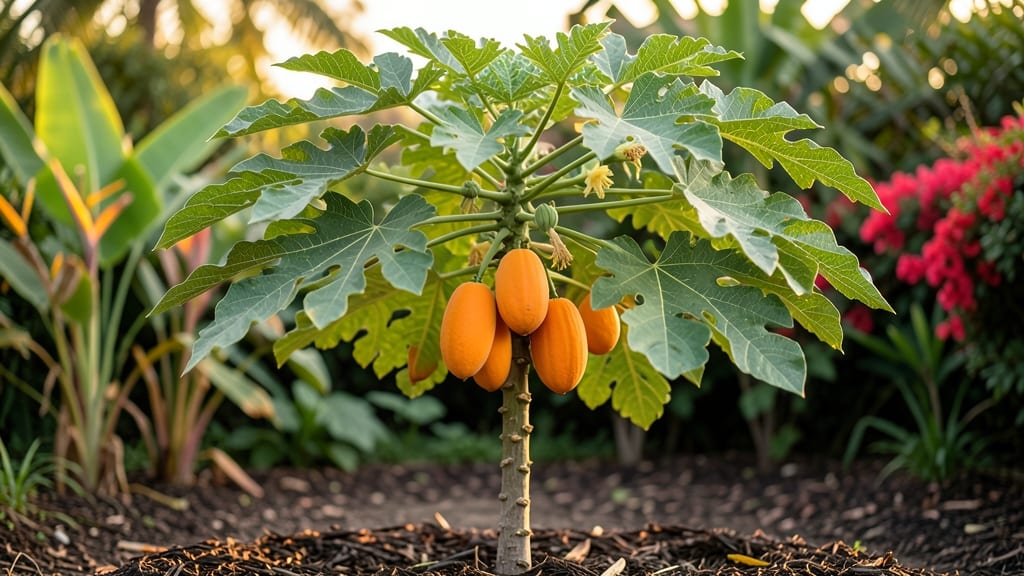
Growing papaya trees in California thrives best with frost-free varieties like 'Solo' or 'SunUp,' planted in warm microclimates with well-draining soil and full sun exposure. Protect young plants from coastal winds and provide consistent moisture during fruit development.
California's Mediterranean climate creates perfect conditions for papaya trees when you choose the right varieties and microclimates. 🌵 The key is mimicking tropical environments—think of your garden as a controlled greenhouse.
Coastal areas like San Diego offer milder winters, while inland valleys (like the Central Valley) provide warmer nights that help fruit set. I've found that using black plastic mulch around the base raises soil temperatures by 10-15°F, which is crucial for germination in cooler zones.
What sets California-grown papayas apart is their ability to produce fruit year-round in ideal conditions. The 'SunUp' variety, for example, matures in just 90 days and handles brief temperature dips better than most tropical varieties.
For container growing, opt for dwarf types like 'Tahitian'—they'll fit on patios while still yielding sweet, orange-fleshed fruit. The trick is keeping roots warm and consistent moisture during flowering, which is when most growers see failures.
💡 In This Article
- California Climate Zones for Papaya Trees
- Best Papaya Tree Varieties for California Gardens
California climate zones for papaya trees
Papaya trees thrive in California's USDA hardiness zones 9-11, where winter temperatures rarely drop below 32°F. Coastal regions like San Diego and Santa Barbara (zone 10) provide ideal conditions with mild winters and consistent humidity—similar to tropical environments.
Inland valleys such as the Central Valley (zone 9) experience hotter days and cooler nights, which can actually benefit fruit development when combined with proper soil insulation.
The critical temperature range for papaya growth spans 70-90°F during the day and 60-70°F at night. Germination requires soil temperatures above 75°F, which is why many growers use black plastic mulch or heat mats in early spring. 🌡️ For fruiting, temperatures between 75-85°F maximize sugar development in the fruit.
Coastal winds can be problematic—sandy soils and windbreaks (like bamboo screens) help prevent transplant shock in young seedlings.
Microclimates play a huge role in success. Urban heat islands in cities like Los Angeles can create pockets where papayas thrive, while higher elevations (above 1,000 feet) may struggle.
The key adaptation is simulating tropical conditions: use drip irrigation to maintain 1-2 inches of water weekly, and group plants together to create a humid micro-environment. I've seen containers work well on patios when wrapped in bubble wrap during cooler evenings.
One common misconception is that all papayas need full sun exposure. While they do require 6-8 hours of direct sunlight daily, afternoon shade (especially in inland areas) prevents heat stress during summer.
The tree's large leaves act like solar panels—too much midday sun can scorch them. Mulching with straw helps retain moisture and regulates root-zone temperatures, which is especially important during California's dry summers.
For container growing, choose pots with 15+ gallon capacity to accommodate the tree's extensive root system. Self-watering containers help maintain consistent moisture, which is critical during flowering. The root zone must stay above 65°F—if it drops below 55°F for more than a few hours, fruit set will fail.
This is why many urban growers use insulated planters filled with a mix of coconut coir and perlite.
Advanced growers often use row covers during unexpected cold snaps. Even a 30°F dip can damage leaves, though the tree itself may survive if roots stay warm. The 'SunUp' variety shows remarkable resilience—it can tolerate brief dips to 28°F if protected, making it the top choice for coastal gardens. 🌿
Remember that papaya trees are dioecious—meaning male and female flowers appear on separate plants. For fruit production, you'll need at least one female plant for every 8-10 male plants.
California's long growing season allows for multiple harvests when proper pollination is maintained, typically through hand-pollination with a small brush during early morning hours.