
Pruning
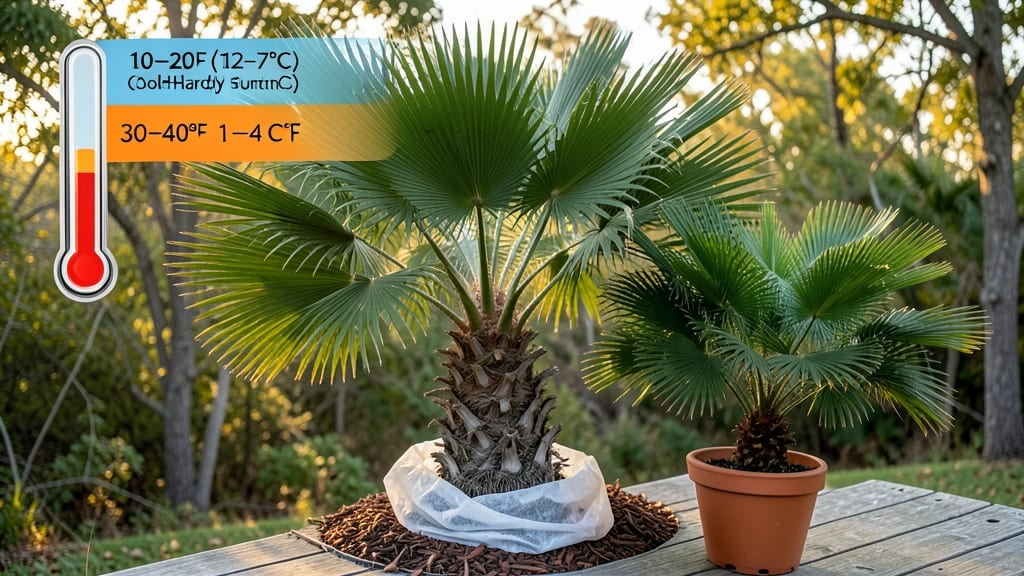
Palm trees thrive in warmth, but their temperature tolerance varies wildly—some survive 10°F dips while others wilt above 100°F. I’ve learned the hard way which species make it through my zone’s brutal winters (and which don’t).
The key isn’t just picking the right palm—it’s knowing how to shield them when temperatures swing outside their comfort zone.
Most palms need protection below 30°F, but some tropical varieties like the majestic coconut palm won’t survive past 50°F. Cold-hardy types like the windmill palm or Needle palm can handle 15°F with the right care, while desert palms like the Mexican fan palm bounce back from 20°F freezes.
The trick is matching the species to your zone—and preparing for sudden drops.
You’ll spot temperature stress quickly: brown fronds, blackened tips, or a palm that suddenly drops fruit. But with the right wraps, mulch, and watering tricks, you can keep even delicate palms alive through extremes.
A well-prepped palm won’t just survive—it’ll keep growing, year after year, no matter what Mother Nature throws at it.
Whether you’re in a chilly zone or a scorching desert, the right species and protection plan makes all the difference. Let’s get your palms through every season without a single leaf turning crispy.
📚 In This Guide
- What you need
- Instructions
- Tips and common mistakes
- Wrapping up and next steps
What you need
- ● Thermometer: A digital outdoor thermometer with a range of -20°F to 120°F (for precise temperature readings).
- ● USDA Hardiness Zone Map: Printed or digital (check USDA’s official site for your zone).
- ● Notebook & Pen: For recording temps, pruning notes, and observations.
- ● Pruning Tools: Bypass pruners (for small fronds, 1/4"–3/8" blade).
- ● Loppers (for thicker stems, 24"–36" reach).
- ● Sterilized saw (for large trunks, 10"–12" blade).
- ● Gloves & Safety Goggles: Heavy-duty gardening gloves and ANSI-rated goggles.
- ● Mulch: Organic mulch (e.g., wood chips or straw) for root insulation.
- ● Watering Can or Hose: With adjustable nozzle for gentle hydration.
- ● Heat Stress Monitor: A soil thermometer (110°F+ range) to check root zone temps.
- ● Windbreak Cloth: Lightweight fabric to shield young palms from cold winds.
- ● Frost Cloth: Breathable cover (30–50% shade) for sudden freezes.
- ● Palm-Specific Fertilizer: Slow-release, low-nitrogen blend (e.g., 8-3-9 ratio).
- ● Drone or Ladder: For inspecting tall palms safely (if DIY isn’t an option!).
How to protect palm trees through temperature extremes
Palms thrive in warmth but need smart care when temperatures dip or spike—here's how to keep yours healthy year-round.
Identify Your Palm's Cold-Hardiness Zone
Most palms naturally grow in USDA Zones 9-11, where winter lows stay above 30°F. If you're in Zone 8 or colder, research your specific palm variety—some like the Windmill Palm handle 20°F while others, like the Coconut Palm, die below 35°F. Check the label or consult a local nursery for exact tolerances.
Zone boundaries aren’t fixed—microclimates matter. A palm in a sheltered spot (near a building or south-facing wall) may survive 5°F colder than one in an open area. I always test a small section of my yard first by wrapping a thermometer in foil and leaving it overnight during cold snaps.
Prepare for Winter Dips Before Temperatures Drop
Start protecting your palms 4-6 weeks before the first frost. Remove any dead fronds with clean, sharp pruners—these can harbor pests and trap moisture, increasing cold damage. Water deeply but reduce frequency to let roots harden slightly; soggy soil freezes faster and can kill roots.
Apply a 2-3 inch layer of mulch (like wood chips or straw) around the base, keeping it 6 inches away from the trunk. This insulates roots while allowing airflow to prevent fungal issues. I like to spread mulch in a donut shape rather than piling it against the trunk—this mimics natural ground cover and prevents rot.
Use Physical Barriers for Extreme Cold
For Zone 7 or colder, wrap the trunk and crown with burlap or frost cloth secured with twine. Avoid plastic—it traps moisture and can burn leaves. Focus on the top third of the palm, where new growth emerges, as this is the most vulnerable. I use staple-free pins to anchor the fabric loosely so air can still circulate.
For potted palms, move them to a garage, shed, or insulated patio where temperatures stay above 40°F. If you can’t move them, bury the pot in 6 inches of straw or leaves—this mimics the ground’s natural insulation. Never leave potted palms outside uncovered in freezing temps; even 32°F can cause irreversible damage.
Monitor and Adjust During Temperature Swings
Watch for sudden temperature drops—palms can handle 30°F if it’s dry, but 30°F with humidity is deadly. If a frost warning comes, sprinkle water around the base (not on leaves) to create a thin ice layer—this releases heat as it freezes and raises soil temps by 2-5°F. Stop watering 48 hours before the freeze to avoid shock.
Check for brown or blackened fronds after a cold snap—these are dead and should be pruned after the danger of frost has passed. Never cut healthy fronds in winter, even if they look damaged; new growth often hides beneath. I wait until spring warmth to assess true damage, as palms can recover surprisingly well.
Recover and Revitalize After Cold Stress
Once temperatures rise above 50°F, remove any protective wraps and inspect the palm for sap oozing, cracks, or soft spots—these signal internal damage. Prune only dead fronds with sterilized shears, cutting at the base of the frond where it meets the trunk. Avoid over-pruning; healthy fronds photosynthesize and feed the palm.
Fertilize lightly with a balanced palm fertilizer (like 8-2-12) in early spring to encourage recovery. Increase watering gradually—palms stressed by cold need deep watering every 7-10 days until new fronds appear. I avoid heavy fertilization until I see two new fronds unfurl, as stressed palms can’t process nutrients efficiently.
Tips & tricks for palm tree temperature protection
Palm trees can thrive even in challenging climates—here's how to give yours the best shot at survival during temperature swings.
Zone-Specific Prep: The 4-6 weeks before the first frost is your window to prepare. This timing lets roots gradually adjust to drier conditions, making them less vulnerable to sudden freezes. I've seen palms in Zone 8 survive 25°F when properly prepped, but only if you start this process early. Pay special attention to newly planted palms—their roots are particularly sensitive to temperature changes.
Mulch Application Technique: That 2-3 inch layer of mulch isn't just about insulation—it's about airflow too. I learned this the hard way when a palm developed root rot from mulch piled too close to the trunk. Spread it in that donut shape, keeping it 6 inches away from the trunk, and use materials like wood chips or straw that allow moisture to escape. For potted palms, consider using a lighter mulch like pine needles to reduce weight on the pot.
Frost Warning Response: When that frost warning hits, the 48-hour watering cutoff is non-negotiable. Wet soil conducts cold much faster than dry soil, and the ice layer you create around the base only works if the ground is properly prepped. I keep a hose with a gentle spray attachment ready—just a light mist around the base (not the fronds) creates that protective ice layer without over-saturating the soil.
Post-Cold Assessment: Waiting until temperatures rise above 50°F to inspect your palm is crucial—cold-damaged fronds can look worse than they actually are. I've seen palms that appeared completely dead in winter fully recover by spring. Look for new growth at the base rather than focusing solely on the fronds. This patience pays off—palms are surprisingly resilient when given the right conditions to recover.
Pro Tips for Palm Tree Temperature Tolerance
- Palm trees can thrive even in challenging climates—here's how to give yours the best shot at survival during temperature swings.
- Zone-Specific Prep: The 4-6 weeks before the first frost is your window to prepare.
- Mulch Application Technique: That 2-3 inch layer of mulch isn't just about insulation—it's about airflow too.
Frequently asked questions
Got questions about keeping your palm trees thriving in different climates? Here are some common concerns—and answers—to help you care for your tropical beauty year-round.
What’s the ideal temperature range for most palm trees?
Most palm trees thrive in temperatures between 65°F and 95°F (18°C–35°C). While some varieties, like the Canary Island Date Palm, tolerate brief dips to 25°F (-4°C), prolonged cold below 30°F (-1°C) can cause irreversible damage. Always check your specific species for exact needs!
Can palm trees survive winter in cold climates?
Yes, but with preparation! In zones below USDA Zone 8, wrap trunks with burlap or frost cloth, mulch the root zone, and water deeply before the first freeze. Cold-hardy palms like the Windmill Palm or Needle Palm are great choices for cooler areas. Avoid sudden temperature swings—those hurt more than steady cold!
How do I know if my palm tree is suffering from heat or cold stress?
Watch for these red flags: yellowing fronds (nutrient deficiency or cold damage), brown, crispy tips (heat or drought stress), or oozing sap (freeze injury). If fronds droop or split, it’s a sign of extreme stress. Act fast—trim damaged fronds and adjust care (watering, shade, or insulation) to revive your tree.
Are there palm tree alternatives for extreme climates?
For hot, dry climates, try Mexican Fan Palms or Pygmy Date Palms—they’re drought-tolerant. In cold zones, opt for Dwarf Palmetto or Chinese Windmill Palms, which handle frost better. Even ornamental grasses like Muhly Grass mimic palm texture without the temperature fuss!
What should I do if my palm tree gets frostbitten?
Don’t panic! Gently remove blackened or mushy fronds (use sterilized pruners) to prevent disease. Water deeply to reduce shock, and avoid fertilizing until new growth appears. If the trunk shows cracks or oozing, it may need wound dressing (like tree sealant) to heal. Most palms bounce back with patience—just protect it from future cold snaps!
Wrapping up and next steps
Understanding your palm tree’s temperature tolerance is the first step to keeping it thriving year-round! 🌴 Whether you’re in a cold-hardy zone (8-10) or a tropical paradise (10-11), proper care—like mulching, watering, and strategic pruning—can make all the difference.
With the right knowledge, your palm can not just survive, but flourish through every season.
Ready to take action? Start by assessing your local climate zone and adjusting your care routine accordingly. Need a deeper dive? Check out our pruning guide or consult a local arborist for personalized tips!