
Pruning
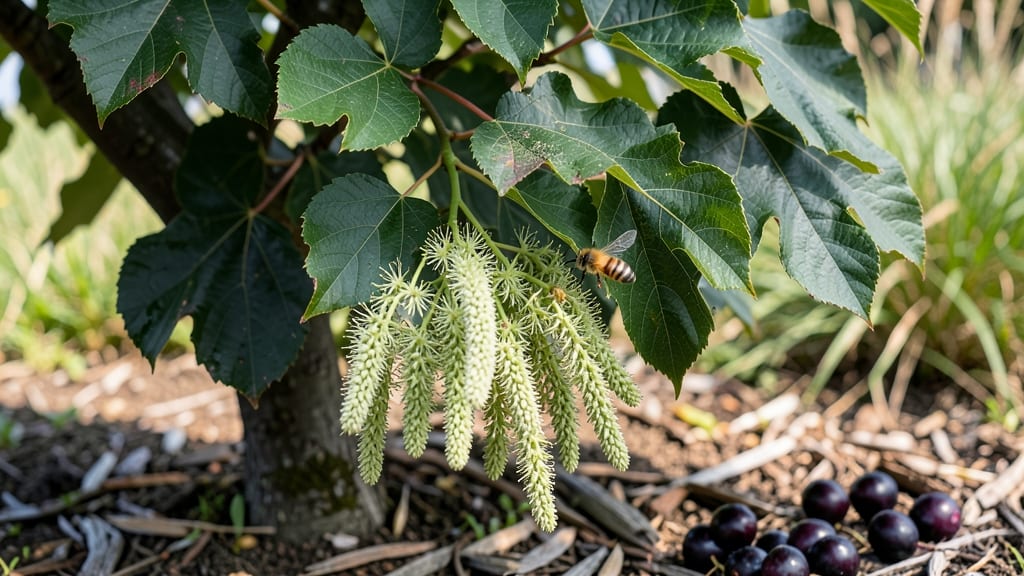
Mulberry tree pollination relies on wind and insects to transfer pollen from male flowers to female flowers, creating the conditions needed for fruit development. Without proper pollination, trees may produce far fewer berries.
Understanding mulberry tree pollination starts with the flowers—male trees produce pollen-rich blooms, while female trees need that pollen to develop fruit. 🔥 Wind carries some pollen, but bees and other insects are far more effective at cross-pollination, significantly increasing berry yield.
If you're growing mulberries, planting multiple trees nearby ensures better fruit production, as isolated trees often struggle with limited pollen transfer. The process also depends on timing: ideal pollination occurs during warm, dry conditions when flowers are fully open and pollinators are active.
For gardeners, this means avoiding pesticides during bloom season and creating pollinator-friendly habitats with native plants. Manual pollination—like gently shaking branches to release pollen—can help isolated trees, but it's not a long-term solution.
The key takeaway? Healthy pollination equals more berries, and that starts with understanding how these trees naturally reproduce.
💡 In This Article
- How Mulberry Tree Flowers Develop Into Fruit
- Boosting Mulberry Tree Fruit Production Through Pollination
How mulberry tree flowers develop into fruit
Mulberry trees exhibit dioecious reproduction, meaning male and female flowers grow on separate trees. Male flowers produce abundant pollen in catkin-like clusters that release grains measuring about 0.001 inches in diameter during early spring. Female flowers, clustered on different trees, contain ovules that require this pollen to trigger fertilization.
The process begins when pollen lands on the sticky stigma of female flowers, forming a pollen tube that travels down to the ovary—typically within 24-48 hours under ideal conditions.
The effectiveness of pollination depends heavily on environmental factors. Wind can carry pollen up to 100 feet, but only about 1-5% of grains successfully reach female flowers this way. Insects, particularly native bees and butterflies, dramatically increase success rates by physically transferring pollen between flowers.
Humidity above 70% can hinder pollen release, while temperatures between 60-80°F create optimal conditions for both wind and insect activity. The fertilization process itself takes 5-7 days before the ovary begins swelling into what will become a mulberry fruit.
What most gardeners don't realize is the dramatic yield difference between wind-only and insect-assisted pollination. Studies show trees with active bee populations produce 3-5 times more berries than isolated trees relying solely on wind.
The key visual indicator is flower health: successful pollination results in female flowers developing into 1-inch-long fruits within 6-8 weeks, while unpollinated flowers simply wither and drop. This explains why some mulberry trees appear lush but produce minimal fruit despite healthy foliage.
Timing is everything in this process. Mulberry flowers typically bloom in late March to early April in most climates, with peak pollination occurring during the first 10-14 days of flowering. After this window, female flowers become less receptive to pollen.
The berries themselves develop from the fertilized ovules and undergo a 3-phase growth cycle: initial swelling, color development (from green to deep purple), and final ripening. Each phase requires specific temperature ranges—too cold (below 50°F) can stall development, while extreme heat (>strong>90°F) may cause fruit drop.
Here's what's actually happening at the cellular level: Once pollen reaches the stigma, it germinates and forms a tube that penetrates the style (female flower's neck) at a rate of about 1-2 mm per hour.
The tube then releases sperm cells that fertilize the ovule, triggering the ovary to transform into fruit. This entire process is why mulberry trees often produce clusters of berries—each flower that successfully receives pollen becomes a potential fruit.
The tree's energy then shifts from flower production to fruit maturation, which explains why heavy fruit loads can sometimes reduce next year's flowering.
Consider these key factors when observing your trees:
- Flower color: Healthy male flowers appear yellow-green, while female flowers start greenish-white and turn slightly pink after pollination
- Pollen availability: Male trees release pollen most heavily on sunny mornings between 8-10 AM
- Fruit development: Successful pollination shows as small green bumps on female trees within 7-10 days of flowering
The entire process from pollination to ripe fruit takes about 8-12 weeks, making early spring the most critical period for ensuring a good harvest. 🌿