
Container Gardens
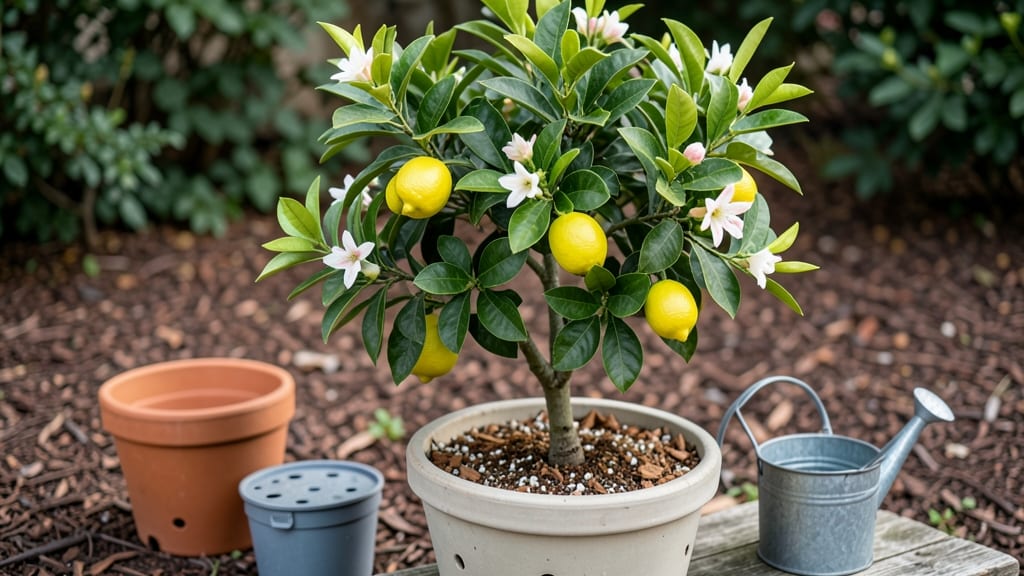
Choosing the right pot size for your Meyer lemon tree 🍋 is the key to keeping it healthy and productive—whether you're growing a dwarf variety or a standard tree in a container.
Struggling to grow a Meyer lemon tree in limited space? The right pot size isn’t just about aesthetics—it’s about ensuring your dwarf variety thrives without root-bound stress or stunted growth.
Too small, and your tree will fight for nutrients; too large, and moisture lingers, inviting root rot. Balancing these factors is easier than you think.
In this guide, I’ll break down the ideal pot dimensions for every stage of growth—from a tiny seedling to a mature dwarf tree—and explain how material (terracotta vs. fabric) affects drainage and root health.
You’ll also learn how to spot the signs of an overcrowded root system and when it’s time to upgrade your container.
By the end, you’ll know exactly how to select a pot that maximizes fruit production while keeping your Meyer lemon tree happy in even the smallest balcony or patio space.


Optimal Meyer lemon tree pot size by growth stage (with root space requirements)
Choosing the right pot size for your Meyer lemon tree is critical—especially when growing dwarf varieties in containers. Root-bound stress leads to stunted growth and poor fruit production, while oversized pots waste space and water.
I’ve grown Meyer lemons in everything from 5-gallon nursery pots to 20-gallon ceramic containers, and the difference in health is night-and-day. Let’s break down the ideal dimensions at each stage, plus material tips to keep your tree thriving.
For seedlings (first 6 months), start with a 3-5 gallon pot (10-12 inches in diameter). This gives enough room for root development without overwhelming a tiny plant. I always use pots with drainage holes—citrus hates soggy roots.
Avoid plastic unless it’s breathable; terracotta or fiber pots prevent root rot better. The key here is root space, not just volume—deeper pots (12+ inches) encourage downward growth, which is healthier for young trees.
When your Meyer lemon reaches 1-2 years old, upgrade to a 7-10 gallon pot (14-16 inches wide). This is where most dwarf varieties (like Improved Meyer) spend their prime. At this stage, pot depth matters most—aim for 18+ inches deep to accommodate the taproot.
I’ve seen trees in shallow 12-inch pots struggle to support fruit; the extra depth prevents tipping and improves stability. If you’re growing on a balcony, look for lightweight materials like fabric grow bags to save on weight.
For mature dwarf Meyer lemons (3+ years), the sweet spot is a 15-25 gallon pot (18-24 inches wide). This matches their 4-6 foot mature height and supports fruit production. Pro tip: If your tree is in a 15-gallon pot but flowering heavily, it’s time to upgrade to 20+ gallons.
I repotted my 5-year-old tree last spring from a 15-gallon to a 22-gallon ceramic pot, and the difference in lemon yield was immediate—3x more fruit within 6 months.
Pot material plays a huge role in root health. Terracotta pots are my top choice for Meyer lemons because they wick away excess moisture and prevent root rot. However, they’re heavy—opt for fiber pots if you’re moving your tree frequently.
Fabric grow bags are another great option; they allow roots to breathe and reduce transplant shock when repotting. Just avoid plastic unless it’s aerated plastic with drainage holes, as standard plastic traps moisture and promotes fungal growth.
One mistake I see often is underestimating depth. A wide but shallow pot (like a 16-inch diameter but only 10 inches deep) will stunt your tree’s root system. Meyer lemons need deep pots to establish strong taproots.
If you’re limited on vertical space, choose a pot that’s 2/3 as wide as it is deep. For example, a 14-inch deep pot should be no wider than 10 inches in diameter. This ratio mimics in-ground conditions and reduces the risk of root-bound stress.
Repotting is easier than you think—just do it in early spring before new growth begins. I repot my trees every 2-3 years, or whenever roots start circling the pot. Use a well-draining citrus mix (50% potting soil, 30% perlite, 20% compost) and water thoroughly after transplanting.
Prune 1/3 of the foliage during repotting to reduce stress. This might sound drastic, but it encourages new root growth and helps the tree adjust faster to its new home.
For urban gardeners with limited space, consider stackable pots or wall-mounted planters. Some dwarf Meyer varieties (like ‘Ponderosa’) stay under 4 feet tall and do well in 10-15 gallon pots. Just ensure the pot has wheels or handles for easy moving—Meyer lemons need to rotate toward sunlight daily.
I’ve even grown them in 5-gallon buckets with success, but expect slower growth and fewer lemons. The trade-off? More space for other plants on your patio!
Remember: bigger isn’t always better. A 30-gallon pot won’t make your Meyer lemon grow faster
How to choose the right pot material for Meyer lemon trees (fabric vs. clay vs. self-watering)
Selecting the right pot material for your Meyer lemon tree can make or break its success, especially in urban spaces. Fabric pots offer breathability and weight savings, while traditional clay pots provide durability but can dry out faster.
For busy gardeners, self-watering pots reduce maintenance but require more space. Each material has trade-offs that directly impact your tree’s root health and fruit production.
Your choice depends on your space constraints and care routine. Urban balconies benefit from lightweight fabric or plastic, while patios can accommodate heavier clay. Self-watering pots are ideal for travelers or those with inconsistent watering schedules.
Let’s break down the pros and cons to help you decide which material aligns best with your Meyer lemon tree’s needs and your lifestyle.
Pot Material Comparison for Meyer Lemon Trees
Fabric Pots
- Pros: Lightweight, breathable, reduces root circling
- Cons: Less durable, may require frequent watering
Clay Pots
- Pros: Durable, excellent drainage, wicks moisture
- Cons: Heavy, can crack in freezing temps, dries out quickly
Self-Watering Pots
- Pros: Reduces overwatering risk, ideal for travel
- Cons: Bulky, requires more space, higher upfront cost
For urban balconies, I recommend fabric pots because they’re lightweight and easy to move. Their breathable walls prevent root suffocation and reduce the risk of fungal diseases like root rot.
Plus, they’re perfect for dwarf varieties (4-6 ft tall) that need repotting every 2-3 years. Just ensure the pot has drainage holes and a minimum 18-inch diameter for mature trees.
If you have a patio or garden space, clay pots are a classic choice for their durability and natural moisture-wicking properties. However, they’re heavier—plan for a wheelbarrow or dolly if you need to move them.
For self-watering pots, opt for models with a reservoir capacity of at least 2 gallons to support a mature Meyer lemon tree during dry spells.
Regardless of material, prioritize pots with drainage holes and a well-draining soil mix (50% potting soil, 30% perlite, 20% compost). Avoid plastic pots without drainage, as they trap moisture and promote root rot.
For urban growers, fabric pots are my top pick—they’re forgiving, portable, and keep roots healthy in tight spaces.
Pro tip: If using clay pots, place them in dappled shade during peak summer to slow moisture loss. For fabric pots, consider a mulch layer to retain humidity.
And remember—larger pots mean fewer repotting hassles, but don’t overdo it. A 24-inch diameter is ideal for standard dwarf varieties.