
Trees
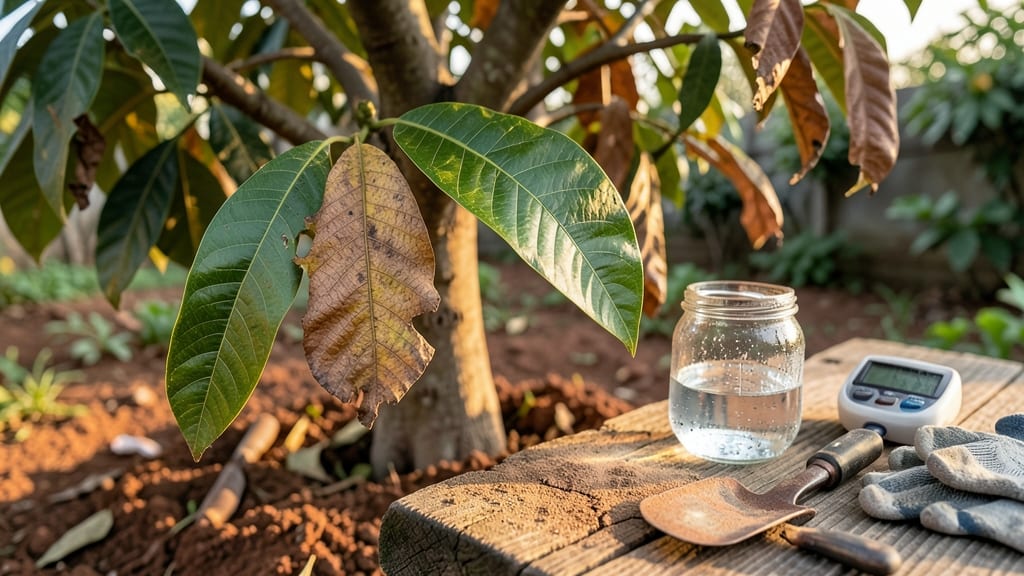
Your mango tree’s brown leaves might be screaming for help—don’t ignore them. 🌿 I’ve nursed back more than a few struggling trees, and the first step is figuring out whether your plant is thirsty, starving, or under attack.
The fix depends entirely on the pattern and location of the browning, so let’s decode what your leaves are really saying.
Dry, crispy edges usually mean underwatering or too much sun, while yellowing between veins signals overwatering or root rot. Pests like spider mites leave tiny speckled damage, and fungal spots appear as dark, greasy patches. The good news?
Each issue has a targeted solution—from adjusting your watering schedule to applying neem oil or pruning damaged branches. You’ll know you’re on the right track when new growth emerges a vibrant green within 2-4 weeks.
Start with a simple check: gently tug a few leaves. If they come away easily, your tree’s roots might be struggling. If the soil smells sour or feels soggy, that’s your clue to cut back on water.
For nutrient deficiencies, a balanced fertilizer with micronutrients can work wonders—just avoid overdoing it, as mango trees prefer a gentle feeding. The key is consistency: once you identify the problem, stick with the fix until you see improvement.
Prevention is easier than rescue. Mulch around your tree’s base to retain moisture, prune for airflow, and monitor pests regularly. A healthy mango tree should have glossy, deep-green leaves—so don’t wait until the browning spreads. Small adjustments now save hours of frustration later. Let’s get your tree thriving again!
Root Causes Behind Leaf Discoloration
Understanding why your mango tree’s leaves turn brown is the first step to saving it. Brown leaves are often a cry for help—whether from environmental stress, pests, or underlying health issues. Below, we break down the most common culprits with clear explanations and actionable insights.
Mango trees thrive in warm climates, but excessive heat or direct, intense sunlight can scorch leaves, causing them to turn brown and crispy at the edges.
This is especially common in: - Newly transplanted trees (shock from sudden exposure) - Young leaves (less hardened than mature foliage) - Hot, dry afternoons (when temperatures spike above 95°F/35°C)
Why it happens: Leaves have a waxy cuticle to retain moisture, but when heat exceeds their tolerance, cell membranes break down, leading to dehydration and browning. Think of it like sunburn on human skin—only worse for your tree.
💡 Pro Tip: If your tree is in a full-sun location, provide afternoon shade (especially in summer) using shade cloth (30-50% coverage) or a nearby structure. Mulching around the base also helps regulate soil temperature.
Brown leaves can signal both overwatering and underwatering, but the patterns differ:
| Issue | Signs | Why It Happens |
|---|---|---|
| Underwatering | Leaves curl, edges brown and crispy, soil pulls away from pot edges. | Roots dry out, transpiration exceeds water uptake, causing cellular damage. |
| Overwatering | Yellow-brown leaves, mushy stems, roots smell foul, soil stays soggy. | Root rot (from Phytophthora or Fusarium) blocks nutrient/water flow. |
🔥 Key Difference:
- Underwatered? Brown edges with dry, brittle leaves.
- Overwatered? Uniform browning + possible leaf drop and fungal growth.
✨ Fix It:
- Check soil moisture by sticking your finger 2 inches deep—water only if dry.
- Improve drainage by amending soil with perlite or sand, and ensure pots have drainage holes.
- Water deeply but less often (mango trees prefer 1-2 inches per week, depending on climate).
Pests like aphids, mites, thrips, and mealybugs drain sap from leaves, causing:
- Brown, stippled, or curled leaves (from spider mites).
- Sticky residue (honeydew) + sooty mold (black fungus) on undersides.
- Holes or chewed edges (from caterpillars or beetles).
Why it happens: Pests inject toxins or disrupt leaf function as they feed. Heavy infestations weaken the tree’s ability to photosynthesize, leading to browning.
👨🍳 Action Plan:
- Inspect leaves (use a magnifying glass for tiny pests like mites).
- Blast off pests with a strong spray of water (disrupts their life cycle).
- Apply neem oil (1 tsp per quart of water) or insecticidal soap (repeat every 5-7 days).
- Introduce beneficial insects (ladybugs or lacewings) for long-term control.
Fungi and bacteria thrive in humid, wet conditions and attack mango trees through:
- Leaf spots (brown/yellow patches with dark borders, caused by Anthracnose or Alternaria).
- Powdery mildew (white, powdery coating turning leaves brown).
- Bacterial leaf spot (water-soaked brown spots that enlarge).
Why it happens:
- Poor air circulation (crowded trees or dense foliage).
- Wet leaves for prolonged periods (from overhead watering or high humidity).
- Weakened tree (stress from poor nutrition or pests makes it susceptible).
🎯 Prevention & Treatment:
- Remove infected leaves immediately and sterilize pruners with rubbing alcohol.
- Space trees for airflow (at least 10 feet apart).
- Avoid watering leaves (use drip irrigation or water at the base).
- Apply copper fungicide (for bacterial spots) or baking soda spray (1 tsp baking soda + 1 quart water + a drop of soap).
Brown leaves can also mean your mango tree is starving for key nutrients. Here’s what to watch for:
| Symptom | Likely Deficiency | How to Fix It |
|---|---|---|
| Yellow-brown leaves (older leaves first) | Nitrogen (N) | Apply balanced fertilizer (e.g., 10-10-10) or compost in spring. |
| Brown edges on new growth | Potassium (K) | Use a potassium-rich fertilizer (like banana peel tea or greensand). |
| Pale green/brown veins | Magnesium (Mg) | Apply Epsom salt (1 tbsp per gallon of water, spray on leaves). |
| Small, brown, brittle leaves | Iron (Fe) | Use chelated iron or amend soil with sulfur (for acidic-loving mango trees). |
💡 Remember: Always test soil pH (mango trees prefer 6.0-7.5). If the soil is too alkaline, nutrients like iron become unavailable.
- Wind damage: Leaves tear or dry out from desiccating winds, turning brown and ragged.
- Salt buildup: In coastal areas or from over-fertilizing, salt accumulates in soil, burning roots and causing leaf browning.
- Chemical exposure: Herbicides, pesticides, or even tap water with high chlorine can damage leaves.
🔥 Solutions:
- Protect from wind with a windbreak (bamboo screens or native shrubs).
- Flush soil with fresh water if salt buildup is suspected.
- Use filtered/rainwater for sensitive trees and avoid spraying leaves with chemicals.
Reviving Your Tree’s Health
Brown leaves on your mango tree can be alarming, but the good news is that most issues are fixable with the right approach. Below, we’ve mapped out practical solutions based on the most common causes—from overwatering to pests—along with prevention tips to keep your tree thriving.
Let’s get your mango tree back to its lush, green glory!
Signs: Yellowing or brown leaves, soggy soil, root rot.
How to Fix It: 🔥 Adjust Your Watering Routine
- Mango trees prefer well-drained soil and moderate watering (about 1–2 inches per week, depending on climate).
- Water deeply but infrequently—focus on the root zone rather than surface sprinkling.
- Test soil moisture before watering: Stick your finger 2–3 inches deep—if it’s damp, wait a few more days.
🍳 Improve Soil Drainage
- If your tree is in a pot, ensure it has drainage holes and use a mix of potting soil, perlite, and sand.
- For in-ground trees, amend the soil with compost or organic matter to improve aeration.
- Consider raising the planting bed slightly to prevent waterlogging.
👨🍳 Prune Affected Leaves & Roots (If Needed)
- Trim soft, brown, or mushy leaves to redirect energy to healthy growth.
- If root rot is suspected, prune affected roots (sterilize tools with rubbing alcohol first) and repot in fresh, dry soil.
💡 Prevention Tips: ✔ Water in the morning to allow excess moisture to evaporate. ✔ Mulch around the base (2–3 inches deep) to retain moisture without suffocating roots. ✔ Avoid watering during heavy rains—let the soil dry slightly between sessions.
Signs: Crispy, dry brown edges, wilting, soil pulling away from pot edges.
How to Fix It: 🔥 Rehydrate Gradually
- Give your tree a deep watering (soak the root zone until water drains out the bottom).
- For potted trees, place the pot in a tray of water for 10–15 minutes to encourage absorption.
🍳 Provide Shade & Humidity
- If temperatures exceed 90°F (32°C), provide afternoon shade (use shade cloth or move potted trees indoors briefly).
- Mist leaves lightly in the early morning or use a pebble tray under the pot to increase humidity.
👨🍳 Adjust Fertilizer (If Needed)
- Brown leaves from nutrient burn? Flush the soil with water to remove excess salts, then switch to a balanced, organic fertilizer (like 10-10-10).
- Avoid fertilizing until the tree recovers—focus on hydration first.
💡 Prevention Tips: ✔ Monitor soil moisture daily in extreme heat—mango trees in pots dry out faster. ✔ Group potted trees together to create a microclimate with higher humidity. ✔ Use drip irrigation for in-ground trees to deliver water slowly and evenly.
Signs: Sticky residue (honeydew), tiny webs, yellowing leaves, visible bugs on stems/undersides.
How to Fix It: 🔥 Isolate & Inspect
- Move the tree away from other plants to prevent spread.
- Check leaves, stems, and soil for pests—use a hand lens if needed.
🍳 Natural Remedies First
- Neem oil spray (1 tsp neem oil + 1 tsp mild soap + 1 quart water) – spray early morning/evening for 2–3 weeks.
- Insecticidal soap (follow package instructions) for aphids and mites.
- Horticultural oil for scale insects—apply when leaves are dry and pests are active.
👨🍳 Severe Cases? Try Systemic Solutions
- For bad infestations, use imidacloprid granules (follow label rates) mixed into the soil.
- Prune heavily infested branches and dispose of them in sealed bags (not compost).
💡 Prevention Tips: ✔ Inspect new plants before bringing them home—quarantine for a week. ✔ Encourage beneficial insects like ladybugs and lacewings by planting marigolds or basil nearby. ✔ Keep the area clean—remove fallen leaves/debris where pests hide.
Signs: Yellowing between veins (iron/chlorosis), brown leaf tips (potassium), purple stems (phosphorus).
How to Fix It: 🔥 Soil Test First
- Grab a DIY soil test kit (or send a sample to a local extension office) to identify deficiencies.
- Common fixes:
- Nitrogen (yellow leaves): Use blood meal, fish emulsion, or compost tea.
- Potassium (brown tips): Apply wood ash or banana peel tea.
- Magnesium (yellow patches): Sprinkle Epsom salt (1 tbsp per gallon of water) every 2 weeks.
🍳 Fertilize Smartly
- Avoid over-fertilizing—stick to a balanced 6-6-6 or 10-10-10 formula once a month during growing season (spring–fall).
- Slow-release granules are better than liquid fertilizers to prevent burns.
👨🍳 Boost with Organic Amendments
- Compost or worm castings improve soil structure and provide slow-release nutrients.
- Mulch with aged manure (like cow or chicken manure) for a nutrient boost.
💡 Prevention Tips: ✔ Test soil every 2–3 years—prevention is easier than correcting deficiencies. ✔ Avoid synthetic fertilizers if possible—they can disrupt soil pH over time. ✔ Water before fertilizing to prevent root burn.
Signs: Dark spots, powdery white coating, leaf drop, oozing sap.
How to Fix It: 🔥 Prune & Remove Infected Parts
- Cut off all diseased leaves/branches (sterilize tools between cuts).
- Dispose of pruned material in a sealed bag—do not compost.
🍳 Fungicide Treatments
- Baking soda spray (1 tsp baking soda + 1 quart water + a drop of soap) for powdery mildew.
- Copper fungicide (like Bordeaux mixture) for anthracnose—apply every 7–10 days until symptoms disappear.
- Neem oil (as a preventative) reduces fungal spores.
👨🍳 Improve Airflow & Hygiene
- Thin out dense foliage to allow sunlight and air circulation.
- Water at the base (avoid wetting leaves) to prevent fungal growth.
💡 Prevention Tips: ✔ Space trees properly (15–20 feet apart) to reduce humidity buildup. ✔ Clean tools with rubbing alcohol after each use. ✔ Avoid overhead watering—use drip irrigation instead.
To keep your mango tree healthy long-term: ✅ Prune regularly (remove dead/diseased branches in late winter/early spring). ✅ Monitor pests weekly during growing season. ✅ Adjust care seasonally (less water in winter, more in summer). ✅ Mulch annually to retain moisture and regulate temperature.
With these steps, your mango tree should bounce back within a few weeks—just give it time and consistent care! 🌿🍈
Frequently asked questions
Why are my mango tree's leaves turning brown only at the edges?
This is usually a sign of underwatering or excessive heat exposure. Mango trees need consistent moisture—check if the top 2 inches of soil are dry before watering. For potted trees, ensure proper drainage and provide afternoon shade during peak summer heat (above 90°F/32°C).
Can I save my mango tree if the brown leaves are falling off?
Yes, but act fast! First identify the cause—overwatering (soggy soil), pests (check for webs/sticky residue), or nutrient deficiency (yellowing between veins). Prune affected branches and adjust care immediately. With proper treatment, new growth should appear in 2-4 weeks.
How do I tell if my mango tree has a fungal infection vs. pest damage?
Fungal issues show as dark spots with fuzzy edges (anthracnose) or powdery white coatings (mildew), often on lower leaves. Pest damage looks like tiny holes, stippling, or webbing on leaf undersides. Fungal spots may ooze when wet, while pests leave sticky honeydew.
Will pruning brown leaves help my mango tree recover?
Pruning removes stressed leaves that drain energy. Use sterilized shears to cut 1/3 above the brown area—never prune more than 25% at once. Focus on removing diseased leaves first, then adjust watering/fertilizer based on the cause. Fresh cuts heal within 2 weeks.
How often should I fertilize a mango tree with brown leaves?
Wait until the tree shows new green growth—fertilizing stressed trees worsens damage. Once stable, use a balanced 10-10-10 fertilizer every 4-6 weeks during growing season (spring-fall). For deficiencies, target-specific nutrients: Epsom salt for magnesium or banana peel tea for potassium.